
Two things ruin chocolate covered pretzels before anyone opens the bag: heat, which melts the coating into one fused brick, and humidity, which turns a crisp twist soft. Where you buy decides how much of either the product has already met. A grocery shelf in October is the safe bet; a ground-shipped order in July is the gamble. Below: which stores and sites carry what, who makes the big brands, and how to spot a waxy coating before you pay.
This page contains affiliate links. We may earn a commission at no extra cost to you.
Bag, Gift Box, or Bulk Pound: How the Category Is Sold
A chocolate covered pretzel is a salted wheat pretzel enrobed in milk, dark, or white chocolate, or in a cheaper compound coating, and sold shelf-stable. It reaches buyers through three channels that rarely overlap: snack bags (including individually wrapped single-serve packs) in grocery and big-box stores, hand-dipped pretzel rods and decorated twists from mail-order gift specialists, and multi-pound bulk cases from online snack sellers.
Most familiar brands belong to much larger companies:
| Brand | Who owns it | Typical format |
|---|---|---|
| Flipz | pladis (Yildiz Holding), after Nestle created it in 1997 | Mini twists in snack bags |
| Snyder’s of Hanover Pretzel Dips | Snyder’s-Lance, part of The Campbell’s Company since 2018 | Small pretzels, milk or dark |
| Harry & David | 1-800-Flowers, since 2014 | Hand-dipped twists, boxed |
| Asher’s | Asher family, Souderton, Pennsylvania, since 1892 | Boxed and bagged pretzels |
| Trader Joe’s | Store brand | Milk or dark mini pretzels |
Shape matters too. Chocolate covered pretzel rods hold toppings and look good on a tray; mini twists are the snacking shape. A thick pretzel stays crisp longer than a thin one, because moisture has more dry interior to work through.
Where to Buy Chocolate Covered Pretzels in Stores
Look in the snack aisle first, not the candy aisle. Supermarkets usually shelve the everyday bags with other coated snacks and trail mix, then add a second seasonal display near the front of the store from October through Valentine’s Day, when holiday tins take over.
Walmart and Target
Browse the selection here. Walmart, the largest brick-and-mortar retailer in the US, lists Flipz in 5-ounce, 7.5-ounce, and 24-ounce bags plus multi-packs, the easiest big bag without a club membership. Target leans harder into seasonal endcaps, so it is the better stop for something gift-looking without ordering online.
Kroger, Harris Teeter, and regional grocers
Regional grocers carry the national brands plus their own labels. Harris Teeter and other Kroger-family banners list the dark Pretzel Dips from Snyder’s of Hanover, a 6-ounce bag that tastes less sweet than milk versions. If the snack aisle comes up empty, check the seasonal aisle.
Trader Joe’s
Trader Joe’s sells own-label mini pretzels in milk and dark coatings in 12-ounce bags, plus a peanut butter filled version. The chain rotates products without notice, so call before a special trip.
Walgreens and drugstores
Check availability here. Drugstores sell grab-and-go sizes and last-minute presents at higher per-ounce prices, with tins in the seasonal candy section. Walgreens, now owned by Sycamore Partners, is still closing some locations, so call first.
Costco in the holiday season
Costco has sold a 12-piece set of Belgian chocolate holiday pretzel twists from Chocolate Covered Company, half dark and half milk, on its website ahead of the holidays. Selection rotates, so check costco.com in late October rather than expecting it year-round.
Ordering Dipped Pretzels Online Without a Melted Box
Online is where the selection is, and where summer heat becomes your problem. A real coating softens well below the temperature inside an August delivery truck. From June through September, pick a seller that ships with insulation or an ice pack, pay for the fastest tier, and keep the box off a hot porch.
Amazon
Shop the full selection here for the widest brand range, from single bags to multi-pack cases and gourmet pretzel assortments. Third-party sellers set their own return terms inside Amazon’s policy, and many grocery items are non-returnable, so check the seller before ordering in warm months.
Harry & David
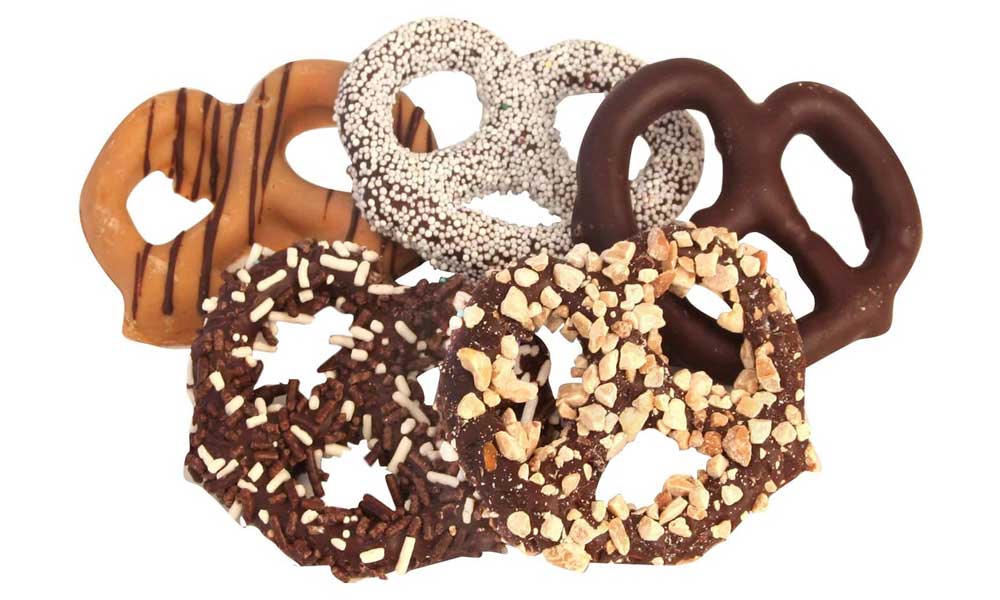
View the gourmet options here. The Medford, Oregon company, owned by 1-800-Flowers since 2014, sells pretzel twists hand-dipped in Belgian milk chocolate and finished with sprinkles and drizzle, made in small batches. It is the classic pretzel gift for a client or host: right for thank you gifts, wrong for restocking a desk drawer.
Nuts.com
Order in bulk here when quantity is the point. The lineup runs from 7-ounce bags to 15-pound cases: milk, black and white, toffee, peanut butter bites, fruit-flavored yogurt, and a low-sugar “chocolatey” version, a compound coating by name. Adding other bulk snacks helps reach the free shipping threshold.
Candy or Snack? Why the Aisle and the Sales Tax Disagree
Legally, many states treat a coated pretzel as food rather than candy. The Streamlined Sales Tax definition of candy, used by member states, excludes any preparation containing flour, and a pretzel is made from wheat flour. The same rule exempts a Kit Kat while taxing a solid bar, and it is why the same bag can be taxed at the grocery rate in one state and the full rate in another.
Shelving follows the same logic: they sit next to trail mix, while candy bars sit at the checkout. If staff say the store does not carry them, ask about the snack aisle by name.
The 20-Second Coating Check
The coating decides most of the quality, and the label tells you which kind you have. Under the FDA’s standards of identity in 21 CFR Part 163, milk chocolate and sweet chocolate must use cocoa butter as the fat. Swap in palm or vegetable oil and the front of the bag has to say “chocolatey,” “flavored,” or “confectionery coating.” Real coatings usually list soy lecithin, an emulsifier, too. White chocolate uses the same fat with no cocoa solids, which is why it reads sweeter. For the full wrapper breakdown, see the chocolate buying guide.
| Coating | Label reads | Fat used | Cost per ounce |
|---|---|---|---|
| Real milk or dark | “milk chocolate,” “dark chocolate” | Cocoa fat | Higher |
| White | “white chocolate” | Cocoa fat, no cocoa solids | Higher |
| Compound | “chocolatey,” “flavored” | Palm or vegetable oil | Lower |
| Yogurt | “yogurt coated” | Palm oil plus yogurt powder | Lower |
- Check the front panel for “chocolatey” or “flavored.” Either word means a substitute fat.
- Look for cocoa butter near the top of the ingredient list. Compound versions lead with sugar and palm or vegetable oil.
- Tilt the bag toward the light and look for bare patches or grey film. Film means the stock sat through temperature swings.
- Divide shelf price by net weight, then compare the bulk bag and the gift box. The tin often holds the same product.
Well coated pieces have no bare spots, and every topping (sprinkles, chopped nuts, salted caramel drizzle) pushes the per-ounce rate up. Festive toppings sell the holiday version; plain is the better everyday value. Many lines also handle peanuts and tree nuts, and the “may contain” advisory is voluntary under US law, so a missing warning guarantees nothing. Kosher buyers should look for an OU or OK symbol; OU-D means dairy, which covers nearly every milk chocolate covered product.
How Long They Keep, and Whether to Refrigerate
An unopened bag keeps until its best-by date in a cool, dry cupboard. Once opened, the pretzel is the weak link: it pulls moisture from the air and goes stale or chewy long before the coating changes, so reseal the bag or move the pieces to an airtight container and finish them within a couple of weeks.
- Refrigerator: skip it unless the house runs hot. Fridge air is humid, and the condensation that forms when a cold bag warms up causes sugar bloom and soggy pretzels.
- Freezer: fine for holiday surplus (see the FAQ below).
- Bloom: a grey-white film is fat or sugar bloom from temperature or humidity swings. It is safe to eat, though the texture underneath is often chalky.
When a Substitute Makes More Sense
For a bigger gesture, chocolate covered strawberries read as more of an occasion. The tradeoff: perishable, shipped overnight on ice, and far more expensive.
For the same crunchy bite without wheat, chocolate covered coffee beans are a workable gluten-free swap. They carry caffeine, so skip them for a kid’s party.
For the cheapest route to that sweet and salty flavor, buy plain twists and a good dark chocolate bar and eat them together. Dipping your own is also easy: melt the chocolate in a microwave-safe bowl in short bursts or over a double boiler, dip a pretzel, and let the excess drip off before setting it on parchment paper. Chips work, though they set softer than a bar.
Skip the category if you are shipping to a hot climate in August with no temperature-controlled option, or feeding a strictly gluten-free group. Chocolate coins or a plain bar solve both problems.
Five Chocolate Covered Pretzels Worth Buying
These five span the everyday grocery bag to the premium gift tin. Prices change with size, season, and seller, so compare per ounce at checkout.
Best everyday snack: Flipz milk chocolate pretzels. Created by Nestle in 1997 and now made by pladis. Thin mini twists from single-serve pouches up to a 24-ounce bag. Check price on Amazon
Best dark option: Snyder’s of Hanover Dark Chocolate Pretzel Dips. Small pretzels in a mildly sweet dark coating, a good pick if standard bags taste cloying. A milk version is sold too. Check price on Amazon
Best for gifting: Harry & David hand-dipped twists. Sprinkles and drizzle over a Belgian milk coating, in a gift box. Buy when presentation is part of the point. Check price on Amazon
Best bulk buy: Nuts.com milk-coated pretzels. Bags from 7 ounces up to 15-pound cases, with the per-ounce rate falling as size goes up. The right call for parties and office kitchens, where a big bowl is a reliable crowd-pleaser. See current pricing
Best heritage maker: Asher’s Chocolates. A family confectioner founded in Philadelphia in 1892, now in Souderton, Pennsylvania, and best known for its coated pretzels and graham crackers. Check the listing for rods versus twists. Check price on Amazon
Start with the ingredient panel, not the brand. If the coating is real, compare the per-ounce cost of the bag, the box, and the bulk pound, then buy the cheapest format that fits the occasion. If it says chocolatey, pay snack-bag prices only. From June through September, buy in a store or pay for insulated shipping. That routine gets you better chocolate covered pretzels than brand loyalty ever will.
Pretzel Buying Questions, Answered
Who makes Flipz chocolate covered pretzels?
Flipz is made by pladis, the global snack company owned by Turkey’s Yildiz Holding. Nestle created the brand in 1997, DeMet’s Candy Company bought it in 2003, and Yildiz agreed to buy DeMet’s in late 2013, later folding it into pladis North America.
Are chocolate covered pretzels gluten free or dairy free?
Standard versions are neither. The base is wheat flour, and milk and white coatings contain dairy. A few specialty makers use certified gluten-free pretzels and some dark coatings are dairy free, but shared equipment is common, so look for a certification mark rather than reading the ingredient list alone.
Can you freeze them?
Yes. Freezing works for a few months if the pieces are double-wrapped and airtight. Thaw them inside the sealed container at room temperature so condensation does not land on the coating and soften the pretzel.
Is the gift tin the same product as the snack bag?
Often, yes. Decorative packaging from a mass-market brand frequently holds the same coating and base as its bagged version, with the price difference going to the container. Compare the ingredient panels side by side; quality shows up in the ingredients, not the ribbon.
How This Guide Was Checked
Retailer links, product lines, and brand ownership on this page were rechecked in October 2026. Price ranges were removed because they change with package size, promotions, and season; check the retailer for the current figure.