
Say you need about 150 pieces for Halloween night. A drugstore counter would sell you singles one at a time, a grocery multipack gets you partway, and a single warehouse-club carton of fun size pieces covers the whole porch in one trip. That gap between channels is why where you buy candy bars matters more than which brand you pick. Candy bars are single-serve confections built from chocolate, caramel, nuts, or wafer and wrapped for grab-and-go snacking, and the same recipe is sold in four or five sizes at very different costs per ounce. Below: who makes each bar, how to judge one from the wrapper, which stores carry what, and when to buy.
This page contains affiliate links. We may earn a commission at no extra cost to you.
Who Makes the Candy Bars on US Shelves
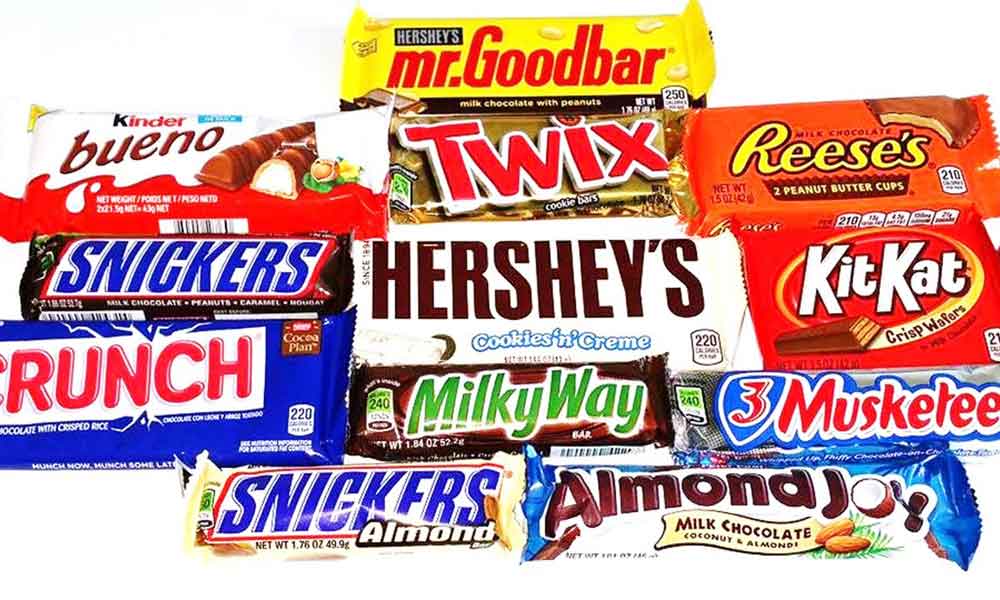
Three companies make most of the mainstream lineup in the United States: The Hershey Company, Mars, and Ferrero. The wrapper name does not always tell you which one, because two of the best-known bars are made by Hershey under license from a rival. That matters to buyers in one practical way: the US version and the imported version of the same name can be different products.
| Brand | US maker | What a buyer should know |
|---|---|---|
| Snickers, Twix, Milky Way, 3 Musketeers | Mars | Privately held; the core caramel and nougat lineup |
| Reese’s, Hershey’s, Heath, Almond Joy, PayDay, Whatchamacallit | Hershey | Solid chocolate and peanut butter staples |
| Kit Kat | Hershey, under a 1970 license | Nestle makes it everywhere else, so a UK Kit Kat is a different recipe |
| Cadbury Dairy Milk | Hershey, licensed since 1988 | UK-made Cadbury is hard to find in US stores (see below) |
| Butterfinger, Baby Ruth, 100 Grand | Ferrero (Ferrara) | Bought from Nestle USA in 2018 |
| Charleston Chew, Tootsie Roll | Tootsie Roll Industries | Independent; strong in bulk and nostalgia channels |
The Kit Kat license is the oddity. Hershey signed it with Rowntree, the original British maker, in 1970, and when Nestle bought Rowntree in 1988 it had to honor the deal. The Ferrero purchase was simpler: in spring 2018 Ferrero closed its roughly 2.8 billion USD purchase of Nestle USA’s confectionery business, which moved Butterfinger, Baby Ruth, 100 Grand, and Raisinets to Ferrara Candy Company, its US affiliate.
British Cadbury is the case that trips up import buyers. In January 2015, after Hershey sued for trademark infringement, the importer Let’s Buy British Imports agreed to stop bringing UK-made Cadbury, plus Toffee Crisp, Yorkie, and UK Kit Kat, into the country. Small importers still list British bars, but stock is patchy and the markup steep. If a seller cannot say where a bar was made, assume it is the US formulation.
What Separates a Good Bar From a Bad One
A good bar pairs a real milk chocolate or dark chocolate coating with a filling that has texture, and it reaches you fresh rather than bloomed. Five checks on the wrapper and the shelf decide that.
- Size tier and cost per ounce. One recipe is sold as mini, fun size, snack size, standard, and king size bars, priced by convenience, not weight. Divide the shelf price by the ounces on the label; a bulk box usually beats a bag of fun size outside the Halloween window.
- The word “chocolate” on the front. A chocolatey coating or “chocolate candy” label means a compound coating, where vegetable fat such as palm kernel oil replaces some of the cocoa butter. The tell is a waxy mouthfeel and no cocoa butter near the top of the ingredient list.
- Build and texture. Wafer layers and crisped rice stay crispy, whipped nougat turns fluffy, and caramel goes chewy. Toffee, fudge, coconut, peppermint, and marshmallow sit in between. Texture, not sweetness, is what people remember.
- Date code and bloom. Bloom is the pale gray film left when chocolate melts and re-hardens. It is safe to eat but tastes chalky, so skip dusty stock at the back of the rack.
- Allergen lines. Peanut, tree nut, milk, soy, and wheat all show up in this aisle, and a wrapper may carry a shared-equipment warning even when the recipe itself is clear. Gluten free, sugar free, and kosher versions exist but are never the default.
The coating check is not hypothetical. In February 2026, Brad Reese, grandson of the Reese’s founder, publicly criticized Hershey for moving some Reese’s products, such as mini Easter shapes, to a coating with less chocolate, and Hershey cited high cocoa prices. On April 1, 2026, Hershey said it would return all Reese’s products to classic recipes in 2027. Until then, read the front panel on seasonal shapes, not just the brand name.
| Build | Texture | Example | Warm-weather shipping |
|---|---|---|---|
| Wafer and coating | Crispy, light | Kit Kat | Poor, coating smears |
| Caramel and nougat | Chewy, dense | Snickers, Baby Ruth | Poor without a cold pack |
| Peanut butter | Salty-sweet | Reese’s Cups, PayDay | Fair |
| Solid dark chocolate | Snappy, smooth | Dove Dark, Ghirardelli | Best of the group |
Milk chocolate is sweeter and softens faster. Dark chocolate is firmer and holds its shape better in a warm car or delivery truck, which is why it ships best of the four builds above.
Where to Buy Candy Bars in Store
Nearly every grocery, drugstore, and big-box chain stocks the mainstream lineup near the registers. Depth of range and per-unit cost are what separate them, and the checkout rack is almost always the worst value in the building.
Walmart
Walmart, the largest brick-and-mortar retailer in the United States, carries the deepest mainstream range. Skip the checkout lane for the multipack shelf in the candy aisle, where the same brands cost far less per piece. See the current Walmart selection.
Target, Kroger, and Publix
Target mixes the standard lineup with seasonal and premium runs, and Target Circle offers rotate through this aisle. Kroger banners and Publix, the Southeast grocer, run multipack deals and deeper seasonal endcaps. Check availability at Target.
Walgreens, CVS, and gas stations
Drugstores and convenience counters are built for single-serve impulse buys: the fastest option and the priciest per ounce. Look for multi-buy shelf tags before grabbing one bar. Browse the Walgreens listing.
Costco and Sam’s Club
Warehouse clubs are the cheapest route to volume, usually through full-size and miniature variety cartons. Assortments rotate, so an October carton may be gone by December. Our guide to what to buy at Costco covers which pantry items are worth the membership.
Dollar Tree, Five Below, and World Market
The first two carry small counts and odd sizes, handy for party handouts but worth a per-ounce check. World Market is the easiest place to find imported European bars in person.
For gifting, Dylan’s Candy Bar sells assortments and oversized pieces online and at a few store locations. Hershey’s Chocolate World, the company’s retail attraction in Hershey, Pennsylvania, with stores in Times Square and Las Vegas, stocks giant formats and brand-exclusive items no supermarket carries.
Buying Candy Bars Online, and What Happens if They Arrive Melted
Online wins on selection, bulk pricing, and hard-to-find brands. It loses on warm-weather shipping and on returns, since many sellers, Amazon included, treat candy as a non-returnable food item.
Amazon
Amazon lists multipacks, variety pack boxes, and nearly every mainstream brand, and Subscribe and Save trims repeat orders. Grocery items generally cannot be sent back, but a damaged or melted delivery can usually be reported for a refund or replacement, so photograph it on arrival. Check who ships the item, since third-party sellers set their own packing and refund terms. See options on Amazon.
CandyWarehouse and Oriental Trading
Both serve events. CandyWarehouse sells case quantities, color-sorted wrappers, and individually wrapped candy for weddings and offices, while Oriental Trading is the cheap-volume pick for classrooms. Shop bulk options. Planning the rest of the event? Our party supplies guide covers plates, decor, and favors.
Nostalgic and decade-sorted candy sellers
These shops sort stock by decade, the fastest route to a nostalgic candy assortment from a specific era or a birth-year gift box of retro candy bars such as Charleston Chew, Whatchamacallit, and 100 Grand. Check that the seller still has a working storefront before ordering, since small retro shops come and go.
Candy Favorites and Zingerman’s
Candy Favorites lists per-item and bulk box pricing side by side, so the break-even between a handful and a case is easy to spot. Zingerman’s is the craft option, weighted toward small-batch and imported bars, with a good selection of chocolate for gifts.
Imported, regional, and discontinued brands
Canada keeps Coffee Crisp, Aero, and Wunderbar, and British Mars and Kinder products differ from their American cousins. For names pulled entirely, import specialists, eBay sellers, and nostalgia shops are the options. Check date codes, because gray-market stock moves slowly. Novelty end of the aisle? Our BeanBoozled guide and chocolate covered pretzels guide cover that corner, and our food products guides handle the rest of the pantry.
When to Buy for the Lowest Cost per Piece
Timing beats haggling, because confectionery pricing follows the same annual cycle every year. The advice we give anyone planning a Halloween or office order is to price by the ounce, not by the bag, and to buy in this order:
- Buy volume in late September or October. Halloween is the peak, so pack counts rise and per-unit pricing hits its floor. This is when Halloween costumes crowd the same aisle.
- Raid the clearance on November 1. Leftover seasonal stock gets marked down as soon as the holiday passes, and sealed chocolate freezes well for months.
- Avoid June through August for bulk orders. Heat damage in transit costs more than any discount saves.
One mistake we see every summer is a bulk carton of chocolate candy bars shipped to a porch in July with no insulated liner. A parcel can sit in an unconditioned trailer for hours, and chocolate that melts and resets arrives bloomed and misshapen. PayDay, with no chocolate coating, is the exception that survives. One more case where paying extra is a waste: a mainstream brand marked up by a retro candy store is the identical product sitting at Walmart for less.
Five Bars Worth Stocking
These five balance flavor, availability, and value. Prices change weekly by store and season, so check the current price at the link rather than trusting a printed number.
Best overall: Snickers. Peanuts, nougat, and chewy caramel under milk chocolate, and the Mars bar that turns up in nearly every multipack and vending machine. Check price on Amazon.
Best solid chocolate: Hershey’s Milk Chocolate. The plain benchmark milk chocolate bar, and the one that doubles for s’mores and baking. See it on Amazon.
Best peanut butter: Reese’s Peanut Butter Cups. The salty-sweet standard. Check price on Amazon.
Best without chocolate: PayDay. Salted peanuts pressed into caramel with no coating, which makes it the most heat-tolerant pick here. See it on Amazon.
Best for parties: mixed variety pack. Twix, Milky Way, Almond Joy, and 3 Musketeers in one carton covers most preferences without four boxes. See variety boxes on Amazon.
Start by naming the job: volume, speed, or one nostalgic brand. Then pick the channel: a grocery or club multipack for value, a drugstore for a quick fix, a specialty confectioner for the rare stuff. Buy candy bars in the cooler months, divide price by ounces, and read the front panel and date code before paying.
Questions Shoppers Ask
Can you eat one past the date on the wrapper?
The printed date is a best-by quality date, not a safety expiration, so a sealed piece past it is usually still edible, just flatter in flavor. Nut and peanut butter fillings go stale first, because their fat oxidizes faster than plain chocolate.
How should you store them, and can you freeze them?
Keep them sealed somewhere cool, dry, and dark, away from onions and coffee, since cocoa butter absorbs odors. Freezing extends shelf life well past the printed date. Wrap airtight, then thaw in the fridge so condensation does not sweat onto the coating.
Are gluten free, sugar free, or kosher versions available?
Yes, though they are a small slice of the shelf. Sugar free candy sells mainly through drugstores and larger supermarkets. Kosher certification appears as a small symbol near the ingredient panel, not on the front. Wafer builds such as Kit Kat contain wheat by design; many solid chocolate pieces do not.
Where do you find giant or oversized bars?
Giant and pound-plus formats are mostly a gifting item, surfacing around the winter holidays and Valentine’s Day at Walmart, Target, and drugstores. The rest of the year, online specialty sellers and Hershey’s Chocolate World are the reliable sources. Expect to pay well above the standard per-ounce rate.
Is a store-brand version worth buying?
For solid chocolate and simple caramel builds, store brands from Kroger, Aldi, and Trader Joe’s compete well for less. Layered builds are harder to copy, so a store-brand wafer version rarely matches the original. Read the ingredient list: cocoa butter high up means real chocolate, not compound coating.
About This Guide
In October 2026 our editorial team rechecked the brand ownership facts, the 2026 Reese’s recipe news, and every retailer link on this page. Prices were removed because they change too often to print accurately.