
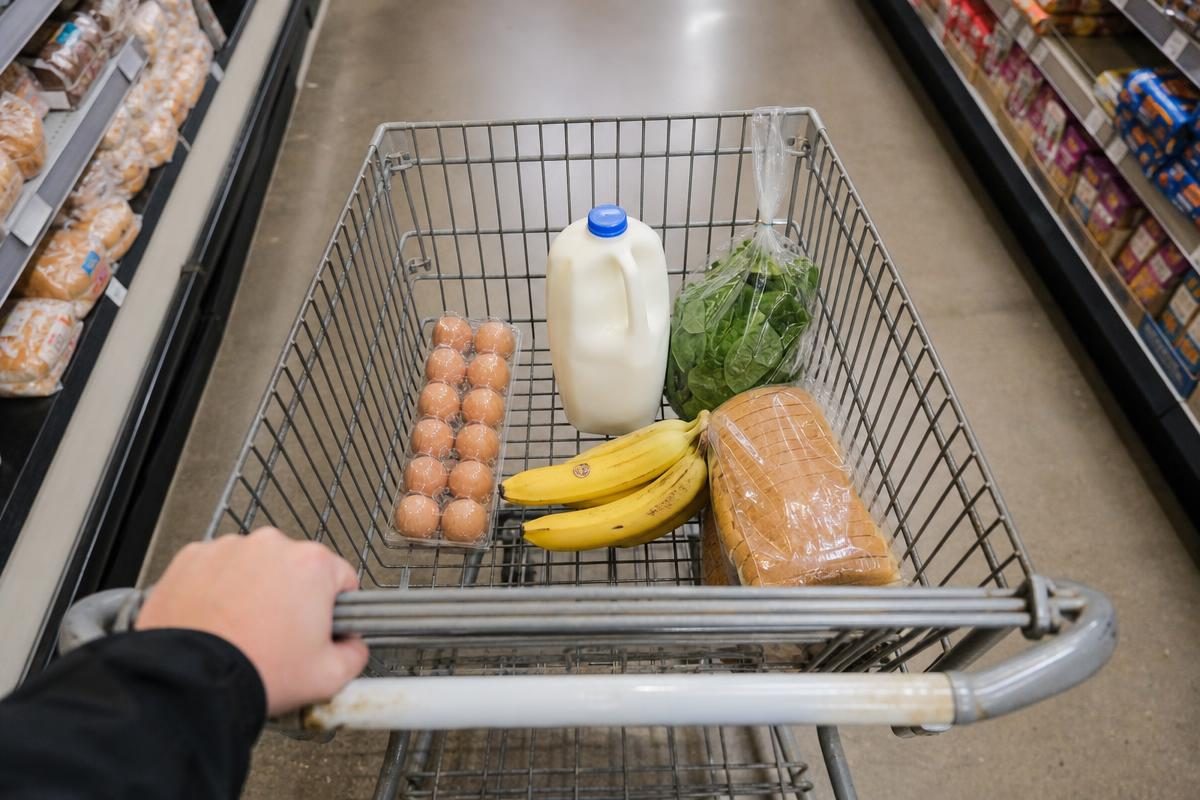
What to buy at the grocery store comes down to about thirty staples that repeat every week: hardy produce, two or three proteins, dairy, a dry and canned pantry, and a freezer backup. Buy those on rotation and add recipe extras only for meals you will actually cook. Below, the list is sorted by department, with notes on date labels, shelf tags, and store brands.
This page contains affiliate links. We may earn a commission at no extra cost to you.
Why a Staple List Beats a Fresh List Every Week
A staple is an ingredient your household uses up week after week and can build a meal around without a recipe: eggs, milk, rice, onions, a decent olive oil. A recipe one-off is the opposite, the anchovy paste one dish demands. The reason most grocery lists fail is that they get written from recipes, so the cart fills with one-offs while the basics quietly run out.
The fix is to make a list in a fixed order:
- Walk the kitchen before you make a list. Two minutes, and it kills the duplicate jar of cumin problem.
- Replace what ran out before anything else, so the rotation stays covered.
- Add recipe extras last, and only for meals you have committed to cooking.
Households cooking four or more nights a week gain the most from walking into the store with a plan. The payoff shows up on a busy night: eggs, an onion, rice, and frozen peas make fried rice in fifteen minutes.
What to Buy at the Grocery Store, Department by Department
Buy for versatility and shelf life, not for a single recipe. Everything below sits on the shelves of any full-size supermarket.
Produce That Survives the Week
- Onions and garlic. The base of nearly every savory dish, and both hold for weeks in a cool, dark cupboard.
- Carrots and potatoes. Cheap root vegetables that spoil slowly. Refrigerate carrots; keep potatoes out of the fridge, where cold turns their starch to sugar.
- Apples and bananas. Buy each bunch at mixed ripeness so they do not all turn at once.
- Leafy greens and a lemon. Spinach for a fast salad, citrus for dressing.
Proteins: Two or Three Cover the Week
- Eggs. The most flexible protein in the store, and USDA guidance puts raw shell eggs at three to five weeks refrigerated. Runny yolks call for pasteurized eggs.
- Chicken thighs and ground beef. Between them they cover most weeknight cooking, from tacos to stir-fries. Freeze what you will not use in two days.
- Canned tuna, dried beans, and canned chickpeas. Shelf-stable protein that stretches soups, tacos, and hummus for pennies a serving.
- Tofu and peanut butter. Protein-dense, cheap, and neither needs cooking.
Dairy and the Cold Case
Shelf-stable oat, soy, or almond cartons keep for months unopened. Butter freezes. A block of cheddar outlasts the pre-shredded bag, and a tub of plain yogurt covers breakfast, a vegetable dip, and sour cream duty.
The Dry and Canned Pantry
- Rice, pasta, and oats. Cheap whole grains and starches that keep a year or more. Brown rice turns rancid sooner than white because its bran layer holds oil, so buy smaller bags. Swaps like black bean pasta add protein.
- Flour and sugar. Sealed all-purpose flour holds six months to a year.
- Canned tomatoes, broth, and coconut milk. The starting point for chili, a hearty stew, and curry, and all three last past a year unopened.
- Olive oil, spices, and something spicy. A good everyday olive oil plus salt, pepper, cumin, garlic powder, and a bottle of sriracha season nearly everything. Whole spices bought in bulk outlast pre-ground jars.
- One acid. A bottle of vinegar, such as apple cider vinegar, rescues flat soups and makes a two-minute dressing.
Freezer and Bakery Backup
- Frozen veggies and fruit. Peas, broccoli, cauliflower, and blueberries are frozen close to harvest, so they often beat out-of-season fresh.
- Bread and one extra grain. Quinoa breaks up the rice routine, and a denser loaf like Ezekiel bread holds up under toast toppings.
- Frozen salmon, paper towels, trash bags. Fillets mean dinner is always possible; bulk packs of paper goods cost less per unit.
Date Labels: What the Stamp Does and Does Not Mean
A date on a food package is mostly a quality signal, not a safety deadline. According to the USDA Food Safety and Inspection Service, federal rules do not require product dating on any food except infant formula, and a “Use-By” date marks peak quality rather than the point where food turns unsafe. A “Sell-By” date is for the retailer’s stock rotation.
What the stamp does not tell you is how the food was handled. Milk left in a hot car spoils before its date; a properly chilled carton often lasts past it. Judge anything past its date by smell, texture, and storage history, except infant formula, which should never be used past its Use-By date.
How Long Each Category Actually Keeps
Typical ranges for properly stored items, cross-checked against the federal FoodKeeper storage database.
| Category | Roughly how long it keeps |
|---|---|
| Produce | Greens 5 to 7 days; roots 3 to 5 weeks |
| Proteins | Fresh meat 1 to 2 days; eggs 3 to 5 weeks |
| Dairy | Milk a week past date; hard blocks 3 to 4 weeks |
| Pantry | Dry goods 6 months to 2 years |
| Frozen | Produce 8 to 12 months; meat 4 to 6 months |
| Bread | 5 to 7 days fresh; grains a year plus |
Store Brand or Name Brand? What Blind Taste Tests Found
Store brands hold their own on most of this list, but they do not win everything. In a 2012 Consumer Reports blind taste test of 19 matched pairs, the private label tied the national brand 10 times, lost 8 times, and won once (Giant Eagle chicken broth over Swanson). Savings across those pairs ranged from about 5% to 60%.
The practical reading: default to the generic on anything with a fixed, simple formula (flour, sugar, salt, canned beans, frozen vegetables, paper goods), then taste-test the categories where recipe and ingredient grade vary, such as ground coffee, jarred pasta sauce, and snack food.
Unit Prices: The Shelf Tag Number That Settles It
The unit price is the cost per ounce, pound, or count printed on the shelf tag, and it is the only fair way to compare a big box against a small one. No federal law requires it. Each state decides, and most rules follow the model regulation in NIST Handbook 130, so some states mandate unit pricing, others treat it as voluntary, and many grocers post it anyway.
Two gotchas trip people up. Neighboring tags sometimes use different units (per ounce on one, per count on the next), so convert before comparing. And bigger is not automatically cheaper: warehouse sizes lose whenever the food spoils before you finish it.
Which Chain Fits Which Part of the List
No single chain wins on everything, so most households split the list across two.
- ALDI. Built around low prices and a mostly private-label shelf. Carts take a quarter deposit you get back when you return the cart, and you bag your own groceries, so bring bags.
- Costco. Worth it only on what you use in volume: olive oil, rice, frozen fruit, cheese, chicken, paper goods. The rotisserie chicken is the deal everyone already knows, and our guide to what to buy at Costco sorts the rest.
- Walmart and Kroger. The widest one-stop selection, pharmacy and household aisle included. Kroger’s banners (Fred Meyer, Ralphs, King Soopers and others) load digital coupons to the loyalty card before you arrive.
- Trader Joe’s, Publix, and Whole Foods Market. Trader Joe’s leans on frozen meals and snacks. Publix operates mainly in the Southeast. Whole Foods costs more across the board, with its 365 store-brand line as the value tier.
Whichever you pick, start on the perimeter: produce, meat, and milk line the walls of nearly every supermarket.
Ordering Groceries Online Without Paying Extra
Online ordering earns its keep on the heavy half of the list: rice, canned goods, drinks, paper products.
- Instacart. The delivery platform that sends a personal shopper to a local retailer lists ALDI, Costco, Kroger, Publix, and hundreds of regional chains as partners. Item prices can run above shelf prices before fees, so it suits stocking up once a month.
- Walmart and Target. Walmart pickup is free once your order clears the minimum shown at checkout. Target runs same-day delivery through Shipt, the service it bought in 2017.
- Amazon. Best for shelf-stable things a local chain skips, like bulk whole spices and specialty grains. Amazon also delivers from Whole Foods Market in many metro areas, and it helps to know the best things to buy at Whole Foods first.
Turn substitutions off for produce and raw meat. A picker choosing your bananas is the most common reason an order disappoints.
Three Habits That Quietly Waste Grocery Money
Shopping with no written list. A list is the best defense against impulse spending, because end caps and checkout displays are designed for shoppers who do not have one.
Over-buying perishables. Wilted spinach and fuzzy berries in the trash are money set on fire. Buy what you will realistically eat before the next trip.
Paying for prep you can do. Pre-shredded cheese, pre-cut melon, and single-serve salad kits carry a steep markup per pound, and shredded blends come coated in anti-caking starch, which is why they melt less smoothly.
Five Cheap Foods to Build Meals Around
These five were chosen on cost per serving and flexibility, not sticker price.
Best overall value: long-grain white rice. Pennies per serving, and it keeps well past a year in a sealed container. Check price on Amazon
Best cheap protein: dried pinto or black beans. One pot feeds a family for days. The catch is an overnight soak or a pressure cooker. Check price on Amazon
Best breakfast: old-fashioned rolled oats. A large canister covers weeks of mornings without the added sugar of many flavored instant packets. Check price on Amazon
Best zero-waste vegetable: mixed frozen veg. Use what you need, reseal the rest, nothing wilts. Freezing happens close to harvest, so nutrition holds up well against fresh. See options on Amazon
Best whole-bird value: a whole chicken. Whole birds usually cost less per pound than the same weight bought as parts. Roast it, eat it twice, then simmer the carcass into broth.
Start with those five this week, then fill in one department per trip over the next two or three. Once you know what to buy at the grocery store on repeat, the weekly shop shrinks to a two-minute check of what ran out.
FAQ: Buying Groceries Without Overthinking It
What is the 5 4 3 2 1 rule for groceries?
The 5 4 3 2 1 rule is a shopping shortcut popularized on social media: five vegetables, four fruits, three proteins, two sauces or spreads, and one grain, often with one treat added. It forces variety into a cart without a full meal plan. It skips oil, butter, and spices, so pair it with the department list above.
How do I decide what to buy at the grocery store on a tight budget?
Anchor the cart on cost per serving, using the unit price on the shelf tag. Dried beans, white rice, oats, eggs, and frozen vegetables are among the cheapest servings in most stores and can carry most of a week’s meals. Buy perishables weekly and shelf-stable goods monthly, since every extra time you go grocery shopping is another pass by the end caps.
What should I buy first if my kitchen is completely empty?
Buy fat, acid, salt, and a starch first: cooking oil, vinegar or lemon, salt and pepper, and rice or pasta. Those four turn almost any protein or vegetable into a meal, and skipping them is why a full fridge can still produce nothing edible.
Which of these items can I freeze?
Bread, butter, hard cheese, raw meat, cooked beans, and most cooked grains handle the freezer well. Skip lettuce, whole raw potatoes, and anything mostly water, which turns mushy on thaw. USDA guidance says food kept constantly at 0 degrees Fahrenheit stays safe indefinitely, but quality drops after a few months.
Editorial review: wheretobuyguides.com team. Retailer details and sources last checked October 2026.