
Chocolate covered coffee beans are whole roasted coffee beans coated in chocolate and eaten as candy, and the most dependable places to buy them are Trader Joe’s, natural grocers with bulk bins, Costco’s business channel, and Amazon. When we rechecked the retailer and brand pages linked in this guide in October 2026, a few had moved or changed, so the notes below reflect what each channel actually offered at that check, plus what the label leaves out about caffeine.
This page contains affiliate links. We may earn a commission at no extra cost to you.
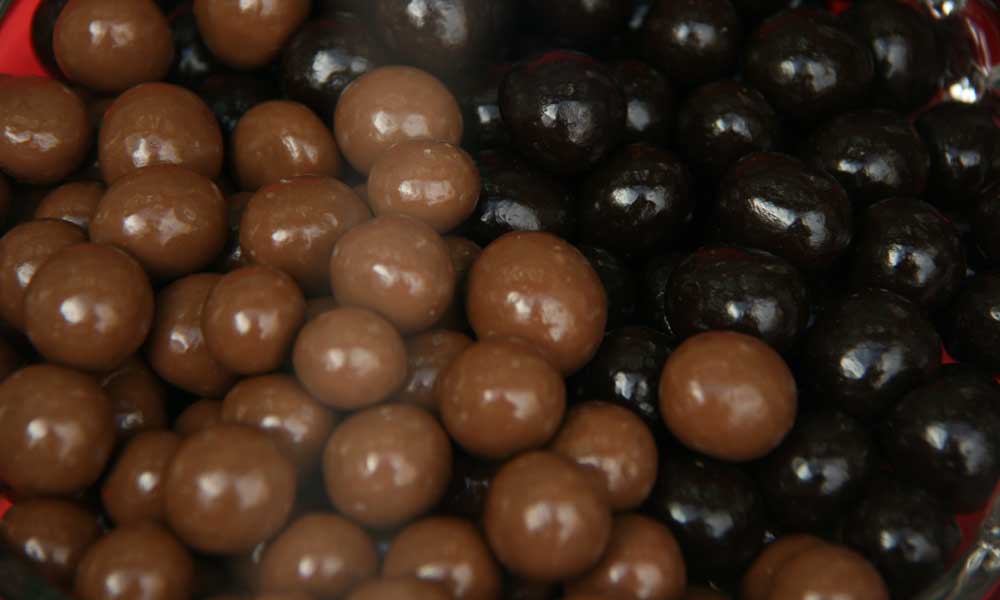
A chocolate covered coffee bean is a confection, not a brewing product. You eat it as it comes. Nothing gets ground, filtered, or run through an AeroPress or any other brewer. They turn up at coffeehouse counters as often as grocery aisles. Desk workers buy them for an afternoon lift, bakers use them as a garnish, and gift shoppers reach for tins in December.
Where to Buy Chocolate Covered Coffee Beans in Stores
Trader Joe’s and grocers with bulk sections are the most reliable walk-in options; big-box candy aisles are hit or miss.
Trader Joe’s
Trader Joe’s sells two house versions: Dark Chocolate Covered Espresso Beans and Coffee Lover’s Espresso Beans, a small assorted bag where the beans wear different flavored coatings. In Tasting Table’s May 2026 ranking of six brands, the dark version placed third for its thick, glossy coat and sweet-bitter balance, and the Coffee Lover’s bag placed fourth, with a caramel latte flavor that stood out. Trader Joe’s does not sell groceries online, so stock depends on your store. Call ahead if you want a specific bag. Browse their selection here.
Whole Foods and natural grocers
Natural grocers are where bulk bins live, and a bin lets you scoop two ounces and experiment, which many coffee drinkers prefer to committing to a pound. The Whole Foods pick in that Tasting Table test was SunRidge Farms Dark Chocolate Espresso Beans, which finished fifth: slightly chewy chocolate over a bitter bean. Sprouts and co-ops with scoop walls work the same way. The Whole Foods page this guide linked now opens a general storefront, so search its site by name. Check availability on their site.
Walmart, Target, and Kroger
Walmart, the largest brick-and-mortar retailer in the United States, rotates a small shelf selection but carries a much deeper third-party assortment online. In our October 2026 check, It’s Delish sold its milk chocolate beans there in 2-pound and 5-pound bags shipped by the maker, and resellers listed Trader Joe’s Coffee Lover’s bags in multi-packs. Reseller listings of a store brand cost more than the shelf, so buy Trader Joe’s product at Trader Joe’s. At Target and Kroger, check the candy aisle and the bulk section; assortment varies by store. See the Walmart listings.
Costco and independent candy shops
Costco Business Delivery listed Dilettante’s 5-pound Espresso Blend when we checked: espresso beans in semisweet, milk, and white chocolate, labeled kosher with “no compound coating.” Warehouse stock rotates, and five pounds of caffeine candy suits a break room better than one home. Independent chocolatiers and candy shops often make the freshest local version.
Buying Online: Amazon, the Makers, and Marketplaces
Amazon has the widest range, the makers have the best gift presentation, and marketplaces cover discontinued labels and bulk orders. Pick by which of the three you need.
Amazon
Amazon lists every shell type and bag size from national brands and small-batch packers. Sort by rating, then read the recent reviews for melting complaints, since those reveal how a seller packs for summer. Set up Subscribe and Save only once you have found a bag worth reordering. Shop the full Amazon selection.
Café Britt and Ethel M direct
Café Britt, the coffee roaster based in Heredia, Costa Rica, enrobes peaberries rather than standard ones. A peaberry is a small, round bean that forms when a coffee cherry grows one seed instead of two, and the company says that shape suits confectionery. It sells three shell types, which makes it the stronger choice for a gift. Ethel M Chocolates, the Henderson, Nevada gourmet chocolate maker that Mars has owned since 1988, sells through its own site. When we checked, the Ethel M espresso bean page this guide linked redirected to its general Treats listing, so confirm the beans are in stock before planning a gift around them. Visit the Ethel M store.
eBay, Etsy, Goldbelly, and Nutstop
eBay is where discontinued and regional labels surface; in our check it carried multi-bag lots of the Trader Joe’s Coffee Lover’s beans for shoppers with no store nearby. Etsy and Goldbelly host small-batch confectioners who ship gift tins; check seller feedback and packing method first. Nutstop is worth a look for bulk orders. Browse the eBay listings or see their catalog here.
What the Label Will Not Tell You About Caffeine
The bag almost never states caffeine per piece, and that is within the rules. FDA consumer guidance explains that packaged foods must list added stand-alone caffeine in the ingredient list, but caffeine that comes from an ingredient such as coffee or chocolate is not broken out; only the ingredient appears. A panel reading “coffee beans, dark chocolate” names the source, not the dose.
The FDA, the federal agency that regulates food labeling, cites 400 milligrams a day as an amount not generally associated with negative effects for healthy adults, and it advises anyone pregnant, trying to conceive, or breastfeeding to ask a health care provider about limits. Caffeine per piece varies with bean size, roast depth, and how much of each piece is shell.
That labeling gap shows up in search results. A r/traderjoes thread asking how many pieces equal one shot of espresso ranks on page one for this keyword, and the replies disagree. Because these eat like candy, a distracted handful adds up faster than a mug does. Portion them into a small dish, and keep the bowl away from children and anyone caffeine-sensitive.
How to Judge a Bag Before You Pay
Four things separate a good bag from a forgettable one: shell type, the bean underneath, coat thickness, and the ingredient panel.
Shell type. Dark, milk, and white chocolate are the three standards, and they change the eating experience more than anything else does. If you already know you prefer sweeter white chocolate, start there.
| Shell | Sweetness | Best for | Watch out for |
|---|---|---|---|
| Dark | Low | Letting the espresso lead | A thin layer tastes harsh |
| Milk | Medium | First-timers and gifting | Softens fastest in warm weather |
| White chocolate | High | Anyone who dislikes bitterness | Sweetness buries the coffee |
The bean underneath. An espresso roast is the default, because a darker, oilier bean stands up to sugar. A medium roast reads brighter and slightly fruity, which suits anyone who finds espresso versions too sharp. Know a roaster you like already, such as the profiles in our Counter Culture Coffee guide? Use that as your benchmark.
Coat thickness. A good coat should snap, not shatter or smear. Too thin and bitterness runs straight through. Too thick and you lose the coffee entirely, and you are eating a truffle with a crunchy middle.
Ingredient panel. Look for cocoa butter near the top. Palm kernel oil or “confectionery coating” means compound, not real chocolate, and it tastes waxy. Watch the word “chocolatey” on foodservice bulk bags: the 5-pound Capora bag sold through WebstaurantStore, for example, is labeled dark chocolatey and described as a compound coating. The same quality check works on dark chocolate bars.
How to pick a bag in under a minute
- Choose your shell. Bittersweet lets the roast lead, milk pleases a crowd, white chocolate makes a decadent, dessert-leaning treat.
- Scan the panel for cocoa butter and reject anything listing palm kernel oil.
- Buy the freshest best-by date, since this product goes stale rather than spoils.
- Match size to habit: a small pack to test a brand, bulk once you know you like it.
- Ordering in warm months? Confirm cold-pack shipping first.
Mistakes That Waste Money
The most expensive mistake is not the wrong brand. It is two pounds ordered in midsummer from a seller who ships in a paper mailer.
- Summer shipping with no cold pack. A box that sits in a hot delivery van can arrive as one fused block. Order in cooler months, or pay for expedited shipping and insulation.
- Mistaking bloom for mold. A pale grey film is bloom, cocoa butter or sugar that migrated to the surface after a temperature swing. It is harmless; the flavor just dulls slightly. Buyers bin perfectly good bags over this.
- Paying gift prices for compound. Read the panel before the price tag, especially on unbranded bulk bags.
- Refrigerating the bag. Condensation forms every time it warms back up, which causes bloom. A sealed bag in a cool, shaded cupboard keeps better.
Five Chocolate Covered Coffee Beans Worth Buying
Picked on shell quality, center size, and how reliably each stays in stock. Prices move often, so check the current listing.
Best overall: Dilettante Chocolate Covered Espresso Beans. A thick, even coat with a proper snap (one review credits it to several layered applications), from a maker whose bulk listing states it uses no compound. Check price on Amazon
Best in-store value: Trader Joe’s Dark Chocolate Covered Espresso Beans. The value benchmark for the category and a top-three finisher in the May 2026 Tasting Table ranking. In-store only, so it is a grocery-run purchase.
Best for gifting: Café Britt Dark Chocolate Covered Coffee Beans. Costa Rican peaberries in packaging that presents well without extra wrapping, which is why it pairs with a basket holding chocolate coins. Check price on Amazon
Best milk option: It’s Delish Milk Chocolate Covered Espresso Beans. A sweeter, gentler shell for anyone who finds bittersweet versions harsh, sold in 2-pound and 5-pound bags. Its ratings trail the maker’s dark version, so try the smaller bag first. Check price on Amazon
Best bulk value: Funtasty Dark Chocolate Covered Espresso Beans. Listed in 2-pound bags on Walmart’s marketplace, packed by a bulk reseller rather than the original maker, so read the latest reviews for freshness. Buy in cool months and store it sealed.
Start with a small sealed bag of one shell type rather than a pound of a brand you have never tried. Read the panel for cocoa butter, buy the freshest date, and if you are ordering chocolate covered coffee beans online in warm weather, confirm cold-pack shipping first. A small Trader Joe’s bag is a low-risk way to test the category, and it stacks well with chocolate covered pretzels and the rest of your chocolate shopping list.
Frequently Asked Questions
How much caffeine is in one piece?
No standardized figure exists, and FDA labeling rules do not require one when the caffeine comes from the coffee itself. The amount depends on bean size, roast depth, and how much of each piece is shell. Count anything the label does list against the FDA’s 400 milligram daily reference for healthy adults.
Do chocolate covered coffee beans go bad?
They go stale long before they become unsafe. The failure mode is a drying center and a coat that picks up pantry odors. Store them sealed in a cool, shaded cupboard and skip the refrigerator, which causes condensation and bloom.
Does Trader Joe’s still sell chocolate covered espresso beans?
Yes, as far as public listings show. Both its Dark Chocolate Covered Espresso Beans and Coffee Lover’s Espresso Beans appeared in Tasting Table’s May 2026 ranking, and resellers still listed the Coffee Lover’s bag in October 2026. Trader Joe’s does not ship groceries, so call your store to confirm stock.
Can you brew them?
No. Grinding a coated bean puts sugar and fat into your burr grinder, which gums it up and takes a full teardown to clean. The center is real coffee, but once coated it is a confection.
Are chocolate-covered coffee beans just regular coffee beans?
Yes, botanically. Espresso is a roast style, not a species, so a bag labeled espresso beans simply went further in the roaster. Some makers, Café Britt among them, use peaberries, a naturally rounder form of the same coffee seed.
Are they gluten free?
The core ingredients, roasted coffee, cocoa, and sugar, contain no gluten. Cross-contamination is the real risk, since many confectionery lines run wheat products on shared equipment. Look for a certified gluten-free mark, and treat unlabeled bulk bins as unverified.
About This Guide
Reviewed by the wheretobuyguides.com editorial team. Retailer pages, product listings, and linked brand sites were rechecked in October 2026. Caffeine guidance here references published FDA consumer information and is general information, not medical advice.