
Coconut bread is one name for five different products, and the version you want decides the store. A spiced Caribbean loaf for a holiday table comes from a West Indian bakery or grocer. A soft roll to wrap around a beef patty comes from a Jamaican patty shop. Pan de coco comes from a Filipino bakery, Hawaiian filled breads mostly from island bakeries, and a keto loaf from a low carb baker that ships. The supermarket bread aisle is the one place it rarely turns up.
This page contains affiliate links. We may earn a commission at no extra cost to you.
Five Kinds of Coconut Bread and Where Each One Sells
Coconut bread is any loaf or roll whose flavor or structure comes from the fruit, through grated flesh, canned milk, or a grain free flour. The five styles share a name, not a recipe.
| Style | What it is | Where to buy it |
|---|---|---|
| Caribbean sweet loaf | Dense, spiced wheat loaf with grated flesh, sometimes raisins or mixed peel | West Indian grocers, Caribbean bakeries, Etsy bakers |
| Jamaican coco bread | Soft folded yeast roll, slightly sweet, built for patties | Patty shops such as Golden Krust, Caribbean bakeries |
| Pan de coco (Filipino) | Soft bun with a sweet grated filling | Independent Filipino bakeries, Asian supermarket counters |
| Hawaiian style | Filled bread or pan, haupia pastries | Hawaii bakeries, occasional mail order |
| Grain free or keto loaf | Coconut flour plus eggs or egg whites, low carb | Julian Bakery, Amazon, home baking |
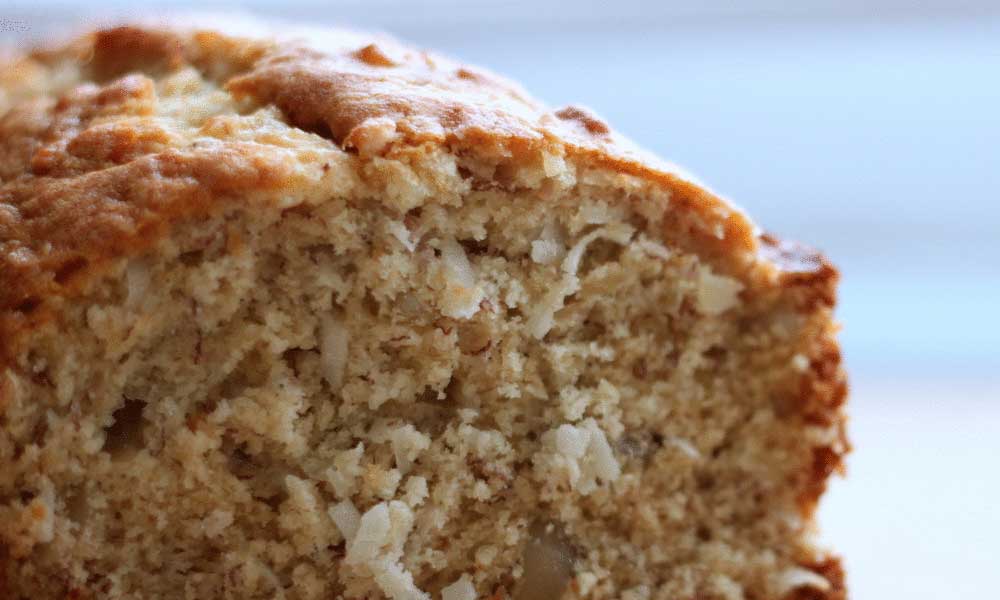
The mix-up we hear about most is the coco bread one. Someone buys a patty shop roll expecting a sweet loaf to slice and toast, or orders a holiday loaf when they wanted sandwich bread. We tell readers to look at the photo before the name: a folded half-moon roll is coco bread, while a rectangular loaf with visible flakes in the crumb is the sweet style.
Caribbean Loaves and Coco Bread: Grocers, Bakeries, Patty Shops
West Indian grocers and Caribbean bakeries are the most reliable source for the traditional loaf, especially around New York, Miami, Atlanta, and Houston. Bahamian, Guyanese, Trinidadian, and Jamaican versions differ in spice and density, and all sell in far larger volume around Christmas.
Caribbean and West Indian Grocers
These shops carry the sweet loaf more reliably than any supermarket chain. Most do not bake on site. They take delivery from a nearby bakery on a set schedule, so ask which day it arrives and shop that morning. The same aisles hold saltfish and green and ripe plantains.
Caribbean Bakeries and Patty Shops
A bakery is the only place to buy warm bread straight from the oven. Golden Krust, the Jamaican patty chain, sells coco bread on its own and as the roll in its patty combo. Royal Caribbean Bakery in Mount Vernon, New York, sells it in four packs through its own online shop, and its listing notes that the roll contains none of the fruit. Patty shops treat the sweet loaf as a weekend and holiday item. December is the crunch, so order a week ahead.
Pan de Coco: Independent Filipino Bakeries First
Pan de coco is a soft Filipino bun filled with sweetened grated coconut, usually eaten as a morning or afternoon snack. Neighborhood Filipino bakeries are the surest source. Philippine Bread House in Jersey City has sold it for over 40 years, and San & Wolves Bakeshop in Long Beach, California, makes a vegan version.
Red Ribbon and Goldilocks, the two best known Filipino chains in the US, are the obvious first call, but their US online menus in October 2026 centered on cakes, ensaymada, mamon, and pandesal, with no pan de coco listed. Call the local branch before driving. Bakery counters inside Filipino and Asian supermarkets are the other bet, and the same stores usually stock fresh and canned jackfruit.
Buy it the day it is baked, since a wet filling goes gummy faster than a plain loaf. A Honduran Garifuna bread also goes by pan de coco, so check the photo when ordering online.
Hawaiian Versions: Island Bakeries and Mail Order
Hawaii has no single standard loaf. Visitors usually mean a filled sweet bread or pan, or pastries built on haupia, the Hawaiian coconut pudding. Punalu’u Bake Shop on the Big Island, best known for its sweet bread, sells a coconut-filled pan and has shipped to the mainland, though its online store showed as temporarily closed in October 2026. Halekulani Bakery on Oahu is famous for a cake rather than bread. The plain Hawaiian sweet rolls sold in mainland supermarkets are a different product.
Keto and Grain Free Loaves for Low Carb Diets
A grain free loaf swaps wheat for coconut flour, which absorbs several times its weight in liquid, so these breads lean on eggs and come out dense and high in fiber. They are a diet product, not a stand-in for the Caribbean loaf.
Julian Bakery, an Oceanside, California baker specializing in low carb goods, makes PaleoThin Coconut Bread from that organic flour, egg whites, and psyllium. It bakes on a set schedule and recommends express shipping for freshness. In October 2026 its site listed a single pack at 14.50 USD, plus 3 and 6 packs. Order from the Julian Bakery website or compare third party sellers. Check price on Amazon. It is dry from the bag, so toast it.
Baking your own with a bag of the flour costs the least. Bob’s Red Mill’s is the most widely stocked brand and works in most paleo formulas. Check price on Amazon. Specialty loaves of this kind often sit in the freezer case, the same spot our guide to buying Ezekiel bread sends you.
Shopping Online: Amazon, Etsy, and Specialty Sellers
Online you choose between shelf stable goods that ship cheaply and fresh or frozen ones that do not. That choice drives total cost more than the listed price.
Amazon, the largest online retailer in the US, has the widest assortment: packaged loaves, grain free options, and flour. See the selection on Amazon #ad to compare brands and reviews. Watch the seller name on perishable listings, since third party sellers set their own return terms.
Walmart is worth a search for packaged loaves, coconut oil, and canned milk. Check their online inventory first, since assortment varies by store.
Etsy is where independent Caribbean and home bakers list, the best online route to the traditional style and the usual source for gift packaging. Browse the listings on Etsy and filter by seller rating. Goldbelly, which ships food from regional bakeries nationwide, is worth a search too. On both, read the processing time, not the shipping estimate.
Thrive Market carries shelf stable and grain free groceries behind a paid membership, so it pays off only on a larger pantry order. iHerb is stronger on ingredients than baked goods: flour, canned milk, and whole coconuts.
Four Rules for Ordering Coconut Bread by Mail
Mail ordering a perishable is where money gets wasted. Four steps prevent most of it:
- Check the ship method before the price. Fresh and frozen goods need two day service, and that cost stays hidden until checkout.
- Order more than one. Shipping is charged per box, so a second loaf costs less than the first one’s freight.
- Order Monday through Wednesday. A box sitting in a depot over the weekend is a common way a delivery spoils.
- Freeze on arrival. Slice first, then bag, so you can thaw one portion at a time.
If a box arrives warm, photograph it before opening, since a refund claim usually needs the picture. Thawing and refreezing in transit turns the crumb crumbly, and freezer burn shows as pale patches on the cut face.
What the Label Tells You Before You Pay
Read the ingredient panel before the front of the package. A tropical front label says nothing about the flour inside or whether real fruit went into the batter.
- Flour base. Wheat versions are soft and sweet, closer to banana bread or zucchini bread. Grain free ones are dense. If gluten matters, look for a certified gluten free mark, since grain free alone has no legal definition in US labeling.
- Real flakes versus flavoring. Shredded coconut or coconut flakes high in the list mean texture plus a coconut flavor that survives toasting. Coconut extract alone gives aroma that fades within a day.
- The liquid. Traditional bakers lean on canned coconut milk, whose fat gives moist crumbs that hold up a second day. Carton milk cannot match that, and cheap shelf stable loaves often use all-purpose flour, water, and sugar.
- Allergens and nutritional information. Since the FDA’s January 2025 food allergen guidance (Edition 5), the fruit is no longer treated as a major allergen tree nut, so a “Contains: tree nuts” line is not required for it. It still has to appear in the ingredient list. Grain free loaves also contain eggs, and holiday styles run high in added sugar.
The FDA’s food allergen labeling FAQ explains the narrower tree nut list. Allergic shoppers should still read the full ingredient list, because older packaging may follow the earlier rule and the allergen line no longer flags it.
Baking a Loaf When No Store Nearby Has It
If nothing local sells it, a coconut bread recipe is easy to buy for: every ingredient sits in an ordinary supermarket. Most versions are a quick bread recipe, leavened with baking powder instead of yeast, which is why coconut lovers with no bakery nearby make coconut bread at home.
The method is short. Whisk the dry ingredients (flour, sugar, baking powder, salt, shredded flakes) in one bowl and the wet ones in another, then fold them together until just combined. Overmixed batter bakes up tough. It bakes in the prepared loaf pan until a toothpick in the center comes out clean, then let it cool in the pan for about ten minutes so it slices without tearing. If you like coconut strongly, toast the flakes first, scatter a few over the top of the loaf, and use coconut milk from a can rather than a carton. Making this recipe with dairy milk works but gives a paler, less rich loaf. Shopping list tip: making coconut quick breads needs canned milk from the international or baking aisle, not the refrigerated case.
Start by deciding which coconut bread you actually want, then call the nearest West Indian grocer, Caribbean bakery, or Filipino bakery and ask which day it comes in. If nothing is close, order early in the week and buy two so the freight is worth paying. On a low carb diet, go straight to a grain free loaf or bake one. Our guide to buying naan covers the same fresh versus packaged tradeoff.
Coconut Bread FAQ
Is coco bread made with coconut?
Sometimes. Jamaican coco bread is a soft folded roll made with flour, yeast, sugar, fat, and either coconut milk or dairy milk, depending on the baker. Royal Caribbean Bakery states its version contains none. One theory holds that the name comes from a Jamaican butter brand rather than the fruit.
Is it gluten free?
Usually not. Caribbean loaves, coco bread, and pan de coco are wheat based and add the fruit for flavor. For celiac disease, buy only loaves carrying a certified gluten free mark; a grain free claim alone is not a legal standard.
Can people with diabetes eat it?
Bakery versions are wheat loaves sweetened with sugar, so they count as a sweet baked good, not a low carb choice. Grain free loaves are far lower in carbohydrates and higher in fiber. Check total carbohydrates per serving on the label and ask your care team how a slice fits your plan.
How long does a fresh loaf keep, and can you freeze it?
Two to three days at room temperature in a sealed bag, several weeks in the freezer. Freeze rather than chill: refrigeration speeds up starch retrogradation, the process that stales baked goods. Slice and wrap tightly before freezing so you can thaw one piece at a time.
Is coconut still labeled as a tree nut?
Not as a major allergen. FDA guidance published in January 2025 dropped it from the tree nut list used for “Contains” statements. It must still appear by name in the ingredient list, so allergic shoppers should read that list rather than rely on the allergen line.