
You can buy coconut oil at almost any full-size supermarket, at Walmart and Target, at Costco and Sam’s Club in bulk packs, and online through Amazon, iHerb, and Thrive Market. The store matters less than the jar. Virgin or refined decides the flavor and how hot you can cook; glass or plastic decides how it ages once opened; and the health claims on the front label usually run ahead of the evidence. Pick the type first, then the store.
This page contains affiliate links. We may earn a commission at no extra cost to you.
Which Coconut Oil Should You Buy? Match the Jar to the Job
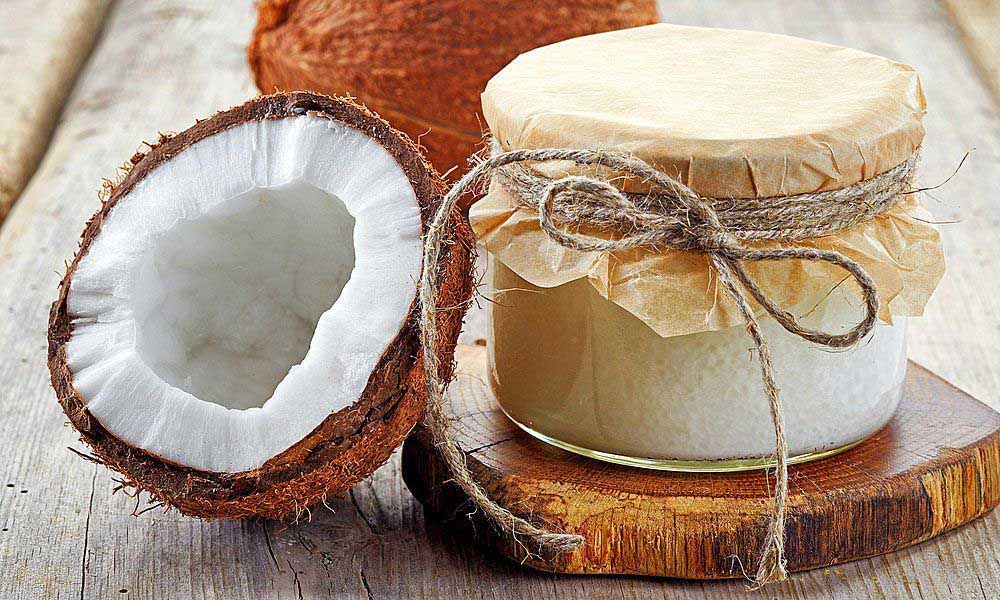
Coconut oil is a plant-based fat pressed from the meat of mature coconuts, used for cooking and baking, soap and balm making, and as a moisturizer for skin and hair. Below roughly 76 degrees Fahrenheit it sits firm and white; above that it turns clear and pours. Neither state means anything is wrong with the jar, and that one fact settles the question buyers ask most.
One choice decides most of what you get: how much processing the fat went through.
- If you want the tropical taste in cookies or curry, buy virgin (also sold as unrefined).
- If you fry, roast, or want a neutral fat, buy refined.
- If you need a liquid carrier oil for massage or a keto drink, buy fractionated, sold as MCT oil.
- If it is only for skin or hair, a cosmetic jar works, but a food-grade virgin jar does both jobs.
Virgin vs Refined Coconut Oil: Flavor and Smoke Point
Virgin coconut oil is pressed from fresh coconut meat without bleaching or deodorizing, so it keeps a distinct aroma and more of the plant’s antioxidant compounds. According to Harvard’s nutrition researchers, its smoke point is about 350°F, which points it toward baking, sautéing at medium heat, and topical use.
Refined coconut oil is filtered and deodorized until the taste is neutral. That lifts the smoke point to roughly 400 to 450°F, enough to stand in for vegetable oil when frying or roasting. Virgin versions scorch where refined holds up, and nobody wants a coconut taste in fried chicken.
Fractionated is a different product. Fractionated coconut oil has the lauric acid stripped out so it stays pourable at any temperature. It never sets solid and is not a one-for-one baking swap.
| Type | Flavor | Heat tolerance | Solid at 70°F | Best for |
|---|---|---|---|---|
| Virgin / unrefined | Distinct, tropical | Lowest (about 350°F) | Yes | Baking, skin, hair |
| Refined | Neutral | Highest (about 400 to 450°F) | Yes | Frying, roasting |
| Fractionated | Neutral | Low | No | Carrier, drinks |
Reading the Label Before You Pay
Only some label words are enforced. These are the ones worth paying for, and the ones that mean nothing.
Cold-pressed, expeller-pressed, and organic. The first two mean mechanical pressure only. Cheaper stock is often pulled from dried coconut meat with hexane, a petroleum solvent, then refined. USDA certified organic covers the crop and the processing, not the nutrition. A jar claiming none of these usually earned none of them.
“Pure” and nothing else. Pure carries no enforced definition here, so a jar sold as pure coconut oil can be heavily refined or a blend. Look for words that mean something: virgin, expeller-pressed, organic, food grade.
Anything hydrogenated or partially hydrogenated. Hydrogenation creates trans fat, which raises cardiovascular risk. Rare now, but it still turns up in cheap imported tubs and blends cut with palm oil. Read the ingredient panel, not the front.
Glass jar versus plastic tub. Glass holds no odor and survives repeated warming near a stove. Plastic weighs less, costs less, and comes in the large sizes that cut the per-ounce price. The unprinted trade-off: every scoop out of a big tub exposes the rest to air.
Culinary versus cosmetic grade. Tubs in the beauty aisle are often formulated for topical use with no food labeling at all. If you plan to cook with it, confirm the jar says food grade before starting a coconut bread recipe.
Assuming a melted jar has spoiled. Softening and re-hardening with the seasons is normal. Rancidity smells sour or sharp instead of faintly sweet, and the fat goes yellow. Trust your nose, not the texture.
Where to Buy Coconut Oil in Store
Supermarkets and Natural Grocers
Nearly every full-size supermarket shelves it in the cooking oil aisle beside the olive and canola oil bottles. Kroger, Publix, Safeway, Whole Foods Market, Sprouts, and Trader Joe’s each stock at least one organic virgin coconut oil; our list of the best things to buy at Whole Foods covers what else is worth picking up there. If that aisle is empty, check the international or Latin and Asian section, where it has been a staple for generations.
Walmart
Walmart gives the category a full shelf run and is the easiest place to find large tubs, including Great Value store-brand jars at the bottom of the price range. Browse their selection online to confirm local stock first.
Target
Target splits it across two departments: grocery jars in the food aisles, lotions and hair masks in beauty. The brand mix leans organic rather than bargain. Check availability on their site for same-day pickup.
Warehouse Clubs, Discounters, and Pharmacies
Costco and Sam’s Club sell the largest containers, usually one organic virgin option in a multi-jar pack. Per ounce that is the lowest in-person price going, so it pays off only if you bake often (it sits alongside other pantry staples on our what to buy at Costco list). Aldi stocks it on and off.
Call ahead at neighborhood-format and pharmacy-format stores. CVS and Walgreens keep small jars near the vitamins or in beauty, usually one size in one brand. Big tubs stay supercenter-only.
Starting with the gallon tub is a mistake. Per ounce it is the cheapest way to buy, but a first-timer who dislikes the taste is stuck with a hundred ounces. Small jar first, then size up.
Buying Coconut Oil Online
Amazon
Amazon carries the deepest range, from small glass jars of extra virgin coconut oil to gallon tubs and fractionated bottles sold as massage oil. Viva Naturals, Nutiva, and Garden of Life sell direct there. Sort by recent reviews rather than the lifetime rating; brands change suppliers between batches. Shop their full category #ad to compare sizes.
eBay
eBay is where multi-packs, discontinued sizes, and cosmetic-grade lots land after grocery chains drop them. Sellers set their own return terms, so check the rating and the best-by date before buying a case. Browse current listings to see what is around.
Etsy and Buying Direct
Etsy is the wrong shop for a plain cooking jar and the right one for handmade soap, lip balm, and whipped body butter. Makers who pair it with beeswax for salves are easy to find. Explore their marketplace for those items. Buying straight from a brand costs more per unit, but the lot tends to be fresher.
Health and Supplement Retailers
iHerb and Thrive Market stock organic and specialty brands that big-box grocery skips, and both ship nationwide. Thrive runs on a paid membership, so the math works only if you buy other staples there too. Both also carry the fractionated bottles that soap makers and people blending essential oils use as a base.
What One Tablespoon Means for Saturated Fat
One tablespoon of coconut oil carries about 120 calories and about 12 grams of saturated fat, according to Harvard’s Nutrition Source, which puts the oil at 80 to 90% saturated fat. That single spoonful is close to a full day’s limit for many adults.
Here is the worked math. The American Heart Association recommends keeping saturated fat to 5 to 6% of calories, about 13 grams on a 2,000-calorie diet. The federal Dietary Guidelines for Americans, published by the USDA and HHS, set a looser ceiling of under 10% of calories, about 22 grams. One tablespoon uses roughly 90% of the AHA budget or more than half of the federal one.
The AHA’s 2017 advisory on dietary fats reviewed seven controlled trials, found that the oil raised LDL cholesterol (the particle linked to cardiovascular disease and a higher risk of heart disease), and advised against using it. Coconut oil may lift HDL too, and Harvard notes a meta-analysis of 16 trials showing both LDL and HDL rose compared with nontropical vegetable oils. The net effect on cholesterol levels still compares poorly with olive oil, canola oil, or safflower oil, which supply more unsaturated and polyunsaturated fats.
The medium-chain argument on many labels has a gap. Coconut oil contains mostly lauric acid, a fatty acid that is absorbed more slowly and metabolized like long-chain fats, so Harvard concludes that research done on MCT oil, which is made of medium-chain triglycerides, cannot be applied directly to regular jars. Claims that it will help you lose weight or prevent Alzheimer’s disease are not established. Treat it as a flavorful fat, not a supplement.
So who should still buy a jar? Bakers chasing that coconut aroma, cooks who want a neutral fat for searing, soap and balm makers, and anyone with dry skin or frizzy hair. If you buy the fruit whole too, our guide on where to buy whole coconuts covers picking and storage.
What Buyers Report After Living With a Jar
Reviews on Amazon and Walmart.com converge on a short list of themes.
Praise centers on texture. Shoppers reviewing the large Viva Naturals and Great Value organic tubs repeatedly describe product that scoops smoothly instead of turning grainy or setting rock hard.
Two complaints recur. Packaging is the loud one: Walmart.com reviewers say plainly they would rather have glass than the standard plastic tub. The second is smell. Buyers who open a jar that smells sour or sharp, sometimes with a yellow tint, call the batch off, and that is the rancidity signal. Both point the same way: container choice and the smell test matter more than the front label.
Five Coconut Oil Jars Worth Buying
These five are chosen on label transparency, extraction method, and container, not marketing claims. Price ranges were last checked in September 2026.
Best overall: Viva Naturals Organic Extra Virgin. USDA certified organic, pressed mechanically with no solvent step, clean scent, sold in glass. Roughly $10 to $15 a jar. Check price on Amazon
Best budget: Nutiva Organic Virgin. Widely stocked, organic, expeller-pressed, usually the cheapest name brand on a physical shelf. Roughly $8 to $12 a jar. Check price on Amazon
Best large tub: Great Value Organic, the Walmart store brand. Sold refined and virgin, in the tub sizes that bring per-ounce cost down furthest. Plastic packaging is the trade-off. See it at Walmart
Best pourable option: Carrington Farms Liquid. Fractionated, so it never sets solid and measures like any liquid fat. Good in dressings and blended drinks, wrong for high-heat searing. Roughly $8 to $14 a bottle. Check price on Amazon
Best for skin and hair: Garden of Life Raw Extra Virgin. Unbleached and minimally processed, which is what you want in coconut oil for skin, lips, and hair care. Roughly $10 to $16 a jar. For a lighter feel on hair, compare it against castor oil first. Check price on Amazon
Decide first whether you want the flavor in the finished dish, because that answers virgin versus refined before you compare a price. Then buy the smallest jar your store carries and cook with it for two weeks. If it earns a spot, order the big tub online where the per-ounce price drops. That gets you the right coconut oil without a shelf of half-used jars.
FAQ: Buying Coconut Oil
Should you buy virgin or refined?
Buy virgin if you want the taste and scent to carry into the dish, refined if you do not. Refined handles higher cooking temperatures without scorching, which makes it the better frying fat. Plenty of kitchens keep both.
Where is it shelved in the grocery store?
Check the cooking oil aisle first, next to the olive and vegetable bottles. Second stop is the international or Latin and Asian food section. Some chains shelve organic jars in natural foods, and Target keeps cosmetic versions in beauty, which is why a store can look sold out when it is not.
How long does a jar last once it is open?
Go by the best-by date printed on the jar, which brands commonly set a year or two out from bottling. Kept in a cupboard away from heat and light, an opened jar holds most of that window. The printed date is a quality marker, not a safety cutoff, so judge by smell first.
Is coconut oil healthy?
Coconut oil is high in saturated fat and raises LDL cholesterol, so the American Heart Association advises against using it to improve cardiovascular health. That is the mainstream position, not a fringe one. As an occasional cooking fat it is fine, but trading away olive oil or safflower oil for it is not an upgrade.
Can it replace butter or vegetable oil in baking?
In most recipes, yes: use coconut oil one for one by volume. Solid product stands in for butter in cookies and quick breads, though the crumb comes out slightly firmer and the coconut flavor carries through if you use the virgin kind. Fractionated liquid versions are the exception, since they never set.
Is MCT oil the same thing?
No. It is fractionated, which strips out lauric acid and the longer fatty acid chains, leaving medium-chain triglycerides that stay liquid at any room temperature. A standard jar keeps the full mix of fats, so the two do not swap by volume in baking.
Editorial review: wheretobuyguides.com team. Retailer links, availability, and price ranges were last verified in September 2026. Health statements follow the AHA, Harvard Nutrition Source, and Dietary Guidelines for Americans guidance cited above.