
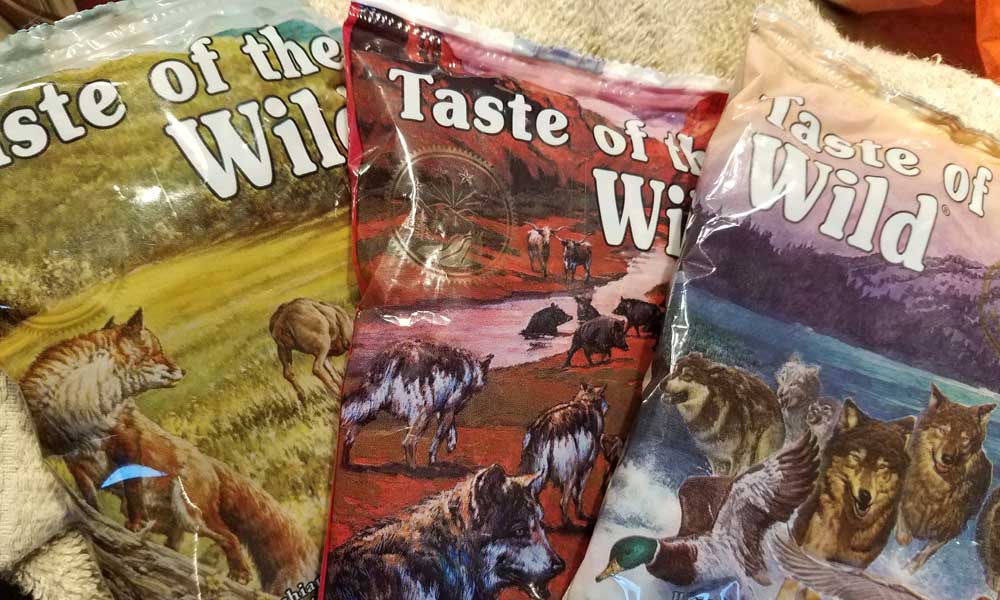
You can buy Taste of the Wild at independent pet stores, feed stores, Tractor Supply, and Petco, or online through Chewy, Amazon, and Petco.com. The brand does not sell direct to consumers. It points shoppers to authorized retailers through a store locator, so the quickest route to a specific recipe is to check that locator, then compare one or two online listings before you drive anywhere.
This page contains affiliate links. We may earn a commission at no extra cost to you.
Who Makes Taste of the Wild Pet Food
Taste of the Wild is a dog food and cat food brand built around proteins such as bison, venison, wild boar, and smoked salmon, owned outright by Diamond Pet Foods. Diamond is the trade name of Schell & Kampeter, Inc., a family-owned company that began in 1970 as a feed mill in Meta, Missouri, and is still run by the founding families.
According to the brand’s own FAQ, the food comes from seven U.S. facilities: two in California and one each in Missouri, South Carolina, Arkansas, Kansas, and Indiana. That matters for shoppers in one practical way. Diamond controls distribution, and the brand asks buyers to purchase only from authorized retailers, which is why the same recipe can be easy to find at a feed store and absent from a big-box shelf a mile away.
Every active formula carries a nutritional adequacy statement based on profiles from AAFCO, the Association of American Feed Control Officials, saying the food is complete and balanced for the life stages on the bag. Treat it as a regulatory floor, not a quality ranking. The appeal is high protein kibble with named meats at a mid-range price, below boutique labels.
Pick the Line and Recipe Before You Shop
Retailers stock the brand by line, so knowing which of the three lines you want narrows the search fast.
| Line | Carbohydrate base | Dry bag sizes | Best fit |
|---|---|---|---|
| Taste of the Wild grain-free (original) | Sweet potatoes, peas, legumes | 5, 14, 28 lb | Dogs with a vet-confirmed grain sensitivity |
| Ancient Grains | Sorghum, millet, quinoa | 5, 14, 28 lb | Owners who want the same proteins with grain |
| Taste of the Wild PREY | One protein, one carb source | 6, 8, 15, 25 lb | Elimination diets and food sensitivity trials |
Protein first. High Prairie leads with roasted bison and venison, Pacific Stream with smoked salmon, Southwest Canyon with wild boar, and Wetlands with roasted fowl. A novel protein only helps a sensitive dog if it is genuinely new to that dog.
Chicken-free is not quite chicken-free. The brand lists Pine Forest, Appalachian Valley Small Breed, Southwest Canyon, Sierra Mountain, Pacific Stream (adult and puppy), Ancient Stream, and Ancient Mountain as its chicken-free dog recipes, but notes they contain natural flavor derived from chicken. For a true chicken allergy, that footnote is the reason to talk to your vet before buying. High Prairie is not on that list.
Life stage. Bags read Puppy, Adult, Small Breed, or All Life Stages. If you’re raising a large breed puppy, read the AAFCO statement itself: a food suitable for growth of large dogs says it covers dogs expected to reach 70 pounds or more as adults.
What every bag shares. Probiotics differ for dogs and cats: canine recipes include K9 Strain Probiotics for digestive support, while feline recipes use Viables Probiotics. Antioxidants for immune health, omega 3 from fish oil, and mixed tocopherols as the preservative round out the panel. Canned recipes are meat and vegetables in gravy, sold as a meal or a food topper. If you want freeze dried raw instead of kibble, shoppers usually move to Stella & Chewy’s, or to Ziwi for air-dried food.
Where to Buy Taste of the Wild in Store
Local stock is patchy by design, so the brand’s store locator, which searches a radius of 5 to 100 miles from your ZIP code, is the first stop. These are the channels it most often turns up.
Independent Pet Shops and Feed Stores
Neighborhood pet shops and rural farm co-ops carry the widest spread of recipes, including PREY and canned food the chains rotate out. Shelf space follows local demand, so call before driving, and ask whether they will special-order a recipe they don’t keep on the floor.
Tractor Supply Company
Tractor Supply, the farm and ranch chain, lists high-volume dry dog recipes such as High Prairie Puppy in 5, 14, and 28 pound bags. Check their listings for your store, then head for the pet food aisle.
Petco
Petco runs a dedicated Taste of the Wild brand page and carries a rotating slice of the dry catalog. The website runs deeper than any one shelf, so check store inventory in the app and use buy-online, pick-up-in-store when the bag is in stock nearby.
PetSmart
Don’t count on it. A search for the brand on PetSmart’s site returns a similar-products page rather than brand listings, so PetSmart is not a confirmed stockist. If it is your only nearby pet store, run the locator first.
Buying Online: Chewy, Amazon, and Petco.com
Chewy carries the deepest online catalog, Amazon is convenient for Prime members, and Petco.com bridges online ordering with local pickup.
| Retailer | Catalog depth | Repeat-order program | Watch for |
|---|---|---|---|
| Chewy | Deep, feline and PREY included | Autoship | Free shipping threshold, so heavy bags help |
| Amazon | First-party and marketplace mixed | Subscribe & Save | Seller identity on every listing |
| Petco.com | Moderate, mostly dry recipes | Repeat delivery | Same-day pickup where stocked |
Chewy. The pet-only online retailer lists recipes the big-box chains drop, including the feline lineup and wet dog food cases. Autoship takes a small percentage off recurring orders, and one 28 pound bag normally carries an order past the free shipping line.
Amazon. The marketplace carries most active recipes, often in multi-packs. Confirm the listing ships from Amazon or a recognized pet retailer. Reseller stock is where stale or heat-damaged bags turn up, and the brand only stands behind authorized sellers.
Petco.com. Petco.com pairs its online catalog with same-day pickup where the item is stocked locally.
The brand’s site. The manufacturer site does not sell bags, but it hosts the store locator, a retailer question line, and every recipe’s guaranteed analysis. Use it to confirm a formulation is still current before you order.
Is Taste of the Wild Good for Your Dog?
For most healthy adult dogs it is a reasonable mid-priced choice with real meat first on the panel, but expert opinion splits on grain-free diets. Dog Food Advisor gives the brand an overall rating of 4.5 stars, with its canned, PREY, and Ancient Grains reviews at 5 stars. Owners often shorthand it as TOTW, and reviewers on retail sites praise palatability with picky eaters and coat condition after a few months; the recurring complaint is loose stool after a switch.
The cooler view comes from veterinary nutrition. WSAVA, the World Small Animal Veterinary Association, publishes questions owners can put to any manufacturer: whether a qualified nutritionist formulates the food, whether it has been through feeding trials, and how quality is controlled. Vets who lean on that checklist often steer clients toward larger food brands such as Purina or Science Diet. Ask Diamond the same questions on the phone line listed by the brand, then decide.
Then there is the heart question. The U.S. Food and Drug Administration investigated a possible link between diets high in peas and legumes and canine dilated cardiomyopathy (DCM), a disease of the heart muscle. Its 2019 update named Taste of the Wild in 53 DCM reports filed from 2014 to April 2019. In December 2022 the agency said the reports did not establish a causal relationship and that it would not publish more updates until there was meaningful new science. Unresolved, not disproven. If your breed carries heart risk, raise it with your vet before buying; some owners move to the Ancient Grains line, which uses grains in place of the grain-free carbohydrate base.
Recalls, Lawsuits, and Label Claims
- One recall, in 2012. Taste of the Wild dry food was part of Diamond’s voluntary Salmonella recall of product made between December 2011 and April 2012. The brand says later testing found no Taste of the Wild product contaminated and reports no recalls since.
- Contaminant lawsuits. A class action filed in federal court in California in August 2018 (Grossman v. Schell & Kampeter) alleged undisclosed heavy metals, pesticides, and BPA, and a similar suit followed in Illinois in 2019. Neither produced a recall, and no court finding that the food was unsafe has been published.
- Marketing words. Natural ingredients, cage-free, and ancestral have little legal weight on a pet food bag. The AAFCO statement, the guaranteed analysis, and whether a named meat meal or a generic by-product carries the protein tell you more.
Switching Foods Without an Upset Stomach
Most digestion complaints about a new food trace back to a rushed switch rather than to the bag. Run the changeover across ten days:
- Days 1 to 3: serve 25 percent new food, so gut bacteria adjust first.
- Days 4 to 7: move to a 50/50 mix. If stools loosen, hold here two extra days.
- Days 8 to 10: serve 75 percent new, then full servings once stools are normal.
Buy the smallest bag for the trial. A 5 pound bag costs more per pound, but it won’t leave you holding 28 pounds of food your dog refuses.
Five Recipes Worth Starting With
These five cover what buyers ask about most, chosen for protein variety and wide availability. Prices move often, so check the current listing.
Best overall: Pacific Stream Canine Recipe with Smoked Salmon. One fish protein suits most adult dogs, including many that react to chicken or beef, and fish oil supplies the omega fatty acids behind the coat reports. Check current pricing on Amazon.
Best for big appetites: High Prairie Canine Recipe with Roasted Bison and Venison. The flagship recipe and the one most stores carry, popular with dogs that snub milder proteins. See options on Amazon.
Best novel protein: Southwest Canyon with Wild Boar. Few dogs have eaten boar before, useful while you narrow down a suspected food sensitivity. Browse the listings.
Best wet option: Wetlands Canine Formula with Roasted Fowl. A canned recipe in gravy for full meals or topper duty. View cases on Amazon.
Best for a puppy: High Prairie Puppy Formula. Bison-based kibble formulated for growth. Check the AAFCO line if your pup will top 70 pounds. Check the puppy formula.
Start with the store locator to see whether a shop near you carries your recipe, since local pickup avoids shipping a heavy bag. If nothing local stocks it, order from Chewy or Amazon and set up a recurring delivery. Whichever way you buy Taste of the Wild, take one small bag home first and run the ten day transition. Our guide to where to buy Blue Buffalo dog food covers the closest rival, and our page on where to buy dogs helps if the household is still growing. These recipes are formulated for canines and felines only.
Frequently Asked Questions
Is it made in China?
No. The brand says its food is made in seven Diamond facilities in the United States, in California, Missouri, South Carolina, Arkansas, Kansas, and Indiana. Some vitamins and trace minerals in pet food are commonly sourced internationally.
Are the recipes suitable for puppies?
Yes, if the bag says so. The puppy recipes and the All Life Stages recipes are labeled for growth, while Adult recipes are labeled for maintenance only. For large breed puppies, confirm the statement covers dogs that will weigh 70 pounds or more as adults.
Is it cheaper on Chewy or Amazon?
Neither is consistently cheaper. Both discount repeat orders through Autoship and Subscribe & Save, so seller identity, stock, and shipping speed usually decide it. Compare the same bag size, because multi-packs can hide a higher per-pound price.
Can cats eat the dog recipes?
Not as a regular diet. Dog recipes are formulated to canine profiles, and cats need more protein and nutrients such as taurine than dog food is built to supply. The separate feline range includes Rocky Mountain Feline with roasted venison and Canyon River Feline with trout.
Sources Behind This Guide
Facts on this page come from the brand’s FAQ and store locator, FDA’s DCM investigation page, AAFCO nutrient profile guidance, Dog Food Advisor’s brand review, and retailer listings. Diet decisions belong with your veterinarian.