
Sandpaper is stocked at Home Depot, Lowe’s, Ace Hardware, Menards, Harbor Freight, Walmart, and Target, sold online through Amazon and specialty dealers such as Rockler, Woodcraft, Klingspor, and Eastwood, and shipped factory-direct by makers like Red Label Abrasives. Finding a pack is easy. Finding the right one is not: these sellers carry different grain types, grit ranges, and brands, so settle the job’s grit range and grain material first, then pick the store that actually shelves them.
This page contains affiliate links. We may earn a commission at no extra cost to you.
Quick routing: for wood and paint prep in common grits, any home center works. For 1000 grit and finer, go to an auto parts counter or order online. For specialty grains, Mirka mesh, or odd belt sizes, a specialty dealer or a direct manufacturer is the shorter path.
How to Choose the Right Sandpaper Before You Shop
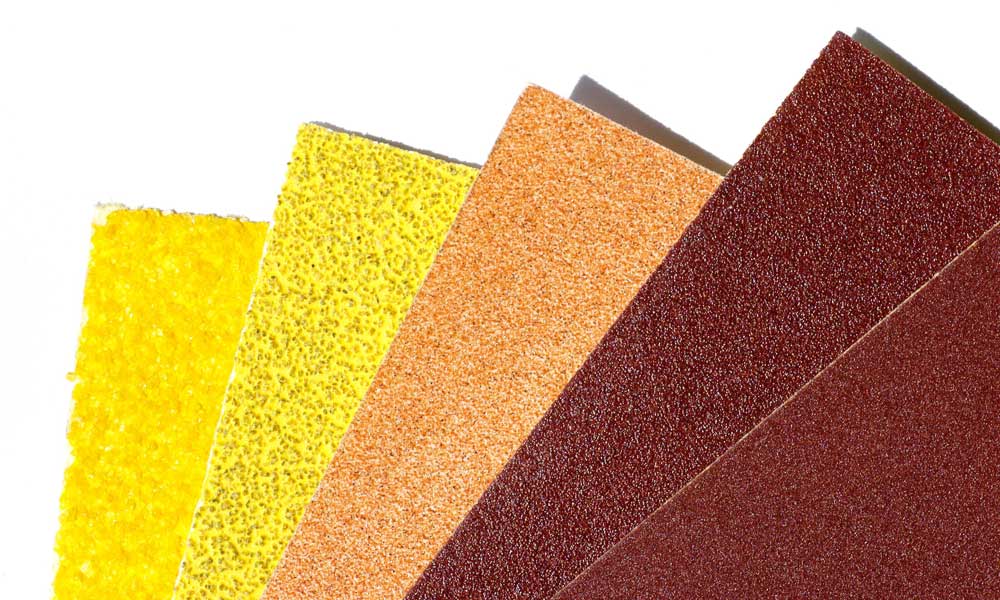
Sandpaper, also called abrasive paper, is a paper, cloth, or film backing coated with bonded abrasive grains, used to cut, smooth, and polish wood, metal, drywall, plastic, and painted surfaces. Read two things on the back of the sheet before the logo on the front: the grit number and the grain.
Grit size. The number describes the size of the abrasive particles. Low numbers cut fast; high numbers are finer and refine or buff a surface. Skipping more than one step leaves scratches that show through stain.
Backing material. Paper backing comes in weight classes A, C, D, E, and F, with A the lightest and F the heaviest. Light paper bends around a contour for hand sanding; C or D weight holds up on sanding blocks. Cloth backings survive belt sanders, and waterproof backings are what make wet and dry sheets possible.
Stearated coating. Stearated sheets carry zinc stearate, a dry lubricant that reduces clogging when you sand paint, primer, and finish coats. Skip them under a water-based topcoat, since residue can affect adhesion.
Which scale is printed. US shelves mix CAMI numbers (the North American scale) with FEPA numbers, which carry a P prefix. The two agree in the medium range and drift apart as they get finer. Klingspor’s conversion chart puts CAMI 220 at about 66 microns and P220 at about 65, close enough to swap. At the fine end it splits: P400 is about 35 microns, roughly the same as CAMI 320, while CAMI 400 is about 23.6 microns.
| Grit Range | Category | Best Use |
|---|---|---|
| 40 to 60 | Coarse | Stripping paint, heavy stock removal |
| 80 to 120 | Medium grit | Smoothing lumber, shaping wood, old finish |
| 150 to 180 | Fine grit | Final sanding before stain, drywall patches |
| 220 to 240 | Very fine | Between coats of finish, scuff work |
| 280 to 320 | Extra fine | Polishing oil and lacquer finishes |
| 400 to 600 | Super fine | Wet sanding primer, deburring metal |
| 800 to 3000 | Ultra fine | Automotive paint correction, mirror finish |
Grain Types and Formats: Matching the Abrasive to the Tool
Four types of sandpaper grain cover nearly every project, and each one sells best in a different aisle.
| Grain | Best For | Trade-off |
|---|---|---|
| Aluminum oxide (alumina) | Wood and metal, plastic, paint | Can burnish bare hardwood |
| Garnet | Bare hardwood before stain | Softest grain, wears fastest |
| Silicon carbide | Wet sanding, glass, stone, fine metal polishing | Too brittle for heavy removal |
| Ceramic and zirconia | Hardwood, welds, belt sanders, hard metal | Highest price per disc |
Garnet is the traditional grain for wood finishing, and emery is the old standby for metal. Silicon carbide comes in very fine grit sizes, which is why it dominates wet sanding. Aluminum oxide sandpaper is the all-rounder most home centers stock deepest.
- 9 by 11 sheets: the size to hand sand a flat panel, torn into quarters for a block.
- Hook and loop discs, 5 and 6 inch, for a random orbital sander from Dewalt, Makita, or Festool.
- Quarter and third sheet clip-on pads for palm sheet sanders.
- Belts in 3 by 21 and 4 by 24, the common benchtop and portable sizes.
- Rolls for pole sanders, plus sponges, nylon-backed sanding pads, and drums for rotary tools.
Mesh discs connected to a shop vacuum also pull particulate matter through the abrasive instead of throwing it into the room, which matters more indoors than in a garage.
A Worked Grit Sequence for Refinishing Furniture
A painted dresser headed for stain needs three grit steps, which tells you to buy a coarse, a medium, and a fine pack rather than one big box of a single number. Our where to buy Sherwin-Williams paint guide covers the finish side.
- Cut the old finish with 60 or 80 until you reach clean substrate.
- Level the surface with 120, working with the grain on wood.
- Move to 150 or 180 for stain, or 220 for paint, then vacuum and wipe.
Why the order matters: jumping from 80 straight to 240 hides coarse scratches instead of removing them, and they reappear the moment stain hits the wood. If the project is a floor, our guide to where to buy wood flooring covers the material side.
Where to Buy Sandpaper In Store
Every general hardware chain stocks basic aluminum oxide sandpaper. Selection depth, brands, and how high the grit range goes are where they split.
Home Depot
Home Depot, the largest home improvement chain in the US, carries a wide DIY range, including Diablo, Gator, and Linzer in sheets, sponges, and belts. Diablo’s SandNET mesh abrasives, a nylon net coated in a ceramic grain blend, are a Home Depot staple. Sandpaper sits under paint supplies, not hardware. Check the category page, since stock is listed per store.
Lowe’s and Ace Hardware
3M splits its consumer lines by retailer. Its abrasives page lists Pro Grade Precision as sold exclusively at Lowe’s and places the SandBlaster family at Ace Hardware and Target, though Lowe’s also lists SandBlaster Pro products. Browse their selection. Ace keeps a tighter range but does well on small assorted packs and is handy when the list also includes where to buy tools or a measuring tape.
Harbor Freight and Menards
Harbor Freight sells house-brand abrasives at low sticker prices, which suits rough carpentry and deck work where sheets get used up fast. See the lineup. Menards, the Midwest home improvement chain, stocks the common brands in sheets and sponges.
Walmart, Target, and Auto Parts Counters
Walmart and Target carry name-brand multi-packs in the paint and hardware aisles. O’Reilly Auto Parts and similar counters keep wet and dry sheets, the fastest local route to 1000 grit or finer. Call ahead above 400, since general hardware stores stock the high grit range thinly.
Where to Buy Sandpaper Online
Order online when you need a number the local aisle skips, a bulk box, a specialty grain, or a size no store shelves.
Amazon
Amazon, the largest online retailer in the US, lists most of what the big boxes carry plus import brands, contractor packs of sandpaper sheets, and grades above 1500. Read the abrasive material in the listing title, because unlabeled assortments are common. Browse the selection.
Rockler, Woodcraft, Klingspor, and Empire Abrasives
Specialty woodworking dealers stock Mirka, Klingspor, and Festool, plus the traditional grains the big boxes rarely shelve. Expect a higher price per sheet in exchange for longer grain life. Rockler and Klingspor ship direct, and Empire Abrasives sells in bulk counts.
Eastwood, Northern Tool, and Red Label Abrasives
Eastwood, an automotive restoration supplier, and Northern Tool carry silicon carbide wet and dry paper and dual action discs, the shortest path to 3000 for paint correction. Red Label Abrasives makes belts, discs, and rolls at its Michigan factory, sells factory-direct, and will custom manufacture odd sizes for older or shop-built machines. For the rest of a car project, see where to buy car parts.
Who Makes the Brands on the Shelf
A handful of manufacturers sit behind most sandpaper labels, and knowing the parent explains where each line is sold.
- 3M: the Minnesota manufacturer behind SandBlaster, Pro Grade Precision, Wetordry, and Cubitron ceramic abrasives.
- Norton: the Worcester, Massachusetts abrasives maker owned by French building-materials group Saint-Gobain since 1990.
- Diablo: a Freud brand that came to Bosch when Bosch agreed to buy Freud’s accessory business in December 2008.
- Mirka: a division of KWH Group, a family-owned company in Vaasa, Finland. Mirka introduced Abranet mesh in 2001.
- Red Label: a US maker producing in Michigan and selling direct.
If a listing will not name the maker or the abrasive material, treat that as the answer. Cheap unbranded bulk lots are where weak resin bonds and grain shedding turn up.
Returns and Three Buying Mistakes
Unopened sandpaper packs are easy to return at the big boxes. Home Depot’s posted policy allows most merchandise back within 90 days with proof of purchase, and Lowe’s accepts most new, unused items within 90 days with a receipt. Red Label advertises a 100% money-back guarantee on its products. Keep packs sealed until you know the grit is right.
Buying one number for three jobs. A single grit cannot strip, level, and finish. Buy at least three steps.
Mixing CAMI and FEPA at the fine end. Swapping a CAMI 400 sheet for P400 is a jump of more than 10 microns, enough to leave visible scratches on a clear finish. Stay on one system above 320.
Dry sanding silicon carbide paper on paint. It works, but it clogs fast. Water carries away swarf, so use it wherever the backing is rated for it.
Five Picks Matched to Common Sanding Jobs
Chosen on grain type, format availability, and how many retailers carry them. Prices change often, so compare per-sheet cost at checkout rather than per-pack.
Best overall: 3M SandBlaster Pro assorted pack. A multi-grit box spanning stripping through finishing, built to hold its cut through paint and primer. Where to buy: Amazon | Home Depot | Lowe’s | Walmart
Best budget: Gator multi-grit sheets. A low cost per sheet among the name brands. Use it for the rough passes and buy a premium sheet for the last one. Where to buy: Amazon | Home Depot | Lowe’s | Harbor Freight
Best professional: Mirka Abranet mesh discs. Open mesh pulls dust through the abrasive instead of trapping it, which reduces clogging. Pair it with a vacuum-ready random orbital sander. Where to buy: Amazon | Rockler | Woodcraft | Empire Abrasives
Best for woodworking: Klingspor PS 10 garnet sheets. Klingspor describes this sheet as a softer-cutting paper for hand sanding and fine finish work, a good match for bare hardwood headed for stain. Stock comes and goes, so check more than one dealer. Where to buy: Amazon | Klingspor Online | Woodcraft | Rockler
Best for auto body: 3M Wetordry automotive sheets. Silicon carbide on a waterproof backing, rated for wet or dry use on primer, clear coat, and final polish. Where to buy: Amazon | Eastwood | Northern Tool | O’Reilly Auto Parts
Start with the job, not the brand. Pull your coarse, medium, and fine numbers off the chart above, buy inexpensive sheets for the first pass, and spend more from 150 up, where scratch quality shows. Above 600, order sandpaper online or drive to an auto parts counter instead of hunting the paint aisle.
Grit and Grain Questions Buyers Ask
Which is rougher, 80 or 120 grit?
80 is rougher. Lower numbers mean larger abrasive particles, so 80 grit removes material faster and leaves deeper scratches than 120. Consumer packs start near 40 and stop near 3000.
What is another name for sandpaper?
Abrasive paper is the industry term. Glasspaper, garnet paper, and sand paper all appear on packaging. Emery cloth is the cloth-backed relative, coated with emery and used mostly on metal.
Which numbers strip paint off wood?
Start at 60 or 80, move to 120, then finish at 150 or 180. One caution: homes built before 1978 may carry lead paint, which should not be dry sanded. The EPA Renovation, Repair and Painting rule governs paid contractors and landlords working in those homes, so test the paint before you start.
What works best on drywall?
Use 120 or 150 on a pole or hand sander to feather joint compound, then a very fine grade for the last pass. A sponge leaves fewer swirl marks in inside corners.
Do 220 and P220 mean the same thing?
Close enough at that number, and not higher up. On Klingspor’s chart the two sit about 1 micron apart at that grade, but P400 (about 35 microns) is much coarser than CAMI 400 (about 23.6 microns). Stay on one system for the fine grades.
Is wet sanding worth it on a DIY paint job?
Yes, above 600 on primer or automotive finish. Water carries away swarf, prevents clogging, and leaves a finer scratch pattern than dry work. Wet sand only with sheets labeled for wet and dry sanding, since ordinary paper backing falls apart.
Reviewed by the wheretobuyguides.com editorial team. Retailer lines, brand ownership, return policies, and grit conversions checked October 2026.