
Brewers yeast is easiest to buy online, from Amazon, supplement retailers such as iHerb and Vitacost, or the brand’s own site, and harder to find on a store shelf. In person, check the vitamin aisle, never the baking aisle. Before you pick a seller, decide which product you actually want: the same name covers a deactivated supplement, live beer yeast, and a pet chew, and buying the wrong one is the most common mistake in this category.
This page contains affiliate links. We may earn a commission at no extra cost to you.
What Brewers Yeast Is, and the Two Products People Confuse With It
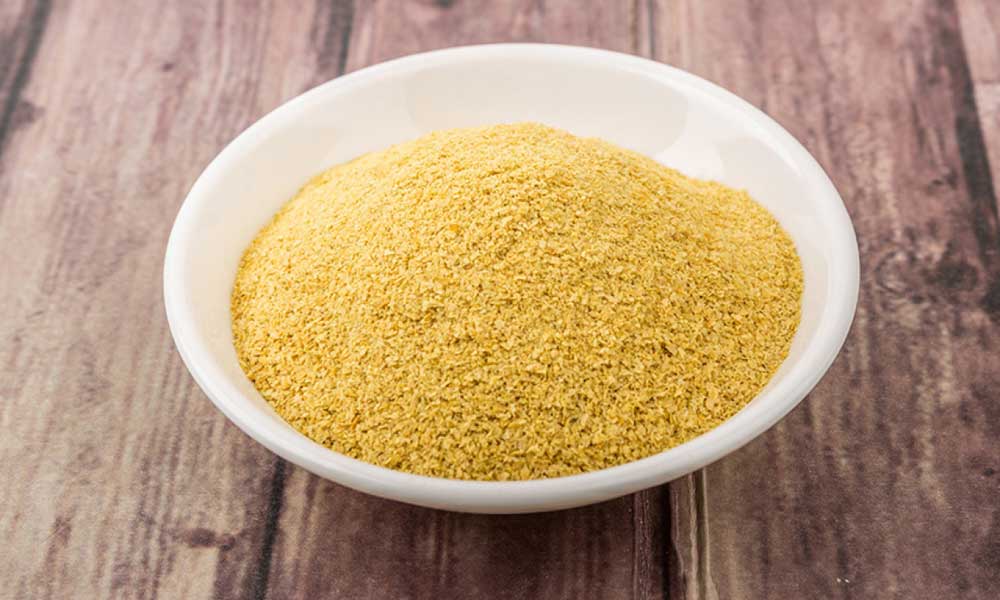
Brewer’s yeast is a deactivated form of Saccharomyces cerevisiae, the single-celled fungus that ferments beer, dried and sold as a dietary supplement in powder, flake, and tablet form. The yeast cells are killed during drying, so nothing in the jar is alive and it cannot raise bread dough. NOW Foods, for example, describes its powder as yeast cultivated on malted barley during beer production, separated from the beer, then roller dried and debittered.
Four groups shop for it. Breastfeeding parents bake the powder into lactation cookies, treating it as a galactagogue (a food or herb believed to increase milk production). Vegan and vegetarian shoppers buy it as a good source of protein, selenium, and B vitamins. Home brewers want something else entirely: live pitching strains from Fermentis, Lallemand, Wyeast, or White Labs. Dog owners buy chewable tablets sold for skin and coat.
| Type | What it is | Alive? | Taste | Typical use |
|---|---|---|---|---|
| Brewer’s | Dried by-product of beer brewing | No | Bitter unless debittered | Supplement, lactation cookies |
| Nutritional | Grown on molasses as a food additive, often fortified | No | Savory, cheesy, mild taste | Vegan seasoning, sauces |
| Baker’s | Live culture, active dry or instant | Yes | Neutral | Bread and dough only |
All three come from the same species, which is why the confusion never goes away. Processing is the difference. Nutritional yeast is grown deliberately as a food and is usually fortified, so its panel can show vitamin B12 numbers an unfortified brewing by-product does not match. Baker’s yeast is still viable, and eaten raw it keeps fermenting in the gastrointestinal tract, which commonly causes gas. Torula is a different species again, sold mostly in savory seasoning blends. None of them swap cleanly for the others.
Does It Actually Raise Milk Supply?
The evidence says probably not, at least not directly. The National Institutes of Health LactMed database reports that no valid human studies show an effect on breast milk supply. Studies in dairy animals hint at higher yields, but LactMed credits that to better nutrition, mainly extra B vitamins and chromium, rather than anything specific to lactation.
Perception is a different story. LactMed cites a US survey of 190 mothers in which 46% believed the supplement increased their supply, and a placebo-controlled trial in New Zealand that found no change in milk composition but better ratings of perceived supply. A larger multicentre randomised trial in mothers of preterm infants, the BLOOM study, is measuring expressed milk volume directly.
Side effects reported by nursing mothers are mostly gastrointestinal. In an Australian survey summarized by LactMed, 11% of users reported an adverse reaction, most often weight gain, stomach cramps, dry mouth, or nausea. If low supply is the real worry, an IBCLC lactation consultant can check latch, pumping schedule, and feeding frequency, which move the needle far more reliably than any powder.
Five Label Checks Before You Order
Five details on the label decide whether a bag gets finished or abandoned: bitterness, format, wheat content, the nutrient panel, and serving size.
Bitter-free or standard. Untreated yeast tastes sharply bitter because hop compounds carry over from the beer. Pick a bitter-free grade if it is going into water, juice, or a smoothie, since taste is why half-full bags end up in the trash.
Powder, flakes, or tablets. Powder disappears into baked goods and lets you adjust the dose. Flakes suit sprinkling. Tablets solve the taste problem, but a serving is several tablets.
Wheat and gluten. Many products are grown on barley or wheat, and the labels say so. NOW Foods lists wheat on its powder, and Solgar’s tablets and unflavored 14-ounce powder both carry a “contains wheat” statement. In the United States a food can be labeled gluten free only if it holds under 20 parts per million of gluten, so with celiac disease, buy only a bag that makes that claim and ask the seller for the lot’s test result.
The nutrient panel. Compare what each label declares per serving: thiamine, riboflavin, niacin, chromium, and selenium. Watch for added B12. Solgar’s 7 1/2 Grains tablets add vitamin B12, while its powder is sold as unfortified, so two products from one brand can read very differently. A proprietary blend that hides the amounts tells you nothing.
Serving size. NOW Foods suggests 2 tablespoons a day, about 28 servings per one-pound bag. Solgar’s 250-tablet bottle uses six tablets per serving, so it holds 41 servings, not 250. That difference is why sticker price alone misleads.
Still unsure which jar you are holding? Three checks settle it.
- Read the front panel for the words inactive, deactivated, or non-leavening. Active dry and instant are alive and belong in bread.
- Note the aisle. Supplements sit with vitamins, leavening sits near the flour, pet formulas sit in pet care.
- Check the nutrition facts for B12. A fortified product declares a large daily value; an unfortified one declares little.
How to Compare Listings by Cost per Serving
Divide the listed price by the servings-per-container figure on the back label and compare that number, not the bag price. Prices change often, so run the math on the day you buy.
- Powder: price divided by roughly 28 servings per pound at a 2-tablespoon dose. Bigger bags usually win, but only if you will finish them.
- Tablets: price divided by count, then multiplied by tablets per serving. A 240-count bottle at three tablets a serving is 80 servings.
- Multi-packs: check who ships them. A two-pack from a third-party seller can cost more per serving than one bag bought direct.
One place extra money is wasted: if the powder is going into cookie dough with oats, brown sugar, and chocolate chips, a premium bitter-free grade buys you little, because the recipe already masks the flavor.
Where to Buy Brewers Yeast Online
Online is the better channel: store shelves rarely hold more than one brand, while online sellers carry every format and size.
Amazon
Shop on Amazon #ad for the widest range, including bags from Anthony’s, NOW Foods, and Legendairy Milk. Sort reviews by most recent, then search the review text for the word bitter, since taste complaints tend to cluster on specific lots.
iHerb and Vitacost
Both specialize in supplements and list Solgar’s tablets, and Vitacost also carries Solgar’s unflavored powder. Open the supplement facts image on each listing and read the allergen line before you add a bag to the cart.
Brand direct sites
Legendairy Milk, Anthony’s Goods, NOW Foods, and Solgar all sell from their own sites. Going to the manufacturer is the reliable route to a certificate of analysis or a sourcing answer, which marketplace listings rarely provide.
Walmart.com
Check availability at Walmart, the largest brick-and-mortar retailer in the United States. Many listings in this category, including NOW two-packs and Pure Naturals tablets, come from marketplace sellers rather than Walmart itself, so check the “sold and shipped by” line before ordering.
Pet and homebrew specialty sites
Chewy, Tractor Supply, and 1-800-PetMeds carry NaturVet Brewer’s Dried Yeast chewables for dogs and cats. For fermentation, Northern Brewer stocks Fermentis dry yeast alongside White Labs and Wyeast liquid cultures, and MoreBeer publishes charts matching equivalent strains across labs. Do not cross the aisles; the products share a name and nothing else.
Where to Find It In Store
Look in vitamins and supplements, not baking. Stock varies between locations of the same chain, so check the store’s app for in-stock status before driving over.
Target and H-E-B
Both list Legendairy Milk’s 16-ounce yeast powder, the lactation-branded option most likely to sit near nursing and baby supplies. In Texas, H-E-B is the grocery chain worth checking first.
GNC
Browse the selection at GNC, where the main listing is a 240-tablet bottle at three tablets per serving. Its label tells anyone allergic to yeast not to use it and asks pregnant or nursing users to consult a physician first.
Natural grocers and health food stores
Whole Foods, Sprouts, Natural Grocers, and independent health food shops sometimes carry it in the supplement section, but none of them lists it reliably online, so call ahead. A trip there is still a good chance to pick up kefir or chia seeds, and the site’s roundup of the best things to buy at Whole Foods covers what else earns the drive.
Pet stores and homebrew shops
Pet chewables sit in pet health, nowhere near human supplements. Local homebrew stores keep live yeast in a refrigerated case.
Picks by How You Will Take It
Each pick below matches one way of taking it. Confirm the current label before ordering, since formulas change.
Stirring into drinks: Legendairy Milk Brewer’s Yeast Powder. Retail listings describe it as naturally debittered and unflavored with a mild taste, and it is marketed for lactation cookies and drinks. Pro: least likely to be abandoned for taste. Con: the lactation branding promises more than the evidence supports. Check price on Amazon
Gluten-sensitive buyers: Anthony’s Premium Yeast Powder. Retail listings describe it as batch tested and verified gluten free and made in the USA. Pro: the strongest gluten claim of the four. Con: the listings do not show lot test results, so ask the brand for one if you have celiac disease. See it on Amazon
Skipping the taste: Solgar 7 1/2 Grains tablets with Vitamin B12. A 250-tablet bottle, six tablets per serving, 41 servings, labeled non-GMO with added B12. Pro: no mixing or measuring. Con: contains wheat, and six tablets a day is a lot to swallow. Check price on Amazon
Baking and reordering: NOW Foods yeast powder. A one-pound bitter-free powder, about 28 servings, sold direct and across Amazon and Walmart.com. Pro: easy to reorder from several sellers. Con: contains wheat. See it on Amazon
Start by reading the allergen line, because the wheat question rules out more products than price does. Then pick the format: bitter-free powder for drinks, any powder for baking, tablets if you hate the taste. Divide price by servings on two listings, buy the smallest size first, and move to a bigger bag of brewers yeast only once you know you will finish it.
Frequently Asked Questions
Does brewers yeast go bad?
Yes, slowly. Go by the best-by date on the package and follow the storage line on the label, which usually asks for a cool, dry spot away from light. Clumping, a stale smell, or a sharper bitter edge than usual means it is past useful.
Which aisle is it in at the grocery store?
Vitamins and supplements, not baking. Pet versions sit separately in pet care. At natural grocers such as Whole Foods and Sprouts, look in the supplement section rather than the bulk bins, and use the store app to confirm stock first.
Is brewer’s yeast gluten free?
Not automatically. Many products are grown on barley or wheat, and brands such as NOW Foods and Solgar list wheat on the label. In the United States a product can be labeled gluten free only if it holds under 20 parts per million of gluten, so that label claim is the one that carries weight.
Can you add it to a dog’s food?
Yes, and NaturVet and others sell chewables made for dogs and cats, though the popular claim that it repels fleas is not well supported by controlled research. Dose by body weight per the label and check the ingredients for garlic, which some blends include and which is toxic to dogs in quantity. Ask a veterinarian if your dog has a medical condition.
Can you use the supplement to brew beer?
No. The supplement is deactivated, so it cannot ferment anything. Beer needs live pitching strains, ales from Saccharomyces cerevisiae and most lagers from Saccharomyces pastorianus, sold by homebrew suppliers in sachets or liquid vials. The dead powder serves only as a fermentation nutrient.
Who should skip it?
Anyone with a yeast allergy, an inflammatory bowel condition such as Crohn’s disease, or a weakened immune system should treat this as a conversation with a healthcare provider rather than a shelf decision. The same applies if you take regular medication or are pregnant. The Food and Drug Administration does not approve dietary supplements for safety or effectiveness before they are sold.
About This Guide
Reviewed by the wheretobuyguides.com editorial team. Retailer listings and product labels reviewed October 2026. Written with reference to the National Institutes of Health LactMed database. This page is general shopping information, not medical advice. Ask your doctor, pharmacist, or a lactation consultant before starting any supplement.