
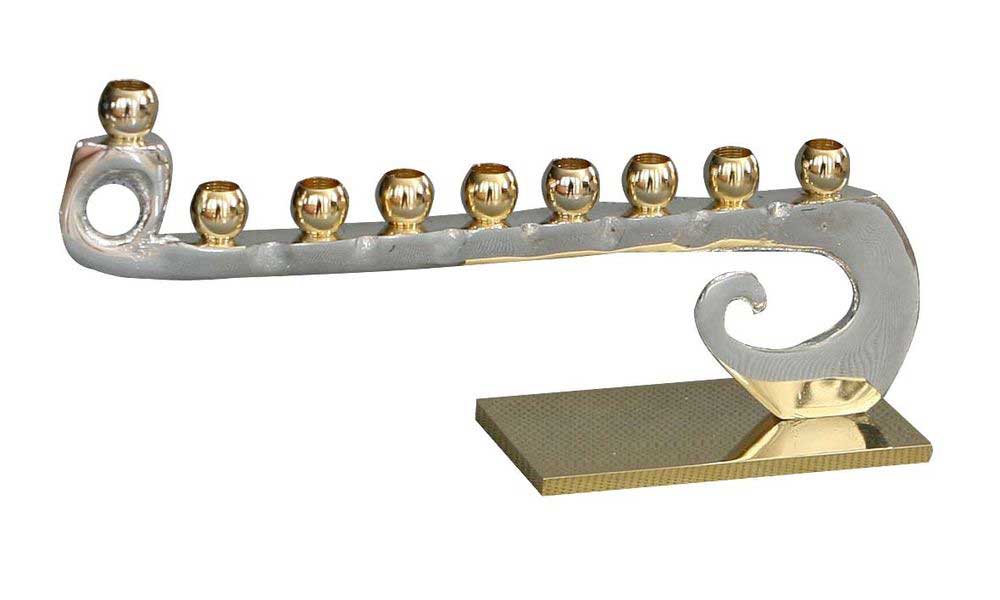
Buy a menorah with nine holders: eight in a straight, level row plus one shamash set apart. That is the Hanukkah version, and it is the one almost every holiday shopper actually needs. The seven-branched Temple menorah is a different object that sells in the same search results at similar prices. Hanukkah 2026 begins at sundown on Friday, December 4, so order by mid-November if the piece ships from Israel or comes from a small maker.
This page contains affiliate links. We may earn a commission at no extra cost to you.
Hanukkah Menorah vs. Temple Menorah: Count the Branches
A menorah is the Hebrew word for a lamp or lampstand, and in English it names two objects. The nine-branched menorah lit for the eight days of the festival is properly a chanukiah (also spelled hanukkiah). The seven-branched menorah is the lampstand that stood in the Holy Temple, and today it works as a Jewish symbol rather than as holiday equipment.
| Feature | Temple menorah | Chanukiah |
|---|---|---|
| Lights | 7 branches | 8 in a row, plus the shamash |
| Original material | Hammered from one piece of pure gold | Any fire-safe material |
| Fuel | Pure olive oil only | Olive oil preferred, wax tapers common |
| When lit | Daily, in the Temple | After dark, one more light each night |
| Use today | Symbol, art, the emblem of Israel | Lit at home every year |
According to the Hebrew Bible, Moses had the first menorah made for the Tabernacle in the wilderness, and the Book of Exodus describes a central stem with six branches. Lamps of the menorah burned in the First Temple (Solomon’s Temple) and later in the Second Temple in Jerusalem. When the Maccabees retook the Temple from the Seleucid king Antiochus IV around 164 BCE, the relighting of that lampstand became the story behind the festival, including the miracle of the oil that lasted eight days.
After the destruction of Jerusalem in 70 CE, the menorah was taken to Rome as war spoil, and the Arch of Titus in Rome still shows soldiers carrying it in a triumphal procession. What happened to the original menorah after that is unknown. Its image survived through the Jewish diaspora on synagogue mosaics, coins, and graves, which is why seven-lamp reproductions still sell well as display pieces.
What Makes a Menorah Fit for Lighting
A menorah is fit for the mitzvah when each light is clearly distinct, the eight sit in a row, and the shamash is visibly separate. Chabad.org’s menorah guide adds that any fire-safe material works for lighting the Chanukah menorah. Check these four points in the product photo, not the description.
- Count nine candle holders. Seven means a Temple-style piece; eight with no helper usually means a novelty design.
- Confirm the eight sit in a straight line at an even height. Circles, spirals, and staggered heights look striking but run against the traditional standard.
- Find the shamash. It should sit higher, lower, or forward of the row so nobody mistakes it for one of the eight.
- Check spacing. Flames set too close merge into one torch, and wax from one taper drips onto the next.
Oil, wax, or electric. Olive oil is the ideal fuel under Jewish law because it echoes the Temple, and oil sets use small glass cups with a cotton wick. Wax tapers are easier and far more common. An electric lamp is fine for a window display, a hospital room, or a dorm that bans open flame, but most halachic authorities, Chabad among them, hold that it does not fulfill the obligation because the mitzvah requires kindling a flame. If that matters in your home, ask your rabbi before you buy.
Materials, Price, and Taper Fit
Material sets the price and the cleanup. Brass and pewter take heat well and hide wear. Sterling silver holds value and polishes back. Ceramic and glass look best and chip worst.
| Material | Typical price | Best for |
|---|---|---|
| Aluminum or steel | Under $20 | First apartments, kids, travel |
| Brass or copper | $25 to $60 | Everyday use, warm patina |
| Ceramic or glass | $40 to $150 | Display pieces, artist work |
| Pewter | $40 to $120 | Weight without silver prices |
| Sterling silver | $200 and up | Heirlooms, gifts that keep |
Taper fit. This is the most common complaint about decorative pieces. Standard Hanukkah candles are a slim taper, thinner than a dinner taper and far thinner than a tealight, and boxed packs are sized to fit mainstream metal designs. Ceramic and glass cups are often cut for something else. If a listing never states the taper diameter it accepts, treat the silence as a warning.
Base and stability. Wide and heavy beats tall and elegant. Nine burning tapers put real heat and shifting weight on a small footprint, and a base that rocks on a tablecloth is a problem you notice too late.
Drip trays and cleanup. Removable cups or a flat catch tray turn a wax-scraping job into a rinse.
The 2026 calendar test. The first night falls on a Friday this year, and Jewish custom lights the menorah before the Shabbat lights that afternoon, using lights big enough to burn at least half an hour after nightfall. Standard tapers can come up short that night, so make sure the cups can take a thicker taper or an oil insert.
Where to Buy a Menorah Online
Online is the only channel that works in every month of the year, and it holds the real selection.
Amazon
Browse the selection here for the broadest price spread, from basic aluminum under $15 to silver in the hundreds. Filter by material and rating, then check the question-and-answer section for taper diameter, which listings often omit.
eBay
Search the listings for vintage brass, copper, and silver that retail no longer carries. Buy from sellers with long feedback histories and a stated return policy, and ask for a photo of the hallmark on anything described as sterling.
Specialist Judaica Retailers
Judaica Webstore, ajudaica.com, and similar shops sell Israeli-made work with fuller descriptions than a marketplace listing gives you. Many ship from Israel, so build in transit time, especially with the first night landing on December 4.
Etsy and Independent Makers
Etsy is where one-off ceramic, wood, and welded-steel work lives. Message the maker about cup diameter and the shamash position before ordering, since handmade holders vary piece to piece.
Where to Buy a Menorah in Person
Local supply splits three ways: Judaica specialists stock the category all year, museum shops cover the artist end, and general retailers put out a seasonal shelf.
Judaica Shops and Synagogue Gift Shops
Judaica specialists carry the widest range and the only staff who handle this category every month of the year. Israel’s Judaica Center in Toronto stocks hand-crafted work from Israeli silversmiths; you can check their Yelp listing for hours before making the trip. Levine Judaica in New York City keeps a walk-in showroom and an online catalog. Most metro areas have a Judaica store or a synagogue gift shop, and the staff can tell you on the spot whether a design meets the straight-line standard.
Jewish Museum Shops
Jewish museum shops sell contemporary artist pieces and reproductions year round, which makes them one of the few reliable options in July. Prices sit in the display-piece range, not the bargain range.
Walmart and Target
Both stock a small seasonal assortment alongside dreidels and chocolate gelt, usually near the Christmas decorations. Stock appears in autumn and clears after the holiday, so general merchandise is not a year-round source. Call ahead rather than driving over.
Red Flags, Including a Recent Menorah Recall
The costliest mistake is buying seven branches for a nine-branch job, and it happens every year because both objects share a name.
A seven-branched candelabra sold for the festival. Count the arms in the product photo, not the description. Decorative seven-branch pieces sell in the same categories at similar prices.
Holders that do not grip. Cups a hair too wide let tapers lean as they burn, dripping wax down the arms and tilting flame toward whatever sits beside it.
Novelty pieces in resin or painted wood. Target recalled a resin taper menorah sold under its Spritz house brand after reports it could melt or catch fire while holding lit tapers. The February 2025 CPSC notice covers about 4,400 dinosaur-shaped units and lists 58 reports of scorching, charring, melting, or fire. Heat tolerance is the whole job, and resin fails it.
Silver plate sold as sterling. Look for a hallmark, and buy plate knowingly at plate prices.
Waiting until the week of the festival. The date moves on the Gregorian calendar, landing anywhere from late November to late December, and specialist stock thins as it approaches.
The lights are meant to burn down on their own. Set it on a non-flammable surface, away from curtains and paper, and never leave a lit menorah unattended.
What Buyers Report After Delivery
The loudest complaint is fit. On Walmart.com and eBay product listings, reviewers repeatedly report that the holes are too small for the tapers they already own. The second theme is scale: “much smaller than expected” turns up constantly, because photography rarely conveys size and listings bury the dimensions. Durability runs third, with reports of cheap pieces cracking within days of arrival.
On the positive side, reviewers of standard boxed taper packs, Ner Mitzvah being the brand carried almost everywhere, confirm they seat properly in mainstream metal designs. Mass-market metal plus standard tapers reliably works; fit problems cluster around decorative and handmade pieces.
Best Menorahs by Situation
Each of the five styles below covers a different buying situation. Prices are ranges as of September 2026.
Best overall: traditional brass Hanukkah menorah. Nine holders, offset shamash, wide base, and it takes standard tapers without argument. Brass builds a patina and polishes back. Roughly $25 to $60. Check price on Amazon
Best budget: aluminum candle menorah. Light, plain, functional, starting under $10. The right call for a dorm or a first apartment. Weight it down or keep it off a drafty windowsill. Check price on Amazon
Best for display: hand-painted ceramic. Israeli ceramicists produce work that stays out all year. Expect $40 to $150, and confirm the cup diameter first, since this category is where fit problems concentrate. Check price on Amazon
Best premium: sterling silver from Israel. The heirloom answer. Smaller pieces start near $200 and ornate work runs past $2,000. A hallmark plus a written statement of silver content is the minimum you should accept. Check price on Amazon
Best flame-free: electric lamp. LED bulbs, usually $15 to $50, for dorm windows, hospital rooms, assisted living, and anywhere a lease bans open flame. Favor models with replaceable bulbs, and keep a few spare light bulbs in the matching base size. Check price on Amazon
Start with the holder count, then the straight row and the shamash, then the taper diameter and the base. Out of season, go straight to a Judaica specialist or a marketplace rather than a general store, and order the tapers in the same cart so you can test the fit the day your menorah arrives.
Menorah Questions, Answered
How many candles does a Hanukkah menorah hold?
Nine: eight for the nights of the festival, plus the shamash used to kindle the rest. Tapers are placed from right to left, adding one each night, and lit from left to right so the newest light is kindled first. The seven-branched Temple menorah described in the Torah held seven lamps and burned olive oil, not wax.
What is the difference between a menorah and a chanukiah?
A chanukiah is the nine-branched lamp used for the eight days of Chanukah. Menorah is the broader Hebrew word for a lampstand, and alone it usually means the seven-branched Temple lampstand, the one the Maccabees relit and the one the Arch of Titus in Rome depicts being carried off. American English collapsed the two words, so shop by branch count.
Can an electric menorah be used for Hanukkah?
Electric models are widely sold and used for display, particularly in windows and in buildings that ban open flame. Most rabbinic authorities hold that they do not fulfill the mitzvah, since it calls for kindling a real flame, so ask your own rabbi rather than a shopping guide. On the hardware side, favor replaceable bulbs; sealed LED arrays are the usual failure point.
Is the menorah used in Christianity?
The menorah is a Jewish object and symbol, not a Christian ritual item. Some Christians display a seven-lamp reproduction as a reminder of the Temple, and Judaica shops sell to anyone. For a home that will light it during the festival, buy the nine-branch version.
Should a menorah be gold or silver?
Neither is required. Metal is budget and taste: brass, copper, pewter, ceramic, and glass are all in normal use. Sterling costs the most and lasts longest; brass gives most of the look for a fraction of the price. On a budget, plate is honest as long as it is labeled and priced as plate.
Our Editorial Commitment
Retailer availability and the price ranges in this guide were last reviewed in September 2026. This guide does not test ritual objects or advise on observance; for anything touching practice, ask your rabbi.