
If you are 18 or older and your hearing has slipped gradually in both ears, you can buy hearing aids today without a prescription, at a pharmacy, a big-box store, or online. If the change was sudden, one-sided, or comes with dizziness, skip the store and see a clinician first. In October 2026 one more check matters: Eargo and Lexie, two well-known direct-to-consumer brands, are winding down U.S. support, so where you buy now decides who services the device later.
This page contains affiliate links. We may earn a commission at no extra cost to you.
OTC, Prescription, or a Doctor First: Which Route Fits You
A hearing aid is a small electronic device worn in or behind the ear, built from three basic parts: a microphone, an amplifier, and a speaker. That is how the NIDCD, the NIH institute for deafness and communication disorders, defines it. Three product types share the shelf, and only two are regulated medical devices.
| Product type | Regulated as | Intended for |
|---|---|---|
| Over-the-counter (OTC) device | FDA medical device | Adults 18+ with perceived mild to moderate loss, no exam needed |
| Prescription hearing aids | FDA medical device | Any degree of loss, and anyone under 18, fitted by a professional |
| PSAP (sound amplifier) | Consumer electronics | Situational boost, not a treatment for diagnosed loss |
The OTC category took effect on October 17, 2022. The FDA, the federal agency that regulates medical devices, limits it to adults with perceived mild to moderate hearing loss, and buyers need no medical exam, prescription, or fitting by an audiologist. The word most shoppers misread is “perceived”: the rule trusts your own judgment, which is why the red flags below matter. Read the agency’s consumer overview of the OTC rules before you shop. The same page notes that the rules do not require a warranty, and that OTC packaging must say “OTC” and “hearing aid.”
The FDA lists warning signs that point to a doctor before any purchase:
- Your hearing changed suddenly in the past 6 months.
- One ear hears noticeably worse than the other.
- Ringing or buzzing in only one ear.
- Real dizziness, or a spinning or swaying feeling (vertigo).
Loss that arrives all at once or over a few days is different. The NIDCD’s guidance on sudden deafness calls it a medical emergency and says to visit a doctor immediately. Severe or profound hearing loss also falls outside the OTC category entirely.
Older buyers often sort this out alongside other daily-living upgrades, from mobility walkers to a walking cane.
The Eargo and Lexie Wind-Down: What Changes for Buyers
Eargo and Lexie are no longer brands to buy new in the U.S. Their parent, LXE Hearing, says on both brand sites that it began winding down U.S. operations on July 15, 2026, after entering an assignment for the benefit of creditors under California law. New warranty and repair requests stopped after September 15, 2026. The Lexie app was pulled from app stores on October 8, 2026, and the Eargo app follows on October 22, 2026, the last day of customer service for both.
Existing units should keep amplifying sound on their on-device controls or last saved profile, the company says. The lesson for a new buyer reaches past these two names: what the spec sheet never tells you is who will service the device in year three, so weigh the support network as heavily as the sound features.
Features Worth Paying For in Hearing Aids
Choosing a hearing aid comes down to your ear, your degree of loss, and the rooms where you struggle. These features decide whether a pair gets worn daily or ends up in a drawer.
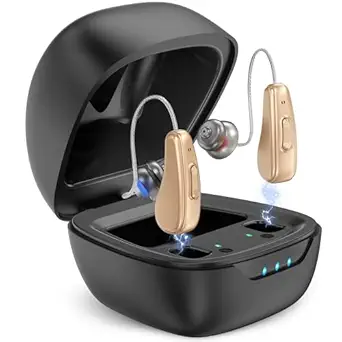
Style and fit. The different styles of hearing aids trade visibility for ease of use. Behind-the-ear hearing aids sit in a case behind the outer ear. An open-fit hearing aid also sits behind the ear but sends sound through a narrow tube into the ear canal, so the canal does not feel plugged. Receiver-in-canal designs put the speaker in the canal itself. In-the-ear models fill the outer bowl of the ear, and in-the-canal styles sit deeper. The smaller the shell, the fewer ears it suits and the faster earwax becomes a maintenance job.
Sound processing. A directional microphone favors the voice in front of you while the processor turns down background noise. Amplifying everything equally makes a restaurant harder, not easier, and the gap between entry and premium tiers is mostly speech in noise.
Power source. A rechargeable battery charges overnight and ends the job of swapping tiny zinc-air cells. Disposables cost less up front, and buying replacement batteries in bulk lowers the per-cell price.
Bluetooth and telecoil. Bluetooth, the short-range wireless standard, streams calls and audio from a mobile phone, and an app handles volume and programs. A telecoil picks up induction loop systems in theaters and places of worship. In a shared living room, a wireless TV listening headset often beats streaming.
Self-fitting versus professional programming. OTC devices are tuned through an app-based check you run at home. Prescription models are programmed against a clinical audiogram by a hearing care professional, which is the better route for uneven loss between ears.
Trial period and support. The NIDCD notes that most manufacturers allow a 30- to 60-day trial in which the devices can be returned for a refund. Get the trial length, any restocking fee, and the warranty in writing, and ask who services the unit if the brand disappears.
Work through the decision in this order:
- Rule out red flags, because sudden, one-sided, or dizzying loss needs a doctor rather than a checkout.
- Get a hearing exam, either a clinical audiogram or the app-based check that comes with an OTC device.
- Pick a style that suits your ear, then the features: directional microphones, noise reduction, streaming, power source.
- Ask what each quote includes, since a bundled price covers the fitting and follow-up visits.
- Read the return terms before paying, then wear the pair daily through the full trial.
What It Costs and Who Pays
What hearing aids cost matters less than what the price includes. A bundled price covers the test, the fitting, and follow-up adjustments. An unbundled quote covers hardware and bills those visits separately, so the cheaper number can finish higher.
For a real benchmark, Costco’s Hearing Aid Center page listed prescription-grade pairs on October 14, 2026, starting at $1,599.99 for Philips HearLink 9050 and Rexton Reach and $1,699.99 for Jabra Enhance Pro 30, with a note that prices vary by state. OTC pricing moves too often to quote, so price the same model at two or three sellers on the same day.
Medicare. Per Medicare.gov, Original Medicare doesn’t cover the cost of hearing aids or of exams for fitting them. Part B does cover diagnostic hearing and balance exams when a provider orders them, and you can see an audiologist once every 12 months without an order for non-acute conditions such as gradual loss. Some Medicare Advantage plans add a hearing benefit, so check your own plan.
Tax-advantaged funds. IRS Publication 502 counts the cost of a hearing aid, plus batteries, repairs, and maintenance, as a medical expense, which is why FSA and HSA cards are generally accepted. Medicaid coverage depends on your state.
Where to Buy Hearing Aids Online
Online sellers carry the widest selection, including brands that bundle telehealth support. Stick to listings labeled as an OTC hearing aid and to authorized sellers.
Amazon
Amazon lists dozens of brands across every tier. Browse the current listings, then read each product page closely, because a regulated OTC device and an unregulated amplifier sit side by side. Check the seller, too, since leftover stock of discontinued brands keeps circulating after support ends.
Jabra Enhance
Explore their options from a company with a long history in audio engineering. As of October 14, 2026, Jabra lists the Enhance Select as its OTC model, sold and serviced at JabraEnhance.com with telehealth audiology. The prescription-grade Enhance Pro and Enhance Max are sold through Costco.
Lexie and Eargo (Support Ending)
Check their site for Lexie’s wind-down notice, app deadlines, and manual archive. Eargo’s in-canal line carries the same notice, and you can see their lineup page for the details. Neither is a sensible new purchase while warranty and app support are ending.
Where to Buy Hearing Aids in Person
Shopping in person gets you a fitting, a real conversation, and at some locations a test on site.
Costco
Costco Hearing Aid Centers are the best-known value channel on the prescription side. Costco lists a free hearing test for members 18 and older and free service appointments for devices bought there. Brands on its page include Philips, Rexton, Jabra Enhance, and Sonite by Sennheiser, and the purchases are FSA and HSA eligible.
Sam’s Club
Sam’s Club runs comparable centers, and its club pages describe free tests for members. Not every club has one, so check your local club’s page before driving over.
Walmart, CVS, and Walgreens
The big-box and pharmacy chains sell OTC devices with no appointment needed. Shelf selection is narrower than online, and store staff cannot run an audiology exam. Call ahead, since stock varies by location.
Best Buy
Best Buy sells OTC models online and in many stores, and HearingTracker’s Best Buy roundup covers brands such as Jabra Enhance, Sennheiser, and Elehear. Seeing a few boxes side by side helps before choosing.
Five Mistakes That Cost Buyers the Most
- Mistaking an amplifier for a regulated device. A personal sound amplification product (PSAP) is consumer electronics, not held to the labeling rules of the OTC category. When packaging avoids the words “hearing aid,” that is why.
- Buying before you know the type of hearing loss. Sensorineural hearing loss, conductive loss, and a canal packed with earwax feel alike to the person living with them, yet call for different responses.
- Ignoring the return terms. Trial windows, restocking fees, and return shipping rules differ by seller. Read them, then buy.
- Judging after one day. Adjusting to hearing aids takes time and patience, as the NIDCD puts it, so wear the pair across a normal week before deciding.
- Buying a brand with no future. A clearance price on a discontinued model can cost more later in lost app features and repairs.
Best Picks by Situation
The best hearing aid depends on the severity of your hearing loss and how much support you want, so these picks span both routes rather than crowning one brand.
OTC with professional backup: Jabra Enhance. Rechargeable, app-controlled, with telehealth audiology on the Enhance Select. Jabra sells the Select direct, so confirm any third-party listing is a current model. Check price on Amazon
Already own AirPods Pro: Apple’s Hearing Aid Feature. On September 12, 2024, the FDA authorized it as the first OTC hearing aid software, for compatible AirPods Pro and adults 18+ with perceived mild to moderate impairment.
Buying locally on clearance: Sony CRE series. Sold through pharmacy and electronics retailers, but at least one 2026 review, citing HearingTracker data, describes the line as discontinued and clearing out, so confirm support before you pay. Check price on Amazon
Hold off for now: Lexie B2 Powered by Bose and Eargo. Both were strong OTC picks, but with support ending in October 2026, buy one only as a replacement for a unit you already use. Check Lexie B2 listings on Amazon or check Eargo listings on Amazon.
Severe or complex loss: Phonak and other prescription lines. These prescription hearing aids cover degrees of loss no OTC product is cleared for, through an audiologist or a warehouse-club center.
Start with a hearing test, even if you plan to buy over the counter, because it tells you whether you fall inside that category. Then pick one seller whose return terms and support plan you have read. The right hearing aids are the ones still in your ears in month three, from a brand still answering the phone.
Questions Buyers Ask
Can you buy one without a prescription?
Yes, if you are 18 or older and judge your own loss to be mild to moderate. The FDA rule that took effect on October 17, 2022 lets adults buy hearing aids without a prescription, exam, or professional fitting. Anyone under 18, or anyone with severe loss, needs the prescription route.
Is a PSAP a medical device?
No. A personal sound amplification product is sold as consumer electronics for people who want a boost in specific situations, such as birdwatching or lectures. It is not regulated as a medical device and is not intended to treat diagnosed loss.
Does Medicare pay for them?
Original Medicare does not cover the devices or exams for fitting them. Part B covers diagnostic hearing and balance exams when a provider orders them, and some Medicare Advantage plans add a hearing benefit, so check your own plan.
How long is a typical trial period?
The NIDCD says most manufacturers allow 30 to 60 days to return the devices for a refund. Terms are set by each seller, so confirm the window, any restocking fee, and who pays return shipping before you buy.
Do hearing aids work if you are completely deaf?
No. They amplify sound so damaged ears can detect it, so they need some hearing left to work with. Cochlear implants, which bypass damaged parts of the ear and stimulate the auditory nerve directly, are the clinical route for people who are deaf or severely hard of hearing.
About This Guide
Editorial review: the wheretobuyguides.com team. Retailer channels, brand status, and coverage rules were checked on October 14, 2026 against FDA, NIDCD, Medicare.gov, IRS, Costco, Jabra, Eargo, and Lexie pages. Not medically reviewed, and not a diagnosis.