
Pick a gingerbread house kit by who is doing the building, then by the calendar. A standing, pre-assembled shell suits a five-year-old, a flat-pack set suits an older child with an adult nearby, and a from-scratch bakery kit suits anyone who wants to eat the result. Store shelves fill after Halloween and thin out by mid-December, so a family building on December 20 should buy in November. Outside that window, Amazon and a few direct-shipping bakeries are the realistic routes.
This page contains affiliate links. We may earn a commission at no extra cost to you.
Which Gingerbread House Kit Fits Your Builder?
The builder’s age decides the format, and the format decides the store. Most collapsed walls come from handing a flat-pack box to a child who cannot hold two panels steady while the glue sets, which ends the holiday activity early.
| Builder | Format to buy | Where it usually turns up |
|---|---|---|
| Toddler, first build | Graham cracker set or mini village | Amazon, supermarkets |
| Child about 4 to 8 | Pre-assembled shell, decorate only | Walmart, Target, Sam’s Club, Aldi |
| Older child or adult | Flat-pack panels, full assembly | Trader Joe’s, Target, World Market |
| People who want to eat it | From-scratch or bakery kit | Bakeries that ship direct |
| Classroom or party | Multi-pack of small houses | Costco, Sam’s Club, Oriental Trading |
A prebuilt kit (sometimes sold as pre-assembled or premade) arrives with the walls and roof already glued into a standing cookie house, so the job is only to decorate. Wilton, Benton’s at Aldi, and Sam’s Club have all sold ready-built versions. Flat-pack sets hand over loose gingerbread pieces and leave the assembly process to you, which is the classic house experience and the harder one.
What Is Actually in the Box
A gingerbread house kit is a boxed set of pre-baked gingerbread panels, icing, and candy sold so a family can assemble and decorate a miniature building without baking. Most include a cardboard base and a piping bag. Gingerbread itself is a ginger and molasses spiced dough with centuries of European baking behind it; the shelf-stable box is a modern grocery product.
The cookie inside a mass-market box is baked hard and dry so the sides of the house carry weight and survive shipping. That makes it structural first and tasty second. Reviewers of the Aldi kit, for example, have described the panels as almost too hard to bite. Buy for the activity, not the flavor.
The glue is where kits differ most. Some boxes include ready-to-use frosting in a pouch or bag. Others ship a dry icing base built on confectioner’s sugar that you mix yourself, and the Trader Joe’s kit has in past seasons asked buyers to supply their own egg white. Icing consistency matters more than brand: too thin and the walls slide, too thick and it will not pipe.
Five Checks Before You Pay
- Confirm whether the shell is prebuilt or flat-pack, then match it to your builder’s age.
- Look for the nutrition facts panel to confirm the set is food and not a craft item.
- Find the best-by date and reject anything close to it.
- Count the icing pouches. One small pouch is a warning sign.
- Read the contents list for the real candy assortment and the allergen line.
Why the nutrition panel matters. Cardboard, wood, and felt houses meant for glue and paint sit in the same holiday displays as edible ones, especially at craft stores. No nutrition facts panel means it is a decoration, and someone should say so before a four-year-old bites a wall.
Why the icing count matters. The pouch in budget boxes is often too small to both glue the structure and frost the roof. A separate tub of royal icing costs less than a second box and rescues most builds.
Why the contents list beats the image on the box. The photo is a styled shot with extra sweets and icicles piped by a professional decorator. Budget sets often hold a thin handful of generic candy, with chocolate and sprinkle mixes saved for larger kits.
Allergens. These kits almost always contain wheat, and many list milk, soy, egg, or tree nuts, or run on shared lines. Read the package in your hand, because formulas change between seasons.
Where to Buy Gingerbread House Kits In Store
Shelf stock generally appears shortly after Halloween and runs into mid-December. Displays are usually built once and thinned rather than restocked, so phone the store in early November if a specific brand matters.
Walmart and Sam’s Club
Walmart, the largest brick-and-mortar retailer in the United States, usually carries the broadest in-season assortment: Wilton pre-assembled houses, Freshness Guaranteed store-brand build-your-own kits, and cheap single cottages. Look in the seasonal holiday aisle, not regular baking. Their store website sometimes lists stock off-season, though selection is thin. Sam’s Club, Walmart’s warehouse club, has sold both a ready-built kit and a build-your-own version in larger packs.
Target
Target’s Favorite Day store brand has produced themed kits in recent seasons, including a tree house, a barn, a beach house, and a village set, alongside national names. Target is the stop for a design that is not a plain cottage.
Trader Joe’s and Aldi
Both treat the kit as a limited seasonal buy, and both sell out first. The Trader Joe’s box is a flat-pack, German-made set with woodland animal candies, sold in stores only, since the chain does not ship groceries. Aldi carries Benton’s kits as an Aldi Find, including a pre-assembled version in past years; Aldi does not sell these online, so once a store sells through, that is it until next autumn.
Five Below, Dollar General, Walgreens, and Supermarkets
Five Below runs a dedicated gingerbread house section during the holidays, and Dollar General has stocked an E-Z Build house that leaves the candy to you. The seasonal candy aisle at Walgreens carries a small selection that varies by location. Supermarket holiday displays run from November, and that aisle in early January holds the deepest discounts.
World Market, Michaels, and Hobby Lobby
World Market is where imported European-style boxes turn up. Michaels and Hobby Lobby shelve gingerbread kits beside cookie cutter sets, food coloring, and pastry bags, so one trip covers a DIY gingerbread house from scratch too. If you plan to cover the roof in sculpted trim, a tub of fondant from the same aisle works better than piping more. Craft stores also stock non-edible cardboard and wooden houses, so check the label there especially.
Buying a Gingerbread House Kit Online
Online is the only channel that works outside the season. Amazon and direct-from-bakery ordering are the two routes with any stock in summer.
Amazon
Amazon, the largest online retailer in the United States, is the one mainstream source listing these year-round. Off-season selection is a fraction of November’s, third-party sellers dominate, and nothing is discounted. Favor listings that state a best-by date, and read recent reviews for broken panels. Browse the current selection before assuming a box is in stock.
Bakeries and Small-Batch Sellers
Small sellers are the answer when the result should taste good. Ginger’s Breadboys, a Washington, DC business that ships to all 50 states, sells from-scratch gingerbread house kits that make two small houses, plus cookie kits, a cookie mix, and pre-baked panels listed for the 2026 holiday season. Mo’Pweeze Bakery, an allergy-focused bakery that sold house kits in past seasons, announced it was closing in May 2026, so look elsewhere for an allergy-conscious kit this year. Order from small kitchens early in November, since they cap production.
Warehouse Clubs and Premium Brands
Costco and Sam’s Club list seasonal multi-packs during the holiday months, usually the lowest per-unit route for a decorating party. Oriental Trading sells gingerbread houses in classroom quantities, which makes it an easy add-on to a party supplies order. At the other end, Williams Sonoma carries gift-grade kits, some with panels from Florida bakers and notched edges that hold each piece in place while the icing dries, the kind people buy as a holiday gift. The rest of the season is covered here too, from artificial Christmas trees to edible cookie dough, plus a full holiday buying section.
Returns on a Fragile Seasonal Food
For a fragile food product, the return window decides where to order from. Broken panels in a shipped carton are common, and a cracked roof is worth more than a dollar or two of price difference.
| Retailer | General window | Practical note |
|---|---|---|
| Amazon | 30 days from delivery on most items | Third-party sellers set their own terms |
| Walmart | 90 days standard on most merchandise | Food and beverages are listed among exceptions |
| Target | 90 days standard, up to a year on owned brands | Generally the most forgiving big chain |
| Costco | Satisfaction guarantee on most items | Keep the outer packaging |
| Trader Joe’s | Store refund policy | In store only, since the chain does not ship |
Treat those as general policy, not a guarantee, because seasonal grocery is a common exception. Two gotchas: post-Christmas clearance is usually final sale, and a cracked carton resolves faster as a replacement request than as a return. Buying for a fixed date? Target or Costco is the safer order.
Mistakes That End With a Collapsed Roof
- Buying a multi-building village for a young child. It turns a fun afternoon into a frustrating one. A mini Christmas village suits patient older kids.
- Skipping the dry fit. Stand the panels up and check alignment before anything is glued. Misalignment found mid-assembly is hard to fix once the glue is setting.
- Decorating walls that are still wet. Let the frame set before adding candy and icing to the roof, or the weight pushes the sides apart. Ease of assembly on the box assumes this wait.
- Ignoring the date code. Seasonal confectionery rotates slowly, and a clearance box can already be a year old.
- Waiting until late December. Selection thins fast. The same stocking curve hits Christmas decorations, holiday cards, and Christmas lights.
Five Kits Worth Hunting For
Picked on structural reliability and fit for a specific builder rather than flavor, which is uniformly mediocre in the mass-market tier. Prices move through the season, so check the listing.
Best overall: Wilton pre-assembled gingerbread house kits. Wilton sells several pre-assembled houses, each with a decorating bag, ready-to-use white icing, and candy mixes. The standing shell removes the collapse risk that ruins most first attempts. See it on Amazon
Best budget: the Trader Joe’s seasonal gingerbread kit. A store-only box that sells out early most years. Flat-pack with a mix-it-yourself frosting, so plan for an adult to run assembly. Check the product page
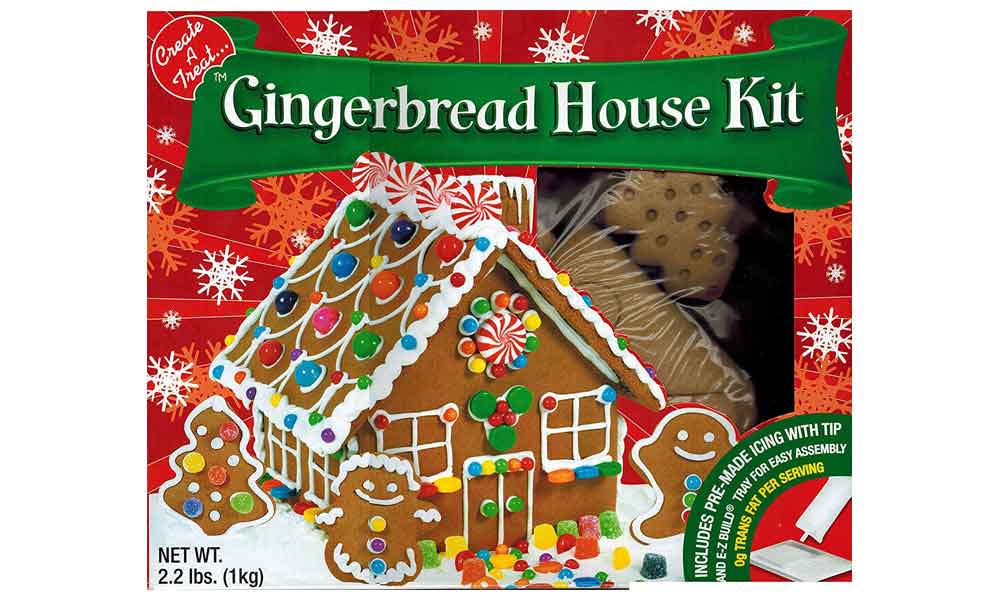
Best for a small child: Create-A-Treat sets. Create-A-Treat makes easy-build houses and mini village sets; smaller pieces mean a shorter build and less mess. See it on Amazon
Best for toddlers: graham cracker house sets. Softer panels, sweeter taste, far less precision required. A better first build than any traditional gingerbread box. Browse options on Amazon
Best for eating: Ginger’s Breadboys kits. Its house kits have you bake the panels from a real gingerbread cookie mix, so the house tastes like holiday baking rather than packaging. Pick this one if the finished house is meant to be eaten. Order from the bakery
Box or scratch? Scratch costs less in ingredients, since flour, sugar, and cinnamon are pantry staples, and it tastes far better. It also costs you a template, a cut-out session, hours of baking, and your own royal icing.
Start with the builder, then the date. Building this December? Set a reminder for the first week of November, when assortment peaks. Need one right now? Order from Amazon or a bakery and pay full price. Purely price-driven? Put December 26 on the calendar, buy next year’s gingerbread house kit at clearance, check the date code, and store the sealed box somewhere cool and dry.
Frequently Asked Questions
When do stores start stocking them?
Most US chains put them out in the days after Halloween, once the costume displays come down. Assortment peaks in the first half of November and is usually cleared to a discount rack right after Christmas. If a brand matters, buy in November rather than hoping in December.
What comes in a gingerbread house kit?
A standard box holds pre-baked wall and roof panels, one or two icing pouches or a dry mix, an assortment of candy, and usually a cardboard base. Some add a piping bag, sprinkles, or a gingerbread man cookie. A from-scratch set supplies a dough mix and a template instead, so you provide the oven and a cookie cutter or knife.
Are they all safe to eat?
No, and the packaging is the only reliable way to tell. Craft retailers sell cardboard, wood, and felt houses that look similar on a shelf but carry no nutrition facts panel, and some edible sets include non-food trim such as a plastic figure. Even the edible ones go stale within days of assembly.
How long do they last?
A sealed box keeps until the best-by date printed on it, which is why a clearance kit with a long date can work the following year. Once assembled, the panels dry out within days. Eat edible parts early, or treat the finished house as a decoration for the rest of the season.
Where can you buy them in bulk for a classroom or party?
Warehouse clubs are the usual answer. Costco and Sam’s Club sell multi-house packs in season, and Oriental Trading carries classroom-quantity craft versions. Order bulk by mid-November, because multi-packs sell through earlier than single boxes.
Can you buy them with EBT or SNAP benefits?
Often, when the item is coded as food. Walmart, Sam’s Club, and BJ’s tag a number of edible kits as EBT eligible on their product pages, while craft versions without a nutrition facts panel are not. Eligibility follows the retailer’s item coding rather than the aisle, so check the product listing or ask at the service desk.
Reviewed by the wheretobuyguides.com editorial team.