
Say a recipe calls for two cups of dashi tonight and the nearest Japanese grocer is a long drive away. A jar of instant granules from a supermarket international aisle will do the job in seconds, but read the back first: the US label of the best-known brand lists fish, MSG, and lactose from milk. Dashi, the Japanese stock behind miso soup and noodle broth, is sold in four forms, and the right one depends on how often you cook, who is eating, and which stores you can reach. This guide covers where each form is sold, what the label has to tell you, and how to store it once the package is open.
This page contains affiliate links. We may earn a commission at no extra cost to you.
What Dashi Is, and the Four Forms on the Shelf
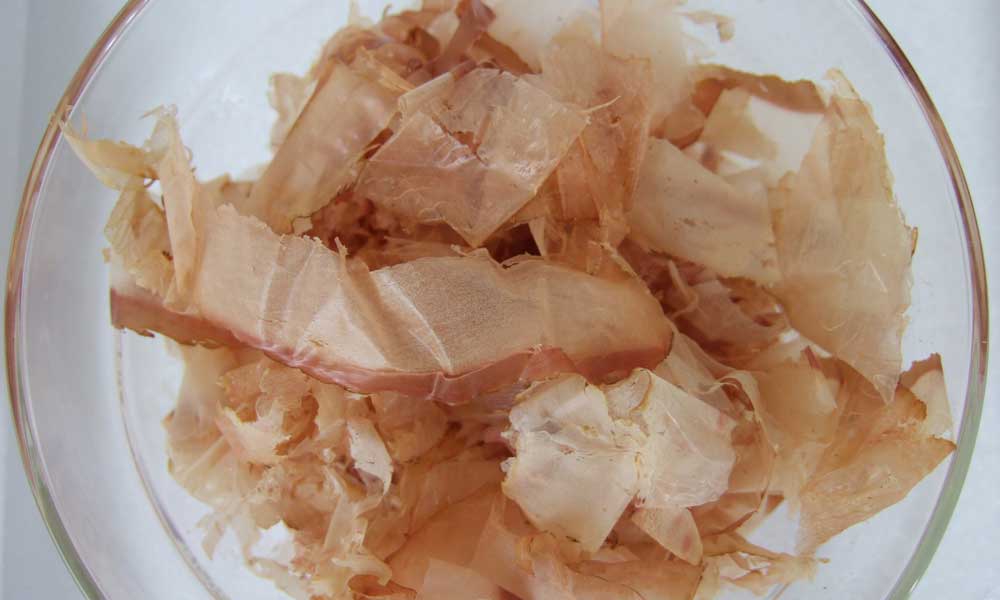
Dashi is a Japanese stock made by steeping kombu (dried kelp) and katsuobushi (skipjack tuna that has been dried, smoked, fermented, and shaved into flakes) in hot water. It tastes savory, lightly smoky, and faintly of the sea, a subtle flavor meant to sit under other ingredients rather than announce itself. Kombu supplies glutamate, katsuobushi supplies inosinate, and paired they produce more umami flavor than either delivers alone. Kikunae Ikeda, a chemist at Tokyo Imperial University, isolated that glutamic compound in 1908 and named umami the fifth taste. The Umami Information Center, a Japanese nonprofit, documents the pairing.
It sits under most savory cooking in Japanese cuisine: miso soup, udon and soba broth, simmered vegetables, savory egg custard (chawanmushi), and hot pot. Lighter dishes like steamed fish or simmered greens take it where a Western recipe would reach for chicken stock.
| Form | What is in the package | Best for | Label line to check |
|---|---|---|---|
| Instant dashi granules or powder | Dissolving granules; Ajinomoto Hon-Dashi and Shimaya are the common brands | Everyday cooking, weeknight miso | MSG, sodium, milk |
| Dashi packs (tea-bag style) | Ground kombu, bonito, and sometimes niboshi or shiitake in a mesh sachet | Better flavor with no straining | Fish species, yeast extract |
| Liquid concentrate | Bottled stock you dilute; tsuyu and shiro dashi already carry soy sauce | Noodle broth, dipping sauces | Wheat, soy, refrigeration |
| Kombu and katsuobushi | Whole kelp sheets plus a bag of dried bonito flakes | Clear broths, frequent cooks | Grade, packing date |
The raw components are what you buy to make dashi from scratch, and they give the most control over strength. The first extraction is ichiban dashi, clear and delicate. Re-steeping the spent solids gives niban dashi, a milder second batch suited to stew, braises, and miso.
The type of dashi matters as much as the form. Awase blends kelp and fish and is the all-purpose default. Kombu dashi skips the fish entirely: clean, mild, and the only traditional version that is plant-based. Katsuo-only runs smokier. Niboshi dashi, made from dried sardines, is stronger and noticeably fishy, a better base for miso soup than for clear broth. Shiitake dashi is deeper and earthier.
Use this order when you are standing in the aisle:
- Estimate your frequency. Monthly cooks buy instant. Weekly cooks buy the raw components, since per-pot cost drops sharply.
- Settle the diet question. If anyone eating is vegetarian or vegan, you need the kombu-only or shiitake version.
- Match the blend to the dish. Clear broths want kombu or a light awase. Stew and braise recipes tolerate stronger blends.
- Read the allergen line. Bonito, mackerel, sardine, and flying fish are all fish. Milk shows up in some granules, and soy and wheat in concentrates.
Reading the Label: Fish, Milk, and MSG
Three lines on the back panel matter more than the front art. Fish is one of the nine major food allergens under US law, and the FDA requires labels to name the species, so look for bonito, skipjack tuna, sardine, mackerel, or flying fish rather than the word “fish” alone. The FDA food allergy page lays out the rule.
Milk is the one that catches people. The US label of Ajinomoto Hon-Dashi, as reproduced by grocery retailers, lists lactose (milk) third, right after salt and MSG. Versions sold in other markets word it differently, so check the package in your hand before cooking for anyone with a dairy allergy. Concentrates such as tsuyu are built on soy sauce, which brings wheat and soy.
MSG is the third line. According to the FDA’s MSG guidance, added MSG must appear on the ingredient panel as “monosodium glutamate,” and the agency classifies it as generally recognized as safe. Yeast extract and similar ingredients contain free glutamic acid naturally, and products made with them cannot claim “No MSG” or “No added MSG.” Kombu releases the same compound on its own, which is why even a homemade pot is umami-rich. Compare sodium per serving across two jars as well, since instant granules are salt-forward by design.
Vegan Dashi From Kombu and Shiitake
Most dashi is made with bonito or another dried fish, so most of it is neither vegan nor vegetarian, and a package showing seaweed on the front often lists fish extract on the back. The plant-based route is kombu, dried shiitake mushrooms, or both. Kombu brings glutamic acid and shiitake brings guanylate, and the pair gives real depth with no fish. Japanese Buddhist temple cooking, shojin ryori, has built stock this way for centuries.
Packaged plant-based packs exist; Kayanoya dashi, for one, comes in kelp, mushroom, and vegetable blends alongside the fish-based original. “Vegetable” on a front panel is not a guarantee, though, so read the ingredient list. Buying the dashi ingredients separately is simpler: thick-capped shiitake (donko) give a stronger stock than thin ones, and any kombu grade works for a home pot.
Where to Buy Dashi in Stores
Japanese supermarket chains
These are the primary in-store channel and nothing else is close. They stock whole katsuobushi blocks, several kombu grades, and the premium packs that rarely reach other stores. Mitsuwa Marketplace has stores in California, Hawaii, Illinois, New Jersey, and Texas. Uwajimaya runs four Pacific Northwest stores: Seattle, Bellevue, and Renton in Washington, plus Beaverton, Oregon. Tokyo Central is the current name for most former Marukai stores, a rebrand that began in 2015 after Don Quijote bought the chain. Nijiya is another Japanese grocer worth checking. The same shelves are a better source for Japanese green tea than most supermarkets; the guide to buying tea covers that aisle.
Korean and pan-Asian grocers
H Mart is a Korean-American chain and 99 Ranch is pan-Asian; both stock instant Japanese dashi alongside their own dried anchovy products, including Korean anchovy stock packs that cook up close to niboshi. Look in the dried goods aisle near the seaweed and noodles, not the canned goods. Use Yelp to search for Asian markets near you, and call ahead for a whole block.
Walmart, Whole Foods, and mainstream supermarkets
Coverage is patchy and store-dependent. Larger Walmart and Kroger locations sometimes stock Hon-Dashi in the international aisle, and Wegmans is reasonably good on Japanese pantry goods, but plenty of stores in all three carry none of it. Check their website for availability before driving over. Whole Foods and Sprouts are a fallback for kombu and dried shiitake mushrooms, both shelved as sea vegetables or dried goods rather than Asian pantry items. Our roundup of what is worth buying at Whole Foods covers those aisles, our grocery store buying guide maps the rest, and our guide to buying cotija cheese covers the same findability problem.
Ordering Online: Amazon, Importers, and Brands Direct
Online is the reliable channel when no Japanese grocer is nearby, and the only practical route to specialty imports.
Amazon
Amazon, the largest online retailer in the United States, carries every form above, from instant jars to whole kombu sheets and bulk bonito. It is the best place to compare brands and read buyer reviews. One caution: much of this category ships from third-party sellers, so check the seller name and the date on dried goods. Browse the full selection on Amazon to compare current options.
Japanese importers and grocery delivery
Importers focused on Japanese food are where the good packets live. Kayanoya USA sells the brand’s packs direct, including original, kelp, mushroom, vegetable, and light-in-sodium versions, and offers a subscription for repeat orders. Weee!, Umami Insider, and Bokksu Market cover the same shelf, and Instacart pulls from whichever Asian market near you is on the platform. Thrive Market is a paid-membership grocery site whose Japanese pantry inventory rotates, so check availability and current membership pricing first. The current eBay listings are worth a look for regional brands that never reach American shelves, though overseas shipping can run weeks.
Storing It After the Package Is Open
Moisture and air are what ruin each form, not time alone. Follow the package first; this table covers the common cases.
| Form | After opening | Sign it is past its best |
|---|---|---|
| Dashi powder or granules | Close tightly, keep cool and dry; no fridge needed | Clumping, faded aroma |
| Dashi packs | Reseal the outer bag, away from heat and humidity | Weak smell when steeped |
| Liquid concentrate | Refrigerate and use within the label window | Off smell or mold |
| Katsuobushi flakes | Seal airtight; refrigerate or freeze, keep dry | Dull color, flat smell |
| Kombu | Airtight, in a cool, dark cupboard | Soft, damp, or moldy (white powder is mannitol, not mold) |
| Homemade stock | Refrigerate and use within a few days, or freeze in ice cube trays | Sour smell |
Granules past their best-by date mostly lose aroma, so an old jar makes a weaker pot. Flakes fade fastest once opened, while the kelp keeps for a year or more sealed and away from light. A large bag of flakes is only cheaper if you finish it, so buy small until you know your pace.
No Store Nearby? Workable Substitutes
A light chicken stock or vegetable stock works in a pinch for braises and hot pot, though neither has the sea-like note. Closer still: soak a strip of kombu or a few dried shiitake in cold water overnight, which needs no special shopping beyond a health food store. Korean anchovy stock packs stand in well for niboshi. For a quick bowl of miso, dashi-iri miso, a miso paste with stock already blended in, skips the separate purchase entirely and is sold at Japanese grocers.
Top Dashi Picks by Buying Path
Five picks covering the realistic buying paths, chosen for distribution and label transparency. Prices change often, so check the current listing.
Best overall: Ajinomoto Hon-Dashi Soup Stock. The most widely distributed instant option in the US and the one most recipes assume. Its US label lists bonito, MSG, and lactose (milk), so it is neither vegetarian nor dairy-free. Check price on Amazon
Best packet: Kayanoya Original Dashi Stock Powder. Sachets that the brand’s US site describes as bonito and flying fish with kombu, marketed as additive-free; verify the panel yourself. Lower-sodium, kelp, mushroom, and vegetable versions sit in the same line. Check price on Amazon
Best budget: Shimaya Dashi No Moto Bonito Soup Stock. A long-running staple at Asian grocers and the usual alternative to the Ajinomoto jar. Check price on Amazon
Best for from-scratch: kombu plus dried bonito flakes. Buy the two separately, from importers such as Shirakiku or Yamaki, for full control over strength; one bag of each covers many pots. Cheesecloth makes straining easier; see our cheesecloth buying guide for grades. Check price on Amazon
Best vegan: dried shiitake mushrooms. Paired with kombu they give a plant-based stock with real depth and no fish. Grades vary by cap thickness. Check price on Amazon
Start by deciding whether anyone eating needs a stock free of fish, milk, or added MSG, because those answers eliminate most of the shelf. Then buy the smallest package of the form matching how often you cook. If a Japanese or pan-Asian grocer is within driving distance, go there first for the widest choice of dashi, and order online when there is not.
Common Questions Before You Buy
Is the instant kind vegan or vegetarian?
Usually not. Anything made with katsuobushi, niboshi, or fish extract contains fish, which covers most instant products on American shelves, and some granules also contain milk. Kombu-only and shiitake versions are the plant-based exceptions, and vegetable stock is the closest non-Japanese substitute.
Does it contain MSG?
Most instant dashi contains it, and US labels must list added MSG as monosodium glutamate. A stock you build yourself has none added, though kombu releases the same compound naturally. The US Food and Drug Administration classifies added MSG as generally recognized as safe. If you avoid it anyway, compare packet brands and read the panel.
Is a bag of kombu the same as the stock?
No. Kombu is a dried seaweed sold as stiff dark sheets. The stock is what you extract from it, usually with dried fish added. A bag labeled kombu gets you an ingredient, not a ready-to-use broth, which trips up first-time shoppers working from a recipe list.
Does the powder expire or need refrigeration?
Sealed granules carry a best-by date; go by that rather than a rule of thumb. Once opened, keep the container sealed and dry, since clumping means moisture got in. Powder does not need refrigeration, but liquid concentrate does once opened, and opened bonito flakes keep best cold.
Which kind works best for miso soup?
Awase, the kelp and bonito blend, is the standard base for miso, whether from granules, a pack, or scratch. Niboshi suits a hearty red miso, and kombu alone keeps a white miso bowl vegan. Miso paste with stock already added is the shortcut for homemade miso soup on a busy night.