
The fastest way to buy work clothes is to decide which job they serve before you pick a store. Office attire (a blazer, tailored trousers, a blouse or button-down) is easiest at Nordstrom, Banana Republic, J.Crew or Ann Taylor. Trade gear such as duck canvas pants, uniforms and flame-resistant coveralls comes from Carhartt, Duluth Trading, Tractor Supply or Amazon. Safety-rated pieces belong to a third lane with its own labels and, often, an employer who pays.
This page contains affiliate links. We may earn a commission at no extra cost to you.
Which Work Clothes Do You Actually Need?
Workwear is clothing built for a specific job environment rather than general daily wear. It runs from a tailored blazer worn to a client meeting to 12 oz duck canvas pants worn on a framing crew, and the four lanes below barely share a rack.
| Lane | Typical fabric | Key spec to check | Where to shop first |
|---|---|---|---|
| Office and business casual | Ponte, poplin, crepe, wool blends | Wrinkle recovery, size curve | Nordstrom, LOFT, J.Crew |
| Trade and construction | 12 oz duck canvas, ripstop | Bar tacks, gusset, knee reinforcement | Carhartt, Duluth Trading, Tractor Supply |
| Flame-resistant and arc-rated | FR-treated cotton, Nomex | NFPA 2112 label, arc rating | Tyndale, Bulwark, Carhartt FR |
| Uniform and service | Poly-cotton twill | Embroidery and laundering program | Red Kap, Cintas, Dickies |
A welder buying a J.Crew chino makes the same mistake as an attorney buying Carhartt double-fronts. If your role mixes both, build two rotations rather than one compromise garment: a blazer that also has to survive a warehouse shift fails at both jobs.
Office Attire: Fit, Fabric and the Pieces That Carry a Wardrobe
Office clothes should be judged on fit, wrinkle recovery and care before the label. A blazer has to hold its shape after a commute, a blouse has to survive a day without pressing, and trousers need a cut that works sitting down. Relaxed dress codes spread far enough that a full suit, the classic business attire, now fills a narrow role, mostly interviews, court and client pitches.
Fabric. Office bottoms use lighter cloth in the 7 to 10 oz range: ponte, poplin, crepe and wool. A linen-blend pant is the summer exception, comfortable on long days but creased by noon. Non-iron cotton and machine-washable suiting save real time; dry-clean-only pieces add a yearly cost nobody budgets for.
Silhouette and rise. A high rise straight leg pant or a bootcut pant stays close to timeless. A wide leg pant, a deep pleat or a strong seasonal hue dates faster, so buy those in one color, not three. For women’s work clothes, a sheath dress and an A-line midi skirt cover the most dress codes, and the hem should land where you can sit and kneel without adjusting.
Size curve. Petite and tall runs in women’s workwear are strongest at Ann Taylor and LOFT; short, tall and big-and-tall runs for men come from Lands’ End Business, Nordstrom and the trade brands. A perfect fit off the rack beats a cheaper piece you pay a tailor to salvage, though a tailor hemming a pant or taking in a waist is a cheap, routine fix.
A Business Casual Workwear Wardrobe in Ten Pieces
Ten pieces build a week of work outfits if all tops and bottoms mix and match:
- Two tailored blazers in neutral colors, one structured and one unlined knit for travel.
- Three pairs of work pants in charcoal, navy and tan.
- Three tops: a poplin shirt or blouse, a fine-gauge sweater and a short sleeve tee for warm months.
- One dress or a second jacket, depending on which your office sees more of.
- One belt that matches your shoes, the accessory that does the most polish for the least money.
A cami under an open jacket takes the same outfit into an after-work dinner without a second closet.
Trade Gear: Construction Details That Predict Lifespan
Trade buyers need abrasion resistance, reinforced seams and freedom to kneel and climb; appearance barely registers. Check fabric weight, seam construction, size curve and the return window first. Those four predict whether a garment survives a year of daily wear better than the brand name does.
Fabric weight and textile type. Carhartt built its reputation on 12 oz firm duck canvas, a number printed on most of its product pages. Heavier is not automatically better: 12 oz in a July warehouse is punishing, and ripstop or a lighter canvas makes more sense for heat.
Seam and stress-point construction. Look for triple-stitched main seams, bar tacks at pocket corners and a gusseted crotch. The reason pants fail at the crotch first is geometry: without a gusset, four seams meet at one point and take every squat.
Fit for layering. Trade brands cut generously so a thermal layer fits underneath, while slimmer office labels run small. Measure once, then check the chart on the specific product page.
Safety Labels: FR, Arc-Rated and High-Visibility Clothing
Safety-rated clothing is only as good as its sewn-in label. Marketplace listings often say “flame retardant” without naming a standard, and that title proves nothing.
- NFPA 2112 covers flash fire protection, the hazard in refineries and oil and gas work. Garments need third-party certification and a label that says so.
- NFPA 70E is the workplace electrical safety standard. Clothing for it carries an arc rating in cal/cm² (ATPV or EBT). An arc rating does not predict flash fire performance, so sites with both hazards buy garments rated to both standards.
- ANSI/ISEA 107 sets high-visibility classes. Type O Class 1 is for off-road work only, Type R Class 2 or Class 3 covers roadway work zones (Class 2 is the minimum near traffic), and Type P is for public safety crews.
- ASTM F2413 is the protective footwear standard to look for on safety-toe boots.
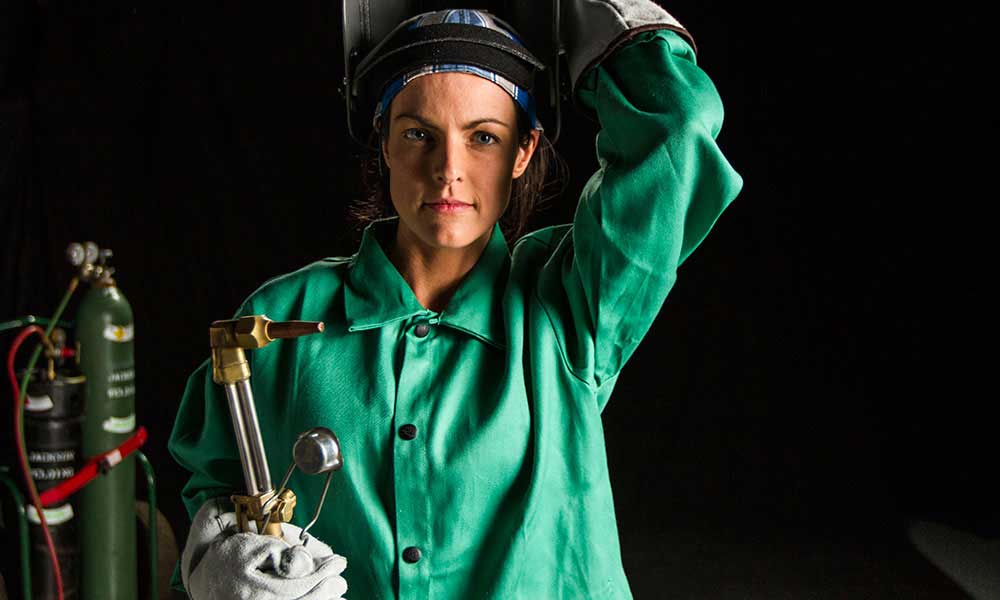
Electricians, oilfield crews, welders and linemen should buy certified pieces from Tyndale, Bulwark, Ariat FR or Carhartt FR. Our shoe buying guide covers fit, and crews on their feet all shift often add compression socks.
Who Pays for Work Clothes and Safety Gear Under OSHA?
Under the PPE payment rule at 29 CFR 1910.132(h), OSHA requires employers to provide required protective equipment at no cost to employees. The part most workers misread is the exclusion list. Employers do not have to pay for non-specialty safety-toe boots or prescription safety glasses that you may wear off the job, everyday clothing such as long-sleeve shirts, long pants and normal work boots, or ordinary weather gear like winter coats, rain gear and gloves. FR coveralls required by a hazard assessment are PPE; your jeans are not. Ask for the written policy before you buy anything with a safety label.
Where to Buy: Store and Online Options by Lane
Physical stores win on fit-critical items like boots and anything you plan to have altered. Online wins on size curves, because brand-direct sites carry runs that rarely reach a shelf.
Department and Big-Box Stores
Nordstrom consolidates most mid-to-premium office labels under one roof and offers in-store alterations, the main reason to shop there over online. Browse their selection, or check Macy’s and Kohl’s for lower-priced house labels.
Walmart and Target both stock basic work pants year-round, and Target adds a stronger women’s office assortment through its house labels. Walmart carries the wider trade selection; Target leans polished. Neither is the place for certified FR gear.
Farm, Boot and Brand-Direct Shops
Tractor Supply carries Carhartt, Wrangler Riggs and Berne across more than 2,400 stores in 49 states, the most practical option for rural buyers. Check store stock on their site before driving out, since size runs vary by location. Red Wing operates hundreds of company and dealer stores and sells only its own boots, so its depth of widths beats any department store. Call ahead: width, not length, is usually the constraint.
Carhartt and Duluth Trading offer the widest trade size curves anywhere. Banana Republic, J.Crew, Ann Taylor and Brooks Brothers cover the office side, and L.L.Bean handles forestry and utility roles. Dickies sells direct at big-box prices.
For professional settings with a softer edge, Abercrombie & Fitch sells tailored trousers and soft blazers, M.M. LaFleur cuts machine-washable sheath dresses for travel, and Spanx makes a ponte pant that reads as office wear. Our dress buying guide covers more work dresses, and Lululemon sells stretch commuter pants that pass in casual offices. Lands’ End Business and Cintas run uniform programs. For clinical roles start with our scrubs guide, and for lighter utility tops see the flannel shirts guide.
Amazon, Zappos and Return Windows
Amazon carries the Carhartt, Dickies, Red Wing, Thorogood and Timberland PRO catalogs plus its own Amazon Essentials chinos and jersey tops. Buy from the brand storefront rather than an unfamiliar third-party seller, because return terms and authenticity depend on who ships the box.
Zappos is the low-risk way to buy boots you cannot try on: a 365-day return policy and free shipping both directions. Order two widths and keep one.
Where Spending More Pays Off
Cost per wear is the number that matters, and a cheap piece that splits mid-season loses that math. Budget lines (Dickies, Amazon Essentials, store house labels) use simpler construction and lighter fabric, fine for warehouse, auto shop and standard office use. Mid-range pieces such as Carhartt duck pants, Duluth flex-waist jeans and J.Crew chinos are where reinforced seams, real size curves and quality fabrics start.
Pay for the top tier on boots and certified safety gear, where failure has consequences. Skip it on a premium blazer if you work a hybrid schedule: a mid-range washable one beats a dry-clean-only suit at two office days a week.
Top Picks by Role
These five were chosen on size-curve depth, published fabric specs and return terms.
Best office overall: Banana Republic. A Gap Inc. brand with a deep catalog of wool-blend blazers, Italian-milled suiting, non-iron shirts and tailored chinos. Sizing stays consistent season to season. Check current pieces on Amazon.
Best trade overall: Carhartt. Founded in Detroit in 1889 and now based in Dearborn, Michigan, Carhartt is the default on construction and oilfield sites. The B01 double-front dungaree and the Detroit jacket are its reference pieces, in a size run almost nobody else matches. Shop Carhartt on Amazon.
Best budget trade: Dickies. Owned by Bluestar Alliance since VF Corporation sold the brand in November 2025, Dickies prices below Carhartt on comparable items. The 874 and the Eisenhower jacket handle warehouse, auto shop and light construction without stretching a budget. Browse Dickies on Amazon.
Best women’s trade: Duluth Trading Company. Duluth (NASDAQ: DLTH) cuts jobsite pants and flex-waist jeans to women’s proportions, not a scaled-down men’s block. The Heirloom Gardening line and Armachillo cooling tops target the two complaints that come up most, heat and restricted movement. See the women’s range on Amazon.
Best outdoor and utility: L.L.Bean. Based in Freeport, Maine, L.L.Bean covers forestry and landscaping roles with flannel-lined pants, PrimaLoft outerwear and rubber-bottom Bean Boots. A one-year satisfaction guarantee backs it. Check pieces on Amazon.
Start by naming your lane, office, trade or safety-rated, then buy one bottom and one top from the retailer that matches it. Wear that pair for five workdays before ordering more; that test beats any size chart. If a hazard assessment calls for FR or hi-vis gear, get your employer’s policy in writing first. If the fit lands, reorder in two colors and you have a year of work clothes sorted.
Frequently Asked Questions
Is Carhartt or Duluth Trading better for jobsite gear?
Carhartt wins on abrasion resistance and heavyweight duck canvas; Duluth wins on ease of movement, women’s fit and odor-control fabric. Pick Carhartt for concrete, framing and oilfield work, Duluth for gardening and light trades. Both publish fabric weights in oz, so compare that number.
Which retailer has the longest return window?
Zappos publishes a 365-day return policy, the longest among the sellers named here, and covers shipping both ways. Amazon’s standard apparel window is 30 days, and Nordstrom handles returns case by case with no published deadline. Carhartt, Duluth and L.L.Bean each run their own guarantee, so read the current policy page first.
Do I have to pay for my own flame-resistant garments?
Usually not. Under 29 CFR 1910.132(h), FR clothing required for a covered role is PPE the employer pays for; the exclusions cover everyday clothing, ordinary weather gear and non-specialty safety-toe boots. Ask for the written policy first.
Where can I buy cheap work gear that still holds up?
Dickies at Walmart or Target, Wrangler Riggs at Tractor Supply and Amazon Essentials for office roles are the cheapest routes from brands that publish specs. Unbranded marketplace listings are the real risk: no spec sheet to compare against, and no accountability when a seam splits in month three.
What counts as business casual now?
Business casual means chinos or trousers with a button-down, blouse, knit polo or fine-gauge sweater, plus leather loafers or derbies you keep in polish. A belt pulls the look together, and the dress code rarely requires a tie or a full suit.
Reviewed by the wheretobuyguides.com editorial team. Retailer ownership, store counts and safety-standard references checked October 2026.