
The best places to buy flannel shirts depend on what you want from them: Walmart and Target win on price at 15 to 40 USD, heritage labels like L.L.Bean, Pendleton, and Filson win on cloth, and thrift racks win on value at under 10 USD used. Cold weather is when a good flannel earns its keep. The brushed cotton nap, the plaid, the way one piece covers a job site and a Saturday errand: that keeps this garment in rotation for men and women alike, and the right weight and fit decide whether it survives more than one winter.
This page contains affiliate links. We may earn a commission at no extra cost to you.
Best Flannel Shirts Right Now, Picked by Use
These five were chosen on fabric weight, fiber content, and sizing consistency, not brand recognition.
Best overall: L.L.Bean Scotch Plaid Flannel Shirt. Midweight all-cotton, a deep run of tartan patterns, relaxed cut, and the most consistent true-to-size feedback here. Around $50 to $65. Check Amazon availability.
Best heavyweight: Pendleton Board Shirt. Virgin wool woven in Oregon, warm enough as an outer layer in dry cold. Runs $180 to $220. The trade-off is care: wool, not machine-wash cotton. See Pendleton styles on Amazon.
Best for work: Carhartt Rugged Flex Hubbard. Midweight cotton blend with stretch, triple-stitched main seams, and a drop-tail hem that stays tucked when you reach. Around $45 to $60. View the Carhartt Hubbard on Amazon.
Best check pattern: Woolrich Buffalo Check Wool Shirt. The red-and-black grid in a warm wool blend, traditional fit with room for a base layer. Around $95 to $130. Find Woolrich picks on Amazon.
Best budget: Legendary Whitetails Buffalo Plaid. Midweight cotton in several colorways, cut generously enough to layer over a hoodie. Under $40. Shop Legendary Whitetails on Amazon.
What a Flannel Shirt Is, and Who Actually Needs One
A flannel shirt is a collared, button-front top cut from flannel, a soft woven fabric with a brushed nap that traps warm air against the skin. The cloth is usually cotton, sometimes wool. Plaid is the pattern most people picture, though solid colors, windowpane checks, and tartan hang on the same rack. Buffalo check, the large two-color grid, is the boldest of them and reads outdoorsy; tartan and windowpane lean dressier.
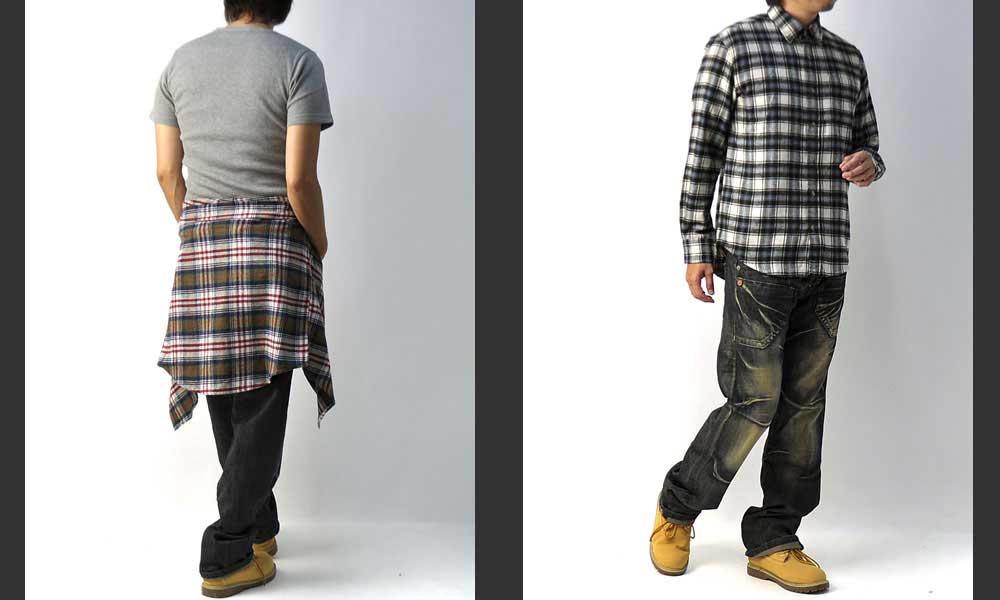
Four groups buy them year after year. Tradespeople and outdoor workers want heavyweight builds that shrug off abrasion. Hunters and hikers use midweight versions as a mid-layer under a shell. Casual wearers treat it as the default cool-weather top over a T-shirt, worn open or tucked with jeans and boots. And a growing share of buyers are women shopping tunic lengths and fitted cuts from L.L.Bean, Pendleton, and Lands’ End.
The style began as workwear for loggers and railroad crews in the 1800s United States, then crossed into mainstream casual wear a century later. That history is why the garment sits in a wardrobe between a dress shirt and a jacket, and why it stays a staple. Home sewers can skip the finished product entirely: flannel is sold by the yard wherever fabric by the yard is stocked.
Fabric Weight in Ounces Per Square Yard, Matched to the Job
Flannel weight is measured in ounces per square yard (oz), and one ounce per square yard equals about 34 grams per square meter (gsm), the unit European labels use. Many retailers only print lightweight, midweight, or heavyweight, so read the ladder below as a translation of those words.
- 4 to 6 oz (roughly 135 to 205 gsm), lightweight. Keeps the brushed texture with little insulation. Layers under a coat in shoulder season and works rolled-sleeve in cooler spring weather.
- 7 to 8 oz (roughly 235 to 270 gsm), midweight. The most versatile weight, and the everyday wear choice most picks above sit in.
- 9 oz and up (roughly 305 gsm and up), heavyweight. Stands alone in dry cold and doubles as a light jacket. Twill weaves dominate here because they are more durable against abrasion.
- Lined (any face weight). Sherpa, fleece, or quilted linings turn the garment into outerwear. The lined shackets from Carhartt, L.L.Bean, and Duluth Trading land between a heavyweight and a coat.
How Flannel Shirts Should Fit
Fit comes down to four points, and all of them shift once you add a layer underneath.
- Shoulders. The seam should sit at the edge of the shoulder bone. A seam hanging down the arm means the size is too big.
- Chest. Traditional and relaxed cuts leave room for a thermal or hoodie, which matters for comfort during labor and outdoor activity. Slim cuts read closer to a dress shirt and pair with chinos, but they turn tight and less comfortable over anything thicker than a T-shirt.
- Sleeves. With arms relaxed at your sides, the cuff should reach the wrist bone.
- Shrinkage. Untreated cotton tightens in a hot dryer, mostly in length. Without a pre-shrunk label, size for the fit after the first hot wash.
Sizes do not match across brands. A medium at L.L.Bean is cut looser than a medium at Pendleton, so compare one chest measurement against each brand’s chart and buy from stores with forgiving return policies when you cannot try the piece on.
Five Label Checks Before You Pay
The costliest error is buying on price alone, and it shows up within two wash cycles. A 12 USD fast-fashion piece pills, fades, and loses its shape inside a season, while a midweight cotton one at $35 to $60 costs less per year of wear.
- Set the weight from the use case. That single decision rules out most of the catalog.
- Read the fiber content tag. All-cotton breathes best and gains softness with washing, cotton-poly resists wrinkles and shrinks less, and wool holds warmth even when damp. Above 80 percent synthetic, the hand turns plasticky and breathability drops. Tops sold as flannel-look are often 100 percent polyester with a plaid printed on; the tag settles it, the title never does.
- Check the nap. Cloth typically brushed on both faces, called double-napped, keeps its texture far longer, and twill outwears a plain weave at the same ounce count. Single-napped, loosely woven fabric is what pills.
- Look at the hardware and seams. Double-needle stitching, reinforced elbows, and a sturdy button or pearl snap separate a five-year garment from a one-season one.
- Confirm the seller. Counterfeit Carhartt and L.L.Bean pieces surface through third-party marketplace sellers at prices that make no sense. Buy from the brand, or from a seller with a legible review history.
Buying Flannel Shirts Online: Retailer Comparison
Amazon has the widest catalog, brand-direct sites have the better cloth, and the price spread is wider than most buyers expect.
| Retailer | Typical price | Best for |
|---|---|---|
| Amazon | $20 to $60 | Widest brand range, Prime shipping |
| L.L.Bean | $50 to $90 | Cotton midweights, one-year guarantee |
| Lands’ End | $40 to $70 | Tall and plus sizing |
| Woolrich | $75 and up | Heritage wool and bold checks |
| Filson | $150 and up | Heavyweight wool for hard use |
Amazon
Amazon pulls Wrangler, Columbia, Woolrich, Dickies, and Burnside onto one filterable page. Filter by size and rating, then read the recent reviews instead of the star average.
Heritage Brands, Direct
L.L.Bean, Pendleton, Duluth Trading, Filson, and Vermont Flannel all sell direct, the safest route for premium labels. Pendleton mills its wool Board Shirt in Oregon. Duluth Trading’s Free Swingin’ Flannel adds underarm gussets for reach overhead. The Vermont Flannel Company cuts and sews in East Barre and Johnson, Vermont, for buyers who want US-made cotton. Check each site’s free shipping threshold at checkout, since those minimums move seasonally.
Woolrich
Woolrich, the outdoor clothing company founded in 1830, builds its collection around heritage wool and brushed cotton. Its signature red-and-black check and the lined shirt jackets are the recognizable pieces, starting around $75.
Lands’ End, Eddie Bauer, Carhartt, and Made-to-Measure
Lands’ End is the one to check for tall and plus sizing. Eddie Bauer sits mid-pack on price and weight. For workwear-grade builds, Carhartt‘s Rugged Flex Hubbard and Legendary Whitetails’ Buffalo Plaid run $40 to $70, and both discount hard at season’s end. Another route: several online shirtmakers cut flannel to your own measurements. One filing quirk to know, women’s styles are often listed under outerwear or shackets rather than shirts, so search both.
Shopping for Flannel in Person: Store by Store
Five kinds of stores carry them reliably from late August through January, sorted here by price tier.
Walmart
Walmart, the largest brick-and-mortar retailer in the country, is the cheapest dependable option. Supercenters stock plaid tops across the men’s, women’s, and kids’ clothing aisles, including house labels George and Time and Tru alongside Wrangler. Budget $15 to $25. Lined versions sit in outerwear rather than with the shirts.
Target
Target stocks hooded, lined, and classic cuts under Goodfellow and Universal Thread, plus the occasional Wrangler or Levi’s collaboration. The floor selection is narrower than Walmart’s; the website carries the fuller range. Most land between $25 and $40.
L.L.Bean Retail Stores
L.L.Bean flagship and outlet locations carry the chamois, Scotch Plaid, and fleece-lined lineup in person, the only practical way to compare weights by hand. Expect $50 to $90. Their full lineup covers the rest of the catalog.
Sporting Goods and Farm Stores
Cabela’s, Bass Pro Shops, Tractor Supply, and Dick’s Sporting Goods bring in heavyweight and lined builds for fall. Farm co-ops and smaller work clothing retailers often stock Carhartt, Berne, and Dickies below chain pricing.
Thrift and Consignment Racks
Goodwill, Savers, and local consignment stores turn up used plaid tops under $10, including heritage Pendleton, Woolrich, and L.L.Bean pieces that cost several times that new. A secondhand piece has one hidden advantage: it has already shrunk, so the fit on the hanger is the fit you keep. The same racks are the best hunting ground for vintage band shirts. Inventory moves fast in autumn, so call ahead.
What Owners Report After a Season of Washing
Two praise themes and two complaints repeat wherever people leave feedback. Walmart reviewers of heavyweight brushed-cotton models keep landing on the same points: the cloth holds its softness through repeated washing, and it leaves the dryer without needing an iron.
The complaints are more useful. Sizing inconsistency is the loudest, and it turns up inside single listings, where reviewers of the same item disagree about whether to size up. Pilling and thinness after washing is the second theme. GearJunkie’s tested roundup lists pilling among the drawbacks on several models. Sewing forums such as Quiltingboard explain one mechanism behind that: mills can use heavy starch sizing so a light cloth hits its advertised weight, and the first wash takes it back out.
Care slows both problems. Wash cold, turn the garment inside out, and tumble dry low. For off-season storage, fold rather than hang heavyweights so the shoulders do not stretch, and store them clean, since moths go after wool with body oils on it.
Pick the use case first and let it choose the weight. Then buy where returns are easy, because sizing is the one variable a listing cannot settle for you. The cheapest stretch of the year for flannel shirts is late January through February, when fall apparel clears out; the deepest selection runs late August through October. That timing applies to seasonal sweaters too if you are building a cold-weather wardrobe.
Flannel Shirts Questions, Answered
What makes a shirt a flannel?
The napping, not the cut. After weaving, the cloth passes under fine metal brushes that raise the surface fibers, creating the fuzzy hand and the insulating air pockets. The finish, not the fiber, earns the name.
What is a good brand of flannel shirts?
L.L.Bean is the safest all-around brand for midweight cotton with consistent sizing. Pendleton and Filson lead on wool, Carhartt and Duluth Trading on work builds, Lands’ End on tall and plus sizes, and Vermont Flannel on US-made cotton.
Are flannels out of style in 2026?
No. This is workwear first, which is why heritage brands still sell patterns they sold fifty years ago. The visible 2026 shift is toward heavier weights and shacket cuts rather than the slim fits that dominated the 2010s.
Is flannel the same thing as plaid?
No. Flannel is a fabric, plaid is a pattern of crossed stripes. A solid gray flannel still counts. A cotton poplin plaid button-down has no nap, so it offers none of the warmth.
Can you wear one to the office?
In a business-casual office, yes, if you pick for it. A slim or classic cut in a muted tartan or a solid, tucked, worn with chinos and leather shoes, reads as a shirt rather than as outerwear. Skip the heavyweight and lined versions, too bulky under a blazer, and leave flannel out of formal settings.
Are there lightweight versions for warmer weather?
Yes. Cloth in the 4 to 6 oz range, sometimes sold as summer-weight, keeps the brushed texture without the insulation. Rolled sleeves and an open front over a T-shirt carry it into spring.
Where is the cheapest place to buy one?
Thrift and consignment racks, at under $10 used. For new stock, Walmart at $15 to $25 sets the floor. The best value on decent cloth is the late-January clearance, when midweight cotton from mid-tier labels drops well below its autumn price.