
Wallets are sold almost everywhere, from Walmart’s accessories aisle to the designer counter at Nordstrom, but where you buy decides the price band, the leather grade, and how painless a return will be. A good wallet shapes how you carry cash, cards, and ID for years at a stretch. This guide covers men’s and women’s formats, leather versus synthetic construction, RFID protection, price tiers, and the specific stores and sites that stock each one.
This page contains affiliate links. We may earn a commission at no extra cost to you.
A basic RFID bifold at Walmart sits in the $10 to $20 range, while a Tumi long format or a Bottega Veneta piece can pass three hundred. The middle ground, roughly $40 to $120, is where Bellroy, Fossil, Ridge Wallet, and Bosca compete.
Wallet Types Explained: Which Format Fits How You Carry
A wallet is a compact case that organizes credit card stacks, cash, identification, and sometimes coins or receipts. Traditional formats include the bifold, the trifold wallet, and the long breast-pocket style common in mens wallets, plus clutch and zip-around layouts across women’s lines. Minimalist wallets, metal cardcases, and money clips serve people who carry three to six cards and little else.
| Format | Typical capacity | Best for | Trade-off |
|---|---|---|---|
| Classic bifold | 8 to 12 cards plus folded bills | Back-pocket carry with an ID window | Thickens fast past ten cards |
| Trifold wallet | More pockets than a bifold | Cash-heavy carry | Thickest folding format |
| Slim card holder | 3 to 6 cards, no bill sleeve | Front-pocket carry | Few bills fit |
| Metal cardcase | Up to 12 cards | Rugged minimalist carry | Bills ride under a strap |
| Zip-around continental | 20+ cards, passport, checkbook | Purse carry | Too big for a pocket |
| Money clip | 2 or 3 cards plus bills | Mostly-cash carriers | No ID window |
Buyers span nearly every adult: commuters tapping transit passes, travelers juggling currencies, students carrying a campus ID, and professionals who want a sleek profile. Even with mobile payments everywhere, a driver’s license is still the one essential card most people have to carry physically. Gift buyers shop this accessory category heavily, because a well-made leather piece signals care with no size risk. For lower-stakes presents, see the white elephant gifts guide.
Top Wallet Picks by Use Case
These five were picked on material grade, warranty terms, and rating consistency. Bellroy (three years) and Ridge (lifetime coverage on the plates) publish the longest warranty terms of the group.
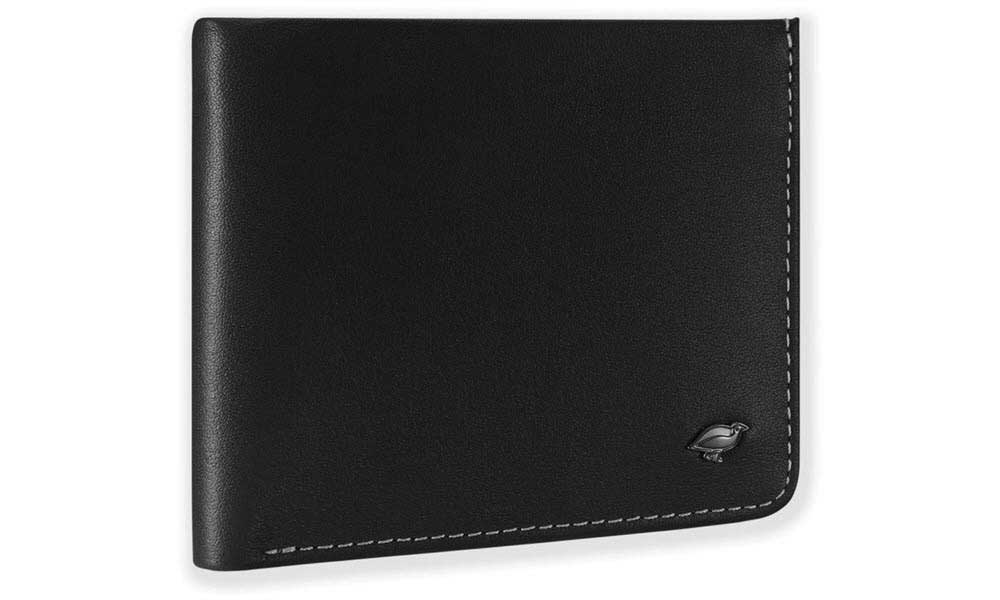
Best overall: Bellroy Hide & Seek. Full-grain leather from Leather Working Group certified tanneries, quick-access card slots, a hidden bill section, and RFID shielding in a compact wallet profile. Around $109 to $125 with a three-year warranty. Check Amazon listings.
Best budget: Fossil Derrick RFID Leather Bifold. Leather with a shielded lining and a traditional two-fold layout. Usually $35 to $50. Browse Fossil Derrick options.
Best minimalist: Ridge Wallet Aluminum. Two machined plates bound by an elastic strap, rated for up to twelve cards, with a lifetime warranty on the plates. Typically $75 to $95. See Ridge listings.
Best women’s: Kate Spade Zip-Around Continental. Multiple card pockets, a zipper closure, an ID window, and a coin pocket in pebbled or saffiano leather. Roughly $150 to $200 at full price, often discounted at outlet and on Amazon fashion.
Best RFID value: Alpine Swiss RFID Leather Bifold. Cowhide with a shielded liner, usually under twenty-five dollars. Check Alpine Swiss stock.
Carry more than ten cards? Start with the Fossil or Alpine Swiss. Six or fewer, the Ridge or Bellroy. Also worth a look: the backpacks guide for a coordinated leather kit, money belts for cash carry abroad, a Levi’s pairing for denim wear, and Visa gift cards when you cannot guess someone’s taste.
Where to Buy Wallets in Store
Department stores, off-price chains, Walmart, Target, and independent leather shops each own a different price band. In person you can test card tension, which no listing photo shows.
Department Stores: Macy’s, Nordstrom, and Kohl’s
Full-line department stores hold the widest in-person selection. Macy’s and Nordstrom stock Coach, Kate Spade, Michael Kors, Fossil, Tumi, and Bosca across men’s accessories and the handbag floor. Kohl’s leans toward Fossil, Levi’s, and store brands at lower price points. Check the accessories counter near the fragrance hall, or handbags for a women’s purse or clutch.
Off-Price Chains: TJ Maxx, Marshalls, and Nordstrom Rack
Off-price stores rotate designer overstock, so inventory turns over weekly. Genuine Coach, Michael Kors, and Fossil pieces show up below full retail, but stock is first-come. Inspect for stitching flaws or scuffs, and read the receipt for the current return window, because off-price policies are generally shorter than the department store standard. The roundup of stores with the best return policy shows how wide that gap runs.
Walmart and Target
Walmart stocks Levi’s, Fossil, and house-brand wallets for men in the accessories aisle, beside belts and ties. Walmart’s online catalog lists shielded designs at the bottom of the price range. Target carries Fossil, Herschel, and its own A New Day women’s line near handbags. Check Target’s aisle listing before driving over.
Independent Leather Shops and Local Makers
Leather boutiques, museum gift shops, and craft fairs carry small-batch, handmade work the chains never stock. Prices run higher, but you can weigh the hide and ask which tannery supplied it. Ask whether the maker will personalize a piece before you pay, because that varies shop to shop.
Best Places to Order Wallets Online
Amazon carries the deepest inventory, Nordstrom and Macys.com own the designer tier, and Etsy handles custom work. Most other online sources are single-brand shops that only show their own line, so cross-brand comparison is on you.
Amazon
Amazon’s category page lists Fossil, Bellroy, Herschel, Tommy Hilfiger, Levi’s, Alpine Swiss, and thousands of independent makers. Filter by Prime eligibility, RFID protection, and rating to narrow it fast. Third-party sellers set their own return terms, so read the seller name first.
Nordstrom and Macys.com
Nordstrom.com carries a broad designer selection and lists free shipping and free returns as its standard policy, which makes it the safer place to gamble on a gift. Macys.com runs regular accessory promotions; check the current sale and shipping threshold at checkout.
Brand Direct Sites
Ordering from bellroy.com, ridge.com, fossil.com, or coach.com gets the widest colorway selection and keeps warranty claims simple. Personalization is not universal, so check the individual product page for embossing or engraving before you commit.
Etsy
Etsy’s handmade marketplace is where custom leather work, monogrammed billfolds, and small-batch makers live. Personalized orders ship slower, and each listing shows the maker’s processing time.
How to Choose a Leather Wallet: Five Features That Matter
Start with capacity and material. Five criteria separate a leather wallet you keep for a decade from one you replace next spring.
Material and construction. Full grain leather is the durability benchmark: the outer grain layer stays intact and builds a patina with daily use. Top-grain is sanded smooth and ages less richly. Genuine leather comes from lower split layers and wears out far sooner; bonded leather (glued scraps) sits below it. Woven nylon shrugs off water for less, and Ridge Wallet bolts aluminum or titanium metal plates over an elastic strap.
Tanning matters too. Vegetable-tanned hide starts stiff and darkens into a deep patina, while chrome-tanned leather is softer from day one and handles rain better. Light shades such as tan and sand also pick up indigo dye from raw denim, so a pale piece in dark jeans will stain.
Card and cash capacity. A slim card holder takes three to six cards with no bill sleeve. A classic bifold fits eight to twelve plus folded notes. A spacious zip-around clutch swallows a passport, a checkbook, and twenty-plus cards in separate compartments. Match capacity to what you carry now, not what you plan to trim to.
RFID protection. Shielded models use a metal mesh or foil liner to block the 13.56 MHz signal contactless cards use under the ISO/IEC 14443 standard. Skimming is rare, since chip transactions rely on a one-time cryptogram, but the liner costs little and protects your personal data.
Closure and stitching. A zipper or magnetic snap keeps coins and receipts from escaping a zip-around, while most men’s designs lean on card tension instead of a closure. Check stitch density and whether the edges are burnished or painted, because painted edges chip and burnished edges hold.
Warranty and repair. Bellroy backs its leather goods with a three-year warranty and Ridge covers its plates for life. Tumi runs a paid repair program and Bosca services its own pieces, though terms vary by line. A repair path signals the maker expects it to last.
Here is the fastest path from browsing to buying:
- Count your cards. Empty what you carry today, then pick a format with one spare slot.
- Set a price band. Under $30 for utility, $40 to $120 for full-grain hide, higher only for a designer name.
- Check the return window. Department stores and brand sites are more forgiving than off-price chains and marketplace sellers.
- Read the leather grade. If a listing will not name full-grain or top-grain, assume it is lower.
Do those four things and comparing wallets stops being guesswork. Open one tab at a department store and one at a brand site, then buy the one whose construction the listing documents.
Wallet Buying Mistakes to Skip
Four traps cost buyers the most money in this category.
Vague leather labels. “Genuine leather” is a split-layer grade, not a quality claim. If a listing skips the words full-grain leather or top-grain, assume split or bonded hide and price it accordingly.
Overstuffing a slim design. A holder rated for five cards will stretch, crack, or split a seam once you cram ten in. Buy the capacity your cards and cash actually need, not the thinner silhouette.
Counterfeit designer pieces. Coach, Michael Kors, Kate Spade, and Bottega Veneta are heavily faked on marketplace listings. Buy luxurious labels from the brand’s own site, Nordstrom, Macy’s, or an authorized outlet, then check the serial tag.
Chasing a logo over construction. A stamped logo does not turn a split hide into quality leather or tighten loose stitching. Compare edge finish and lining first, then decide whether the premium for the name is worth it.
Alternatives When Something Else Works Better
Three formats replace a traditional billfold outright, and one situation calls for skipping the category entirely.
Money clip. A magnetic or spring clip carries folded bills and two or three cards with almost no bulk. Better than a fold-over design if you carry mostly cash, worse if you need an ID window at a gate.
Phone case with card slots. A folio or magnetic sleeve merges two items into one; the phone cases guide covers where to find them. Convenient, with one real risk: lose the phone and you lose your ID and cards at once. On an iPhone, a MagSafe card sleeve (Apple’s magnetic attachment system) snaps on and off, but keep striped hotel key cards out of it, since strong magnets can wipe them.
Keychain card sleeve. A small keychain-mounted holder carries a transit pass, a gym tag, and one backup card. Useful for dog walks where you carry no bag.
Skip the category if you pay by phone, keep your license in the car console, and never carry cash. A rubber band around two cards weighs less than any leather piece here.
Start by counting the cards you actually used this month. Then pick the format from the table above that holds that count with room for one more, and buy from a seller whose return window covers a week of real carry. If you are buying wallets as a gift, order from Nordstrom or the brand’s own site so the recipient can swap the color.
Common Questions About Wallets
Do RFID-blocking wallets actually work?
Yes. A metal-lined case blocks the 13.56 MHz signal contactless chip cards use under the ISO/IEC 14443 standard. Skimming stays rare, because a chip transaction generates a one-time cryptogram a captured signal cannot reuse. Shielding matters most for travelers stacking several cards in one compartment.
What is the difference between a bifold wallet and a minimalist wallet?
A bifold wallet folds once and holds roughly eight to twelve cards plus folded bills. A slim design carries three to six, usually with no bill sleeve, and sits flatter in a front pocket. Bifolds win on capacity and ID windows; slim designs win on bulk. A trifold adds a third panel, trading extra thickness for capacity.
Are minimalist wallets worth it?
A minimalist design is worth it if you carry six or fewer cards and little cash. It sits flat in a front pocket and forces you to drop dead cards. It is a poor fit for anyone who carries loose change, checks, or a stack of loyalty cards.
Is leather more durable than synthetic?
Full-grain hide outlasts most synthetics and looks better as it ages. High-quality woven nylon resists water and stains in ways leather cannot, and costs less. Genuine leather, a split-layer grade below full-grain and top-grain, is the one leather that good nylon reliably beats on durability.
What is the best brand for wallets?
The brands split cleanly by tier. Bellroy and Ridge lead the modern slim category, Fossil owns the mainstream leather price band, Bosca and Tumi handle traditional and travel formats, and Coach, Kate Spade, and Bottega Veneta cover the designer tier. Pick your tier first.
What wallet styles are trending right now?
Slim wallets and front-pocket card holders are the growth formats, as fewer people carry cash and more pay by phone. Metal-plate designs like the Ridge and card sleeves that clip magnetically to the back of an iPhone sit in the same trend. The classic bifold has not disappeared; current versions simply run thinner, with fewer slots and a single bill pocket.
Where is the best place to buy one in person?
A full-line department store, if you want to compare designer and mid-tier leather goods in one trip. Off-price chains beat them on price if you are flexible about style. An independent shop is the only channel where you can ask which tannery supplied the hide.
How often should one be replaced?
Replace it when the stitching opens, a card pocket stops holding tension, or the lining tears. A full-grain piece commonly survives years of everyday use, while genuine leather delaminates much sooner. Metal cardcases outlast everything else here; you swap the worn elastic band instead.
How This Guide Was Put Together
The wheretobuyguides.com editorial team chose these stores and products on leather grade, warranty terms, return policy, and rating consistency; prices are typical ranges, not live quotes. Promotions and return windows change quickly, so confirm the current price on the retailer’s own page before ordering.