
The best place to buy sunglasses is any store where the tag promises full UVA and UVB blocking and the return window lets you test the fit at home. For designer labels, that means Sunglass Hut or the brand’s own site. For prescription lenses, a vision chain such as LensCrafters or Costco, or an online lab like Zenni or Warby Parker. For a glovebox spare, Walmart, Target, or Amazon listings sold by Amazon itself. Price has nothing to do with eye safety: a dark tint with no ultraviolet filter is worse than wearing nothing.
This page contains affiliate links. We may earn a commission at no extra cost to you.
What a Good Pair Has to Do Before Style Matters
Sunglasses are tinted eyewear designed to reduce visible brightness and stop ultraviolet radiation before it reaches the human eye. The second job is the medical one, and it is invisible on the rack. The American Academy of Ophthalmology, the largest association of eye physicians in the United States, recommends 100 percent UV protection, which a label may state as “100% UVA/UVB,” “UV400,” or “UV absorption up to 400nm.” Read the Academy’s eye health guidance for the clinical version.
Three rules govern the U.S. market, and only one of them is mandatory:
- FDA device class. The FDA, the federal agency that regulates medical devices, treats over-the-counter sunglasses as Class I devices. That sets a floor for labeling, not a check of lens quality.
- Impact resistance (mandatory). Under 21 CFR 801.410, every pair sold in the U.S. needs impact-resistant lenses, proven by a drop-ball test on samples from each production batch. Impact-resistant does not mean shatterproof.
- ANSI Z80.3 (voluntary). The American National Standards Institute’s sunglass standard, now in its 2025 edition and developed through the Vision Council’s Z80 committee, covers lens quality, UV claims, and frame durability. The 2025 revision renamed “cosmetic” eyewear “fashion” eyewear and added a label for tints that are not suitable for driving.
Who needs a serious pair? Drivers, boaters, cyclists, skiers, and anyone on a photosensitizing medication. Children need eye protection most, because a young lens is clearer and passes more sunlight to the retina.
How to Read the Tag: UV400, Polarized, and Lens Categories
Check the ultraviolet rating first, the lens material second, and the fit third. Everything after those three is preference.
Ultraviolet rating. Look for UV400 or 100% UVA/UVB on the tag, or etched into a corner of the lens. Tint darkness is not a proxy for sun protection. A very dark pair with no filter opens your pupil wider and lets more harmful rays through. The Academy also notes that an inexpensive pair with full UV blocking beats a designer pair without it.
Polarization. A polarizing film cancels horizontal reflections off water, snow, and wet asphalt. It does not block UV on its own, so polarized lenses still need the UV statement. Pilots and downhill skiers often skip polarized sunglasses, because the same effect hides icy patches and washes out an LCD panel.
Lens category. Pairs made for the European market print a filter category from 0 to 4, set by the ISO 12312-1 standard. It measures how much visible light gets through, not UV blocking:
| Category | Visible light let through | Typical use |
|---|---|---|
| 0 | Over 80% | Clear or fashion tint, overcast days |
| 1 | 43 to 80% | Light tint, low sun |
| 2 | 18 to 43% | Everyday city and driving |
| 3 | 8 to 18% | Bright sun, beach, most sport |
| 4 | 3 to 8% | Glacier, high altitude, open water. Not for driving |
Category 3 suits most buyers. Category 4 glacier lenses are dark enough to hide brake lights.
Lens Material, Lens Color, and Frame Fit
Lens material. Polycarbonate and Trivex are shatter-resistant and the default for sport and for kids. Uncoated polycarbonate scratches easily, so pay for a hard coat. A glass lens gives the sharpest optics and clarity and resists scratching best, but it weighs more and can break on impact. CR-39 plastic sits between them. Whatever the material, clean it with lukewarm water and a microfiber cloth.
Lens color. Gray keeps hues neutral, the safe default for driving. Brown and amber lift contrast on grey days. Gradient lenses run dark at the top and clear at the bottom, so you can still read a dashboard. A mirror coating trims a little more light, but a reflective finish is not UV protection either.
Fit and frame shape. A frame should sit level, clear your lashes, and never squeeze at the temple. Wraparounds and an oversized silhouette shield side light better than a small rectangular plastic frame (the Academy’s pick for blocking rays from the side). Face shape is a style question, not a safety one.
Special cases. Ordinary sunglasses do not protect against tanning beds, arc welding, or looking at a solar eclipse. Each needs a purpose-made filter.
Where to Buy Sunglasses in Person
Four chains cover most of the in-person market: Sunglass Hut for designer labels, LensCrafters and Costco for Rx work, and Walmart or Target for budget pairs. One ownership fact shapes the comparison. EssilorLuxottica, the French-Italian eyewear group, owns Sunglass Hut and LensCrafters as well as the Ray-Ban and Oakley brands, so moving between those storefronts is shopping one company, not comparing rivals.
Sunglass Hut
The largest sunglass specialty chain in North America keeps Oakley, Prada, Persol, Costa Del Mar, and Maui Jim on one wall, the fastest place to try five labels back to back. Stock leans toward current-season best sellers rather than depth. Use the store locator first.
LensCrafters
The right call when you want Rx work handled quickly, since many locations run an on-site lab. Exams are booked through an independent optometrist alongside the store, and the wall carries Oakley and Coach.
Walmart and Target
Budget frames from Foster Grant, Panama Jack, and house labels sit on the accessories aisle. Both chains handle Rx orders through their vision departments, Target Optical in Target’s case, where licensed designer names appear.
Costco Optical
Warehouse vision counters stock Oakley and Costa Del Mar at member pricing and cut Rx lenses in house. Membership is required to buy, not to sit an exam. Our list of what to buy at Costco covers the rest of the warehouse.
Run a 30-second fit check before you pay:
- Face the mirror straight on. The pair should sit level with your brows, not tilted.
- Nod once, hard. If it slides down your nose, the bridge is too wide.
- Turn your head side to side. The arms should hold without gripping.
Then look through the lenses at a door frame or a tiled wall. The Academy’s quick test: if straight lines stay straight as you move the pair, the optics are fine.
Best Places to Order Shades Online
Selection and counterfeit risk both peak online, so who you buy from matters more than which site you open.
Amazon
The deepest range anywhere, from throwaway beach pairs to high-end builds from the premium labels. Buy from listings marked “Ships from and sold by Amazon.com” or from an official brand storefront, since third-party sellers are the entry point for gray market inventory. Browse the glare-cutting selection.
Warby Parker
Direct-to-consumer acetate styling with sun lenses included. The home try-on program ships five frames to test before you commit, which solves the fit problem online buying creates.
Manufacturer Sites
Ordering from Ray-Ban’s own storefront, Oakley.com, MauiJim.com, or the Randolph Engineering site guarantees authenticity and opens up custom tints and engraving resellers skip, a simple way to personalize a pair.
Walmart.com
The widest cheap selection online, with a vision center catalogue running into the thousands and plenty of stylish budget options. Licensed pairs such as the Ray-Ban Warrior sit next to third-party listings worth reading carefully.
Rx Sun Lenses Online: Five Retailers Compared
Ordering prescription sunglasses online usually costs less than a vision chain, and the trade-offs sit in the return window and insurance handling. This table follows the 2026 review of online eyewear retailers by the National Council on Aging (NCOA), a national nonprofit for older adults:
| Retailer | Return window | Polarized Rx | Vision insurance |
|---|---|---|---|
| GlassesUSA | 60 days | Yes | Accepted |
| Warby Parker | 30 days | Yes | Accepted |
| Zenni | 30 days | Yes | Not accepted (HSA/FSA yes) |
| EyeBuyDirect | 14 days | Yes | Accepted |
| Frames Direct | 30 days | Yes | Accepted |
Every site asks for a current prescription plus your pupillary distance, the millimetre gap between your pupils an optometrist measures. A strong Rx or a progressive is worth an in-person fitting at a vision chain.
Returns and Buyer Protection by Retailer
Return windows decide more purchases than buyers admit, because fit is the one thing a product photo cannot show.
| Retailer | Standard window | Requirement | Practical note |
|---|---|---|---|
| Amazon | 30 days | Original packaging | Sellers set their own terms, often shorter |
| Walmart | 90 days | Receipt or order history | Online orders go back at the service desk |
| Costco | Member satisfaction guarantee | Membership card | Rx work has separate terms, ask the counter |
| Warby Parker | 30 days | Original condition | Return shipping is free on non-Rx orders |
| Sunglass Hut | Varies, check the policy page | Receipt | In-store returns clear faster than mail-back |
These are standard published policies, not a guarantee. Confirm on the policy page, since holiday windows and clearance items differ.
The trap is marketplace stock. A pair bought from a third-party seller on Amazon or Walmart.com follows that seller’s terms, not the platform’s, and that is where counterfeits live. Unsure about fit? Buy from the longest window first. Our roundup of stores with the best return policy goes deeper.
Red Flags: Missing Labels, Fakes, and Bad Cleaning
The costly mistake is not overpaying. It is walking out with a dark pair that states no ultraviolet rating.
No ultraviolet label anywhere. If the tag, the sticker, and the product page all stay quiet about a rating, assume there is none. Gas station spinner racks are the usual offenders.
Counterfeit designer sunglasses. Fakes of Oakley, Persol, Prada, and Gucci circulate through marketplace listings. The tells are a crooked logo, a wobbling hinge, missing screws, and a price far below any authorized dealer. Counterfeits rarely carry a genuine ultraviolet coating, which turns a wallet problem into a health one.
Cleaning with a shirt tail. Dry cotton drags grit across the coating and causes most scratching. Rinse first, then wipe.
Our Top Sunglasses Picks
Five picks, ranked on ultraviolet rating first, then clarity, build quality, and value within the tier.
Best overall: Ray-Ban Classic Aviator RB3025. The teardrop metal frame introduced in the late 1930s, still sold with G-15 green, gradient, and glass lens options. Aviator sunglasses flatter a wide range of faces, which is why this one outlasted every trend since. Check current pricing.
Best budget: Knockaround Premiums. A spring loaded hinge and a build durable enough to keep one pair in the car and another in the beach bag. The trade-off is coating life, which gives out before the frame does. See the range on Amazon.
Best for water and snow: Maui Jim Peahi. Glass optics with Maui Jim’s PolarizedPlus2 treatment, aimed at boat decks and ski slopes. Heavier on the nose than plastic. If you fish, pair it with a current fishing license. See the listing.
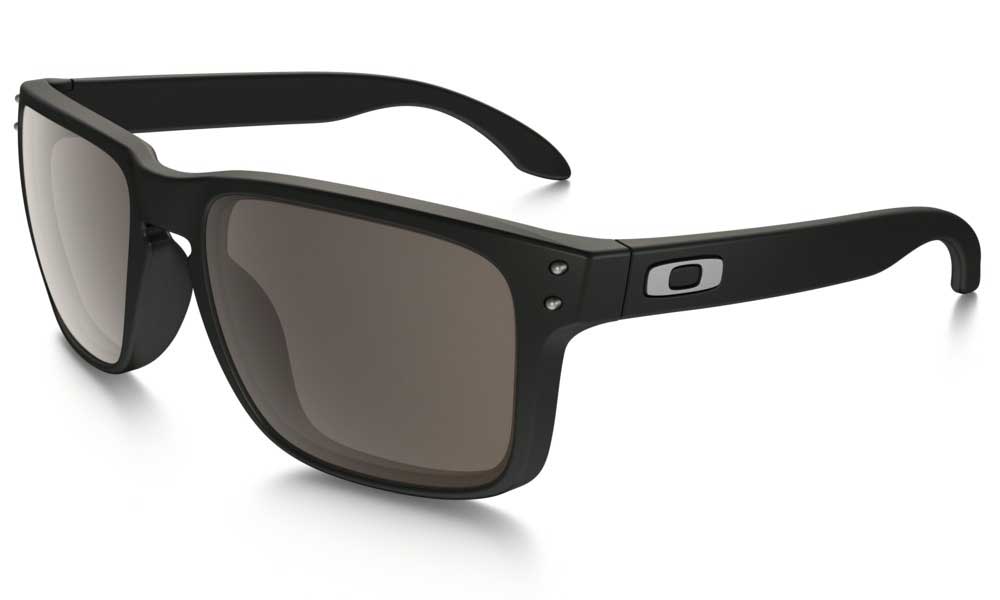
Best for sport: Oakley Holbrook. An O Matter frame with Prizm lens tuning built for contrast on trail, slope, and water, in a squared shape that reads casual off the bike. Matte black is the safe colorway. View sport colorways.
Best designer value: Warby Parker Haskell. Hand-polished acetate in a squared-off wayfarer silhouette, available with an Rx. Free home try-on removes the guesswork.
Building out a warm-weather kit? See our guides to running shoes, wallets, and backpacks. If you use a tanning bed, tanning goggles are a separate buy, because ordinary eyewear does not seal against the face.
Start with the tag. If a pair of sunglasses does not state 100 percent UVA and UVB protection, put it back whatever the price says. Then try it on in person and run the fit check. If you cannot, order from a retailer whose return window gives you a real second chance.
Common Questions Before You Buy
What is better, UV or polarized sunglasses?
They solve different problems and are not alternatives. Ultraviolet blocking is a safety feature every pair should have, and in polycarbonate it comes from the material itself. Polarization is a separate filter layer that strips reflected glare off flat surfaces and adds no ultraviolet blocking by itself. A cheap pair can be polarized and still block almost nothing, so take the rating.
Who has the best cheap sunglasses?
Knockaround, Goodr, and SUNGAIT carry the review volume on Amazon, and Walmart’s house labels handle the cheapest tier. Goodr is built around a no-slip coating aimed at runners. What you give up is coating life and hinge durability, not sun protection, as long as the tag states full UV blocking.
How do I match a frame to my face shape?
Match by contrast, not similarity. Round faces carry rectangular shapes well, angular faces soften under round or aviator styles, and a narrow face needs a shorter bridge more than a smaller lens. The number that matters is total frame width, which should roughly equal the widest part of your face.
Can I order a prescription pair online?
Yes, and it usually costs less than a vision chain. Warby Parker, Zenni, EyeBuyDirect, GlassesUSA, and most manufacturer sites accept a current prescription plus your pupillary distance. Vision insurance sometimes reimburses part of a tinted order even when it does not cover the frame, but Zenni does not take insurance directly.
How long should a pair last before you replace it?
Judge the lens, not the calendar. The American Academy of Ophthalmology says it is unclear whether UV blocking fades over time, and an optical shop can measure a pair’s blocking if you are unsure. Replace when scratches scatter halos at night, when the arms lose their grip, or when the coating flakes.