
If you or someone in your household struggles to hear dialogue clearly, the TV Ears headset is a purpose-built wireless listening system worth considering. It delivers amplified, speech-clarifying audio directly from your television without forcing everyone else to endure high volume. Whether you need the entry-level Original model or the premium Dual Digital System, this guide covers where to buy online and in store, what features matter most, and pitfalls to avoid before you purchase.
This page contains affiliate links. We may earn a commission at no extra cost to you.
What Is the TV Ears Headset and Who Needs One
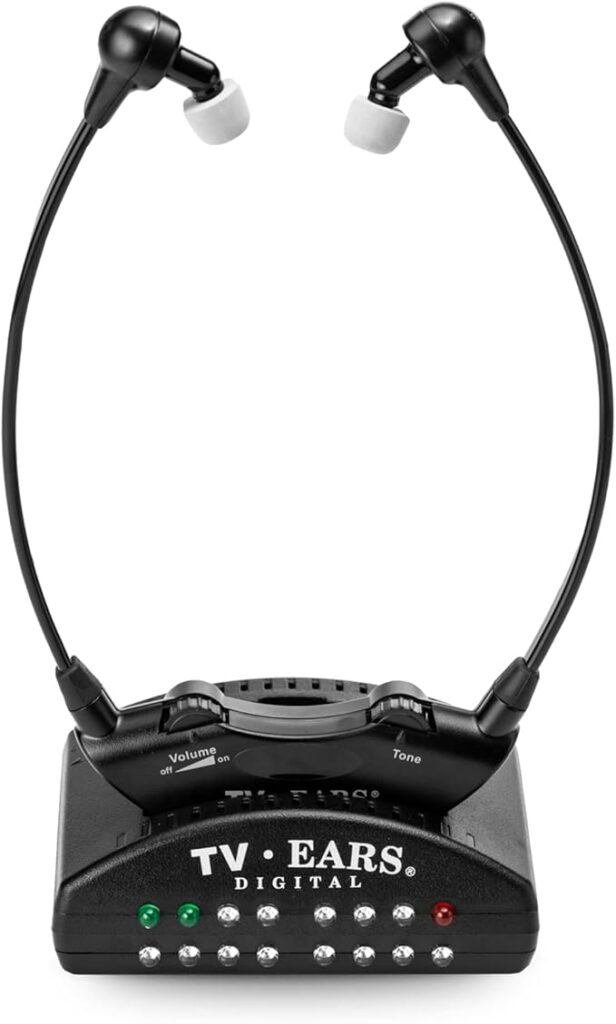
TV Ears is a wireless listening device designed for people who have difficulty hearing television audio. Unlike standard headphones, it uses voice clarifying circuitry to isolate and amplify spoken dialogue while reducing ambient sound, making shows, news, and movies far easier to follow.
The primary audience includes older adults experiencing age-related hearing loss, anyone with mild to moderate hearing impairment, and households where one person needs louder audio than others. According to the National Institute on Deafness and Other Communication Disorders (NIDCD), roughly one in three adults between ages 65 and 74 has some degree of hearing loss – exactly the group that benefits most from a dedicated TV listening device.
Each system pairs a base transmitter with a lightweight headset, allowing independent volume control that does not affect the television speakers. Family members watch the same program at their own preferred levels. For anyone who already wears a hearing aid, several models include compatibility with standard telecoil circuits for added convenience.
The brand has been doctor recommended for years and remains one of the most widely recognized names in the assistive TV listening category. Unlike generic wireless headphones designed for music, every component in the system is optimized for spoken-word clarity – the feature that matters most when watching news, dialogue-heavy dramas, or live sports commentary.
What to Look For: Features and Buying Criteria
Not every model suits every setup. Before choosing a headset, evaluate these key factors:
Wireless Technology: Most systems use infrared signals, which deliver interference-free audio within line of sight. Newer models offer 2.4 GHz or 5.8 GHz digital transmission for extended range. If you need to move between rooms, look for a long range system rated for 100 feet or more.
Transmitter Compatibility: The base transmitter connects to your television through RCA, optical TOSLINK, or 3.5 mm outputs. Check which connections your set provides before ordering. Older TVs only accept RCA, while digital versions handle optical and coaxial inputs.
Sound Customization: Higher-end models offer separate tone and volume controls so you can fine-tune dialogue clarity. The voice clarifying feature is the core selling point – confirm the model you choose includes it, not just basic amplification.
Comfort and Fit: Since many users wear a headset for hours at a time, weight matters. The under-chin design keeps pressure off the top of the head. Ear tips come in multiple sizes, and replacements are inexpensive.
Rechargeable Battery: All current models include a rechargeable battery that charges in the base cradle. Battery life ranges from 6 to 14 hours per charge depending on the model. If you watch more than four or five hours daily, choose one rated for at least 10 hours.
Bluetooth vs. Infrared: Standard bluetooth headphones often introduce a 100-200 ms audio delay that throws off lip sync. Dedicated infrared technology avoids this entirely, which is why purpose-built systems outperform generic wireless headphones for real-time viewing.
What to Avoid When Buying TV Ears
Generic wireless headphones marketed as “TV headphones.” Budget listings use similar keywords but lack the speech-enhancement circuitry that makes the TV Ears line effective. Ordinary wireless headphones amplify all frequencies equally, which does not improve dialogue clarity.
Bluetooth-only devices without a dedicated transmitter. Pairing regular BT headphones directly to a smart television often introduces noticeable audio delay. For lip-sync accuracy, a purpose-built transmitter-receiver pair is essential.
Buying the wrong model for your connections. The Original system is analog-only through RCA. If your television has only an optical output, you need the Digital or Dual Digital version instead. Choosing the wrong model means buying a separate adapter or returning the unit.
Counterfeit or refurbished units from unverified sellers. Third-party marketplace listings sometimes ship knockoff ear tips or outdated firmware. Stick to authorized retailers or the manufacturer’s own store for warranty coverage and genuine parts.
Ignoring ear tip size. A loose fit causes audio leakage and reduces perceived volume. Try the different included sizes before deciding the product is too quiet.
Where to Buy TV Ears In Store
Walmart
Most Walmart locations stock select models in the electronics section or near the pharmacy. Ask an associate to check availability at your local store, since shelf selection varies by region. Walmart often carries both the Original and Digital versions, making it easy to compare options in person before committing.
Look for the assistive listening display near headphones and personal audio accessories. Pricing at Walmart is typically competitive with online retailers, and you avoid shipping wait times. Call ahead to confirm stock – smaller locations may carry limited options.
Hearing Aid Centers and Audiology Clinics
Audiologists and hearing clinics frequently stock TV Ears alongside hearing accessories. Staff can test which model matches your level of hearing loss and verify that the headset pairs properly with any existing device. This hands-on guidance is especially valuable if you are unsure which transmitter connection your television uses.
Clinics may also carry demonstration units so you can test audio quality and comfort before buying. If you already use amplification devices, an audiologist can recommend the model that complements your current setup most effectively.
Medical Supply Stores
Regional home medical equipment retailers often carry assistive listening products. Staff can walk you through setup and help you choose between the Original, Digital, and Dual Digital configurations based on your specific needs and budget. These stores are a good option if you want personalized advice from people experienced with hearing assistance devices.
Where to Buy TV Ears Online
Amazon
Browse the full selection on Amazon #ad to compare TV Ears models including the Original, Digital, and Dual Digital systems side by side. Verified buyer reviews and Q&A sections help you evaluate real-world performance before purchasing. Bundles that include extra ear tips and charging accessories are frequently available at a discount. Amazon also makes returns straightforward if the model you choose does not match your setup.
Best Buy
Check availability at Best Buy for popular models, including wireless headphone options. You can order online for home delivery or reserve for in-store pickup at your nearest location. Best Buy’s return policy also gives you a trial window to confirm the headset meets your expectations.
TV Ears Official Store
Visit the manufacturer’s website to explore every current system, read setup guides, and access troubleshooting resources. Buying direct guarantees genuine parts, current firmware, and full warranty coverage. The official store also sells replacement batteries and additional headsets for multi-listener households.
Walmart Online
Shop the Walmart listing for competitive pricing on headsets and accessories like replacement ear tips. Walmart runs regular rollback pricing on assistive listening products, making it a solid choice for budget-conscious buyers. Free shipping thresholds are typically low, and you can also choose in-store pickup if a location near you has the model in stock.
Top Picks
Best Overall: TV Ears Digital Wireless Headset System
Connects via optical or RCA output, delivers voice clarifying sound, and provides up to 12 hours of battery life per charge. Rated 4.2 stars across thousands of verified reviews, this model suits most households with modern televisions. Price range: $90-$130. Search on Amazon #ad.
Best Budget: TV Ears Original Wireless Headset System
The entry-level model uses RCA connections and provides the same dialogue-enhancement circuitry at a lower price point. If your set has RCA outputs, this is the most affordable way to start. Battery lasts roughly 10 hours. Price range: $70-$100. Ideal for seniors who want straightforward setup without extra complexity.
Best for Two Listeners: TV Ears Dual Digital System
Ships with two headsets and one transmitter so two people can listen simultaneously at independent volumes. Each unit charges in the same cradle, eliminating the need to buy a second device later. Reviewers frequently note that this bundle costs significantly less than buying two separate systems. Price range: $170-$220. A strong choice for couples with different hearing needs.
| Model | Best For | Connection | Battery | Price Range |
|---|---|---|---|---|
| Digital | Most households | Optical + RCA | ~12 hrs | $90-$130 |
| Original | Budget buyers | Analog (RCA) | ~10 hrs | $70-$100 |
| Dual Digital | Two listeners | Optical + RCA | ~12 hrs each | $170-$220 |
Frequently Asked Questions
Can I still use the television speakers while wearing the headset?
Yes. The transmitter sends audio to the headset independently, so the speakers remain active. This lets household members enjoy their own volume levels at the same time without compromise.
Do these devices work with all televisions?
They are compatible with most modern and older sets that have an analog RCA, optical TOSLINK, or 3.5 mm audio output. Check your connections before choosing a model – the Original requires RCA, while the Digital and Dual Digital versions accept optical input.
What is the typical wireless range?
Most models reach up to 50 feet. Systems using 2.4 GHz or 5.8 GHz RF signals offer extended range and work through walls, while infrared models require line of sight to the transmitter.
Is there a hearing aid specifically for watching television?
TV Ears devices are not hearing aids in the clinical sense, but they serve a similar purpose for entertainment audio. They amplify and clarify dialogue independently of room volume, which helps people who are hard of hearing follow programs more easily.
How long does the battery last, and is it replaceable?
Battery life ranges from 6 to 14 hours depending on the model. All current units use a rechargeable battery that charges in the base cradle. Replacement batteries are available from the manufacturer and authorized retailers.
What is the difference between the Original and the Digital model?
The Original connects through RCA outputs only and is designed for older television sets. The Digital model adds optical TOSLINK input for modern sets, and many users report slightly improved audio clarity from the digital signal processing. Both share the same under-chin headset design and dialogue-enhancing circuitry.
About This Guide
Reviewed by the wheretobuyguides.com editorial team. Content on hearing assistance products is prepared with guidance from published research by the National Institute on Deafness and Other Communication Disorders (NIDCD). Last updated: March 2026.
Whether you shop in store or online, finding the right listening system is worth the effort – clearer dialogue and fewer TV volume disagreements make a real difference in everyday comfort.