
Savings bonds have exactly one authorized seller: TreasuryDirect.gov, the online platform the U.S. Department of the Treasury runs itself. Banks stopped selling them over the counter on January 1, 2012, and the last paper option, a Series I certificate ordered with a federal income tax refund, closed on January 1, 2025. So the real decision is not which store carries them. It is which series fits your timeline, how the yearly cap works, and how to tell the real site from the look-alikes.
A savings bond is a non-marketable debt security: it is registered to a named owner, sold directly by the government, and redeemed back to it rather than traded to another investor. The first series went on sale in 1935 to help pay down public debt, the Bureau of the Fiscal Service runs the program today, and repayment is backed by the full faith and credit of the U.S. government.
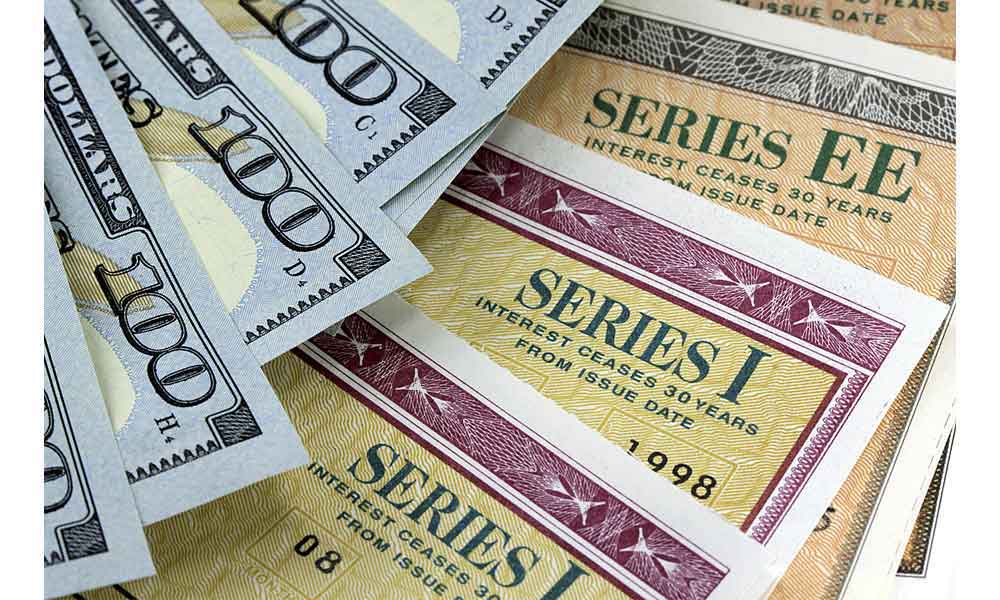
Current I Bond and EE Bond Rates (May to October 2026)
For bonds issued May 1, 2026 through October 31, 2026, Series I pays a composite of 4.26% and Series EE pays a fixed 2.40%, according to the Treasury’s May 1, 2026 rate announcement. The next set is announced November 1, 2026, and only applies to purchases from that date.
| Feature | Series I | Series EE |
|---|---|---|
| Rate for issues May 1 to Oct 31, 2026 | 4.26% composite | 2.40% fixed |
| How the rate is built | 0.90% fixed rate plus 3.34% annualized CPI-U inflation | One fixed rate of interest for 20 years |
| What changes later | Inflation part resets every six months | Nothing until year 20 |
| Guarantee | Composite never drops below zero | Doubles in value at year 20 |
| Stops earning | Year 30 | Year 30 |
The headline interest rate is the least durable part of an I bond. The inflation component moves every six months from your issue date, while the 0.90% fixed rate stays attached for the life of the bond. EE works the other way around: 2.40% alone would take about 29 years to double your money, but the Treasury tops the bond up to twice its price at year 20, which works out to roughly 3.5% a year for anyone who holds the full term. Cash it in at year 19 and you get the stated rate only, with no top-up.
How to Buy Savings Bonds on TreasuryDirect
There is one authorized online seller: the official purchase page. The same TreasuryDirect account also holds bills, notes, TIPS, and floating rate notes, so it becomes the hub for every United States Treasury security you own. Purchases settle by ACH debit from a linked checking or savings account; no credit card option exists, and the Treasury charges no fee to buy, hold, or redeem.
- Open the account. You need a Social Security Number, a U.S. address, a state-issued ID, and a bank routing and account number.
- Clear identity verification. Some applicants must mail a signature-guaranteed form before the account activates, so start ahead of any rate deadline.
- Link your bank. That single account handles every purchase and every payout afterward.
- Pick the bond series and the amount. Choose Series I or EE in BuyDirect, then enter anything from $25 up to the balance of your allowance for the calendar year, to the penny.
- Record the dates. Note the twelve-month lock, the five-year penalty line, and final maturity at year 30.
Electronic savings bonds are sold at face value, so a $50 purchase costs $50; the half-price rule for an old paper bond is gone. For a portable cash instrument that settles the same day, see our guide on where to buy money orders.
Why No Bank, Broker, or Store Sells Them
No bank, credit union, brokerage, or big-box retailer in the United States sells new savings bonds. Branches matter for one other errand: cashing old paper.
Banks and credit unions
Your bank may cash paper savings bonds presented by the registered owner with photo identification. Policies differ between financial institutions, and many branches help customers cash them only for existing account holders, so call first. If none will, FS Form 1522 lets you mail the certificates in for direct deposit. Paper EE and I bonds that need reissuing come back only in electronic form.
Brokerages and financial advisors
Fidelity, Schwab, and Vanguard all sell Treasury bills, notes, and TIPS, but none sell this product. The Treasury distributes it directly and electronically, so no advisor commission or markup attaches.
Purchase Limits, Gifts, and Accounts for Children
Each Social Security Number can buy $10,000 of electronic Series I and $10,000 of electronic Series EE per calendar year, so $20,000 across both. The allowance resets on January 1 and does not roll forward. A trust or business with its own Employer Identification Number gets a separate allowance. The extra $5,000 of paper I bonds that once came through a tax refund on IRS Form 8888 no longer exists; the Treasury ended that option on January 1, 2025.
Gifts. You can buy in someone else’s name on top of your own limit. The recipient needs a Social Security Number and a TreasuryDirect account of their own. Until you deliver it, the gift sits in your account’s gift box, accruing interest from its issue date, and it counts against the recipient’s limit in the year they receive it, not the year you paid, per the Treasury’s limit rules. No account on their end? A gift card is the practical fallback, and our guide to where to buy Amazon gift cards covers that route.
Children. A minor gets a linked account opened inside a parent’s or custodian’s login, carrying the child’s Social Security Number and a separate allowance. When the child turns 18 and opens a full account, the holdings move over.
Cashing Out: The 12-Month Lock and the 3-Month Penalty
You cannot redeem either series in the first 12 months, and cashing in before five years costs the last three months of interest. Those two rules decide more purchases than the rate does. Here is how they play out, checked against TreasuryDirect in October 2026.
| Situation | Rule | Practical note |
|---|---|---|
| Before 12 months | Cannot redeem at all | Exceptions only for federally declared disaster areas |
| Within the first five years | Forfeit the last three months of interest | Cash at 18 months, get 15 months of interest |
| After five years | No penalty | Keeps earning until final maturity at year 30 |
| Lost or destroyed certificate | Replaceable by the Treasury | File FS Form 1048; a signature guarantee may apply |
| Issuer risk | Direct obligation of the U.S. | No FDIC cap; there is no bank in between |
A partial redemption must leave at least $25 in the holding, so you cannot draw one down to loose change. Interest posts on the first day of each month, so cashing on the 2nd rather than the last day of the prior month captures an extra month of earnings for a 48-hour wait.
How Savings Bond Interest Is Taxed
Interest on savings bonds is subject to federal income tax and exempt from state and local income taxes. You choose whether to report it each year or defer it until you redeem the security or it reaches final maturity at year 30. Federal estate and gift taxes still apply.
The education exclusion lets you skip federal tax on interest from Series EE issued after 1989 or any Series I when you redeem them to pay qualified expenses for yourself, your spouse, or a dependent. The rule that trips families up is about the owner, not the student: per IRS Publication 970, the owner must be at least 24 before the issue date, so a bond registered in a child’s own name can never qualify. Married couples filing separately are out, and for tax year 2025 the exclusion phases out between $99,500 and $114,500 of modified AGI for single filers and between $149,250 and $179,250 for joint filers. You claim it on Form 8815 in the year you cash the bonds.
Scams and Mistakes That Cost Real Money
The most expensive mistake is not picking the wrong series. It is typing a Social Security Number into a website the Treasury does not operate.
Trusting any domain that is not treasurydirect.gov. Typosquatted imitations exist to harvest identity data, and a convincing logo costs nothing to copy. Read the address bar character by character.
Following advice written before 2025. Plenty of pages still tell readers to claim paper certificates on a tax refund. You can no longer buy paper savings bonds that way, so any page offering it is out of date.
Buying a marketplace listing. These securities are registered to a named owner and cannot be transferred by sale, so an eBay or Etsy listing gets you a collectible you have no right to cash.
Paying a processing fee. The Treasury charges nothing, so any fee request is a fraud signal.
Which Series Fits Which Goal
Match the series to the date you need the money, not to this period’s headline rate. None of this is investment advice.
Inflation protection: Series I. The variable component tracks CPI-U, so purchasing power holds up when prices climb. Pro: the fixed portion stays locked for 30 years. Con: the composite can fall near zero in a low-inflation stretch. Read the current terms.
A dated 20-year target: Series EE. The doubling commitment produces a known number at year 20, which suits a fixed goal such as a child’s freshman year, provided the bond is in a parent’s name if you want the education exclusion.
Historical and retired: Series HH bonds and Series E. Neither is issued now and both stopped earning, so cash any you find in a drawer. For a hard asset that behaves nothing like a Treasury obligation, compare with where to buy gold or where to buy silver coins.
Open the TreasuryDirect account this week rather than the week a rate changes, because verification can add days. Settle on the series before you fund it, since switching afterward means redeeming and giving up interest. For a small-denomination gift instead, our guide to where to buy Visa gift cards covers that. Buying savings bonds through the official federal channel is the one route that protects your money and your identity at the same time.
Quick Answers on I and EE Bonds
Can I still get paper certificates with my tax refund?
No. That channel closed on January 1, 2025, and the Internal Revenue Service no longer offers the election on Form 8888. Certificates you already hold stay valid and keep accruing on their original schedule. If you want them held electronically, the SmartExchange feature inside TreasuryDirect converts eligible paper holdings into a linked conversion account.
How long does a $50 savings bond take to mature?
Thirty years, and the denomination does not change that. Both series earn interest for 30 years from the issue date printed on the bond, whatever the face amount. A separate 20-year mark applies only to EE, where the doubling commitment kicks in. Anything past year 30 sits idle and should be cashed.
How much can one person buy in a year?
Each Social Security Number can purchase $10,000 of electronic Series I and $10,000 of Series EE per calendar year, so $20,000 across both. Gifts you buy for other people do not count against your own limit; they count against the recipient’s in the year of delivery.
How do I check what an old bond is worth?
Use the official Savings Bond Calculator: enter the series, denomination, and issue date, and the calculator returns the current redemption value. The issue date printed on the face of the certificate is often not the year it was given to you, which is the most common reason people get the wrong figure.
Are savings bonds still worth it?
They compete as a safety allocation, not a growth one. The deferred federal tax, the state and local tax exemption, and the government backing are the structural draw rather than the headline yield. A high-yield savings account may pay more in a given year and stays liquid, but offers no inflation linkage and no 20-year doubling floor. To hunt for bonds a relative left behind, start with the Treasury’s free search tool.
Editorial review: wheretobuyguides.com team. Rates, purchase channels, annual limits, and redemption rules last verified October 2026 against published guidance from the U.S. Department of the Treasury and the Internal Revenue Service.