
Decide what the fruit is for, then pick the store. Pumpkins for a porch, a pie, and a Thanksgiving can are three different purchases, sold in three different places on three different calendars. Fresh stock reaches American stores in mid-September, peaks in the last two weeks of October, and thins out fast after November 1, while canned puree sits on the shelf all year. Get the job and the week right and the store almost picks itself.
This page contains affiliate links. We may earn a commission at no extra cost to you.
A quick worked example shows how the decision runs. A family that wants two jack-o’-lanterns and one pie should buy the carvers at a farm or warehouse club around October 15, buy a small sugar type at the same stop, and keep a can of pure puree in the pantry as a backup. Three items, one trip, no wasted fruit.
Which Pumpkin Are You Buying? Carver, Baker, Heirloom, or Can
A pumpkin is a round, thick-rinded winter squash grown for carving, baking, and fall display. Most fresh fruit in American stores belongs to Cucurbita pepo, the species behind the orange field types, while the tan-skinned Cucurbita moschata fills nearly every can. Both sit in the cucurbit family with zucchini, cucumbers, and melons. Native Americans in the United States grew the crop for thousands of years before Europeans arrived.
Pumpkin varieties sort into five classes, and they rarely substitute for one another. Match the class to the job before you look at a single fruit.
| Type | Weight | Best for | Common names |
|---|---|---|---|
| Carving | 10 to 25 lb | Jack-o’-lanterns | Connecticut Field, Howden |
| Sugar or pie pumpkin | 2 to 4 lb | Pie, soup, roasting | New England Pie, Winter Luxury |
| Heirloom | 5 to 20 lb | Display, baking | Cinderella, Long Island Cheese, Jarrahdale |
| Mini | Under 1 lb | Table decor | Jack Be Little, Baby Boo, Wee-B-Little |
| Giant pumpkin | 50 lb and up | Contests, yard display | Atlantic Giant, Big Max |
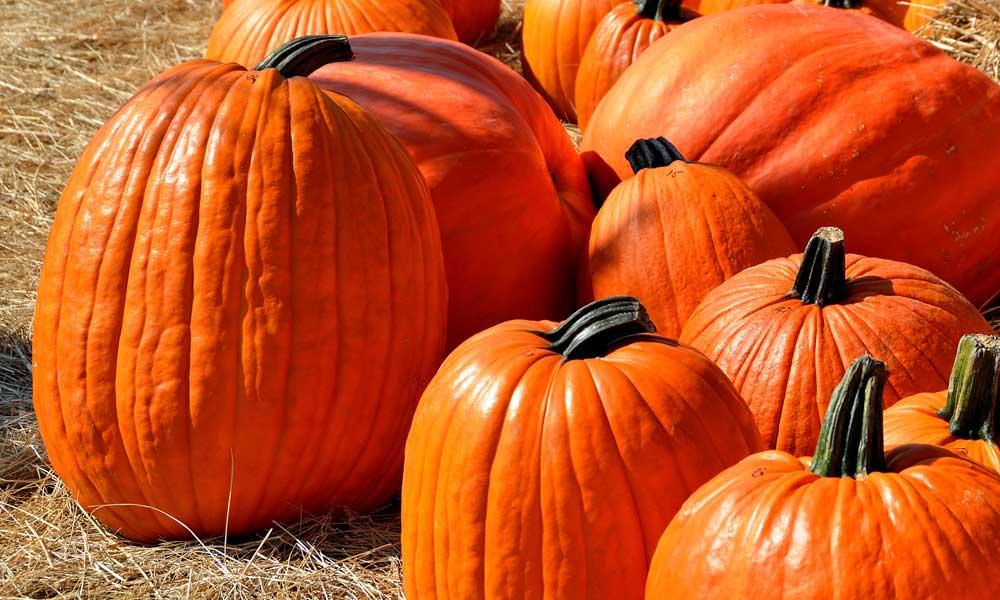
The Connecticut Field pumpkin is the classic American carver: big, orange, thin-walled, and bred for size rather than flavor. That is exactly why it makes a poor pumpkin pie. Carving cultivars run stringy and wet inside, so a custard made from one weeps and never sets properly. Sugar types such as New England Pie are smaller, denser, and sweeter, and they are what most recipes mean when they say “fresh.”
Gourds share the same bins and are genuine relatives, but squash and gourds sold for decoration are mostly ornamental and not meant for the kitchen. If the sign says “ornamental,” treat it as decor only.
Where Canned Pumpkin Actually Comes From
Most canned pumpkin sold in the US comes from one town. Libby’s, the Nestlé-owned brand that dominates the baking aisle, packs its 100% Pure Pumpkin in Morton, Illinois, a canning base the brand traces to 1925 and to the Dickinson & Co. operation that Archibald McNeill and the Libby brothers bought in 1929. The crop inside is the Dickinson pumpkin, a tan, oblong Cucurbita moschata cultivar that looks far more like a butternut than a jack-o’-lantern.
That concentration matters at the store. Illinois grows more pumpkins than any other state, and the USDA Economic Research Service reports that nearly 80% of the Illinois crop is grown for processing, while no other top-producing state tops 5%. A short Illinois harvest can thin canned shelves nationwide, and it tends to show right before Thanksgiving, when demand peaks.
Is it legal to call squash “pumpkin”? Yes. Under FDA Compliance Policy Guide Sec. 585.725, the Food and Drug Administration does not object to a pumpkin label on products made from golden-fleshed sweet squash or from blends of the two with field pumpkin, a position it has held with canners since 1938.
Where to Buy Pumpkins In Store
For fresh pumpkins, buy in person. You need to lift the fruit, check the base, and see the stem, and none of that works through a screen.
Pumpkin patches and farm stands
A pumpkin patch gives the widest choice in one stop: carvers, sugar types, heirlooms, and minis, often cut that week. Larger farms add corn mazes, hayrides, and cider. Many open around the last weekend of September and close on or just after October 31, but hours, entry fees, and what a fee includes vary from farm to farm, so check the farm’s own page before you drive out. The PickYourOwn.org directory lists pick-your-own farms by state. Roadside stands are the fast version: one grower’s crop, usually priced per fruit.
Warehouse clubs and grocery chains
Costco and Sam’s Club put out pallet bins of jumbo carvers in early fall, priced per fruit rather than by weight, which makes them the simplest place to buy large pumpkins; our guide to what to buy at Costco covers how its seasonal stock rotates. Kroger, Safeway, Walmart, Aldi, and Publix build bins by early October. Whole Foods Market, Trader Joe’s, and independent grocers are the likelier chain stops for sugar types and heirlooms, though selection varies by store, so call before a special trip.
Garden centers and fundraiser tents
Home Depot and Lowe’s stock carving pumpkins, minis, and gourds next to the mums and straw bales, which is convenient if you are already buying fall decor. Church and school fundraiser tents often price above grocery, and you are paying partly for the cause. Call ahead anywhere small: one delivery can sell through in a single weekend.
Buying Online: Puree, Seeds, and Store Pickup
Online is the right channel for canned puree, pumpkin seed snacks, and bulk cases, not for a fresh carver. Shipping a 20-pound fruit costs more than the fruit is worth, and it arrives bruised more often than not.
Amazon
Amazon, the largest online retailer in the United States, carries Libby’s 100% Pure in 15-ounce and 29-ounce cans, organic purees, roasted pumpkin seed snacks, and carving kits. Case quantities are often cheaper per can, but case pricing moves through the fall, so compare the per-can figure before you commit. Check current can prices on Amazon.
Walmart.com
Walmart lists canned goods year-round and adds fresh seasonal stock for store pickup in the fall, which sidesteps shipping entirely. Pickup also lets you look the fruit over before it goes in the car, and you can refuse a soft one at the curb. Shop the seasonal listing.
Organic and natural sellers
Farmer’s Market Organic and Pacific Foods Organic purees ship through Amazon and turn up at natural grocers; our list of the best things to buy at Whole Foods covers that store’s pantry aisle. Target carries Libby’s alongside its house brand for same-day pickup. Read the ingredient line on any can: it should list pumpkin and nothing else.
The Six-Week Fresh Season, Week by Week
Fresh supply runs about six weeks, and the calendar repeats almost every year.
- Mid-September. First carvers reach warehouse clubs, grocers, and garden centers. Weekend patches open.
- Late September to early October. Full selection, and the best window for heirlooms before popular cultivars sell through.
- Mid-October. Peak carving week. Fruit cut now still looks right on Halloween night.
- October 25 to 31. Selection narrows, common sizes run out, and blemished stock gets marked down.
- November 1. Clearance. Leftover sugar types go cheap, so buy, roast, and freeze puree then.
- Mid-November. Fresh stock is gone and canned sales spike ahead of Thanksgiving.
Supply and price swing year to year because the crop rides on one narrow growing season. Squash bees and honeybees do most of the pollination in a commercial field, so a wet, cool stretch at bloom leaves fewer and smaller fruit. Powdery mildew spreads across damp leaves and can kill a vine before the crop sizes up, and insect pests add pressure in hot years. The University of Florida’s Institute of Food and Agricultural Sciences publishes growing guidance for its region, and most state extension services do the same.
The rest of the season stacks up behind it: Halloween costumes peak in the same window, fresh turkey supply builds in mid-November, and real Christmas trees start the day after.
Five Checks to Run at the Bin
Once the type is settled, inspect the individual fruit. Stock trucked in from another state has already spent days off the vine before it hits the bin, so ask when it was cut. Farm staff can usually tell you; a big-box garden center usually cannot. Then run these five checks in order.
- Stem. Firm, green, and still attached. A snapped one opens the fruit to rot.
- Rind. Press a thumbnail into the skin. Ripe fruit resists the nail; underripe fruit dents.
- Base. Feel the bottom for soft spots, since that is where rot starts.
- Color. Deep, even orange on carvers. Green streaking means it left the field early.
- Weight. Heavy for its size means thick walls, which carve cleanly and hold shape.
For baking, weight matters most. For a jack-o’-lantern, a flat base and a sturdy stem beat color.
How Long a Pumpkin Lasts After You Buy It
An uncarved, cured fruit with its stem attached keeps roughly two to three months at 50 to 55°F in a dry spot, according to the Old Farmer’s Almanac growing guide. A carved one lasts days, not weeks, and goes fastest in warm weather. Those two facts should set your buying date: decorate early with whole fruit, carve late.
Replace it when you see any of these signs.
- A soft spot at the base. Rot starts underneath, where moisture collects, and works through the wall within days.
- A black or missing stem. The scar is an open wound and mold travels through it fast.
- Weeping or a sour smell. Liquid pooling underneath means the interior has already failed.
- White fuzz in a carved cavity. Discard it that day. That is active mold at head height, next to a candle.
To stretch a carved one, rinse the cavity with cold water, dry it completely, and bring it indoors overnight when a hard freeze is forecast. Frost ruptures the cell walls and a thawed fruit slumps within hours. The spent shell composts fine, though pumpkin seeds do not break down as readily, so pull them first unless you want volunteers in that bed come spring.
Mistakes We See Every October
One mistake we see every fall is a shopper hauling home a 20-pound carver for a pie, then wondering why the filling turned out watery. Nearly every bad purchase in this category comes down to the wrong type for the job or the wrong week of the season.
- Buying a carver for pie. Jack-o’-lantern cultivars are bred for size and thin walls, and the flesh is stringy and watery. Buy a sugar type instead.
- Shopping in August. Early stock has often sat in storage or transit, and pumpkins bought over Labor Day rarely survive to Halloween.
- Ignoring the base. Soft spots underneath mean rot has started, even when the top looks flawless. Lift it and check.
- Grabbing pie filling instead of pure puree. Filling is pre-sweetened and pre-spiced, so it ruins soup and throws off any scratch recipe that adds its own sugar and spice.
- Carrying it by the stem. The stem is there for show, not for load. Snap it and rot moves in through the scar.
Top Picks by Job
Each pick wins on one thing: selection, convenience, baking quality, or year-round availability. Prices change with every harvest and every store, so check locally.
Best overall: a local pick-your-own field. Carvers, sugar types, and heirlooms in one stop, often cut that week. Budget for the farm’s entry fee, which people forget. Not an online purchase.
Best for big carvers: a warehouse club bin. Costco and Sam’s Club price jumbo fruit per piece instead of by weight, so the bigger you pick, the better the deal. Usually gone by Halloween week.
Best for baking: a sugar pie pumpkin from a farmers market or natural grocer. Two to four pounds, dense and sweet, with a flavor gap against a carver that is not subtle. We tell bakers to roast one and taste it against the can before deciding which they prefer.
Best canned: Libby’s 100% Pure. The default American baking can, made from the Dickinson cultivar, in 15-ounce and 29-ounce sizes. Confirm the label reads 100% Pure, not pie mix; the two sit side by side. Buy Libby’s on Amazon.
Best organic canned: Farmer’s Market Organic. Certified organic puree, with Pacific Foods Organic as the runner-up. Shop organic puree on Amazon.
Best decorative: heirloom types. Cinderella, Knucklehead, Jarrahdale, and white Lumina cost more than a plain carver, and several bake well once the display season ends. Sold locally, not shipped.
Start with the calendar, not the store. In late September, drive to a patch and pick carvers and sugar types in one trip. In the last week of October, take what the warehouse club has left and carve it that day. Baking in November? Skip the fresh aisle and buy canned. Follow that order and you buy pumpkins once, at the right place, without paying twice.
Frequently Asked Questions
How long does it take to grow pumpkins?
Most cultivars need 90 to 120 days to mature, so northern gardeners plant by late May and southern gardeners as late as early July for an October harvest. The Old Farmer’s Almanac suggests 4 to 5 seeds per hill, 1 inch deep, with hills 4 feet apart, thinned to the strongest seedlings. Each pumpkin plant needs roughly 50 to 100 square feet, far more for a giant variety, and bush types fit smaller beds.
Why are they called pumpkins?
The word traces to the Greek pepon, meaning melon, which passed through Latin and French as pompon and into English as pumpion in the 1500s. English speakers reshaped it to “pumpkin” by the 1640s. The plant itself is native to North America and was grown here long before any of those words existed.
Is canned pumpkin really squash?
Mostly, yes. Libby’s uses the Dickinson cultivar of Cucurbita moschata, closer botanically to butternut than to an orange field type. FDA policy since 1938 has allowed golden-fleshed sweet squash to carry a pumpkin label, since cooks use the two interchangeably and there is no sharp botanical line between pumpkin and winter squash.
Does WD-40 make a carved pumpkin last longer?
Not reliably. Spraying cut edges is a widely shared tip meant to slow shriveling, but no independent published test backs it up. The spray is flammable and not food safe, so never pair it with a real candle; use an LED light instead. A cold rinse and thorough drying does more. Our guide to WD-40 covers what it is genuinely good for.
Can I save seeds from a store-bought pumpkin and plant them?
You can, with a catch. Supermarket fruit is usually a hybrid, so the seedlings will not come true, and one field often holds several cultivars that pollinate each other freely. Only the female flowers set fruit, and bees move most of that pollen, so poor fruit set usually means a lack of pollination. Save seed from an open-pollinated heirloom pumpkin, work compost into the bed, mulch to hold moisture and reduce weed pressure, and run a mini variety up a trellis if space is short.
Can dogs eat plain canned puree?
Veterinarians commonly suggest a small amount of plain puree for mild canine digestive trouble. Use a can labeled 100% Pure, never pie filling, which adds sugar and spices dogs do not need. Amount depends on the dog’s size, so ask your vet rather than guessing.
Reviewed by the wheretobuyguides.com editorial team, October 2026. Store availability varies by region and changes through the season, so confirm with your local store before a special trip.