
You can buy artificial mistletoe any month of the year from Amazon, Walmart, Etsy, and craft chains such as Michaels and Hobby Lobby, but fresh mistletoe is a November and December product sold mainly through florists, garden centers, Christmas tree lots, and a small number of growers who ship. Cut mistletoe dries out, sheds, and is toxic to cats, dogs, and horses. Faux mistletoe ships year round and carries no poisoning risk. Below is where each kind is sold, how to judge a bundle, and the safety and return rules to settle before you pay.
This page contains affiliate links. We may earn a commission at no extra cost to you.
One finding from our October 2026 recheck changes the fresh-buying advice. Two specialty sellers that older guides, including an earlier version of this one, sent readers to are no longer selling: Mistletoe.com now displays a domain-for-sale page saying its owners retired after 13 years, and Mistletoeing.com no longer resolves at all. Fresh supply online is thinner than most pages admit.
What Mistletoe Is and Why Fresh Supply Is So Thin
Mistletoe is a parasitic plant that grows on the branches of living trees and gets cut, bundled, and sold as a holiday decoration. It is gathered from tree canopies rather than farmed in rows, which keeps supply small and the selling season short.
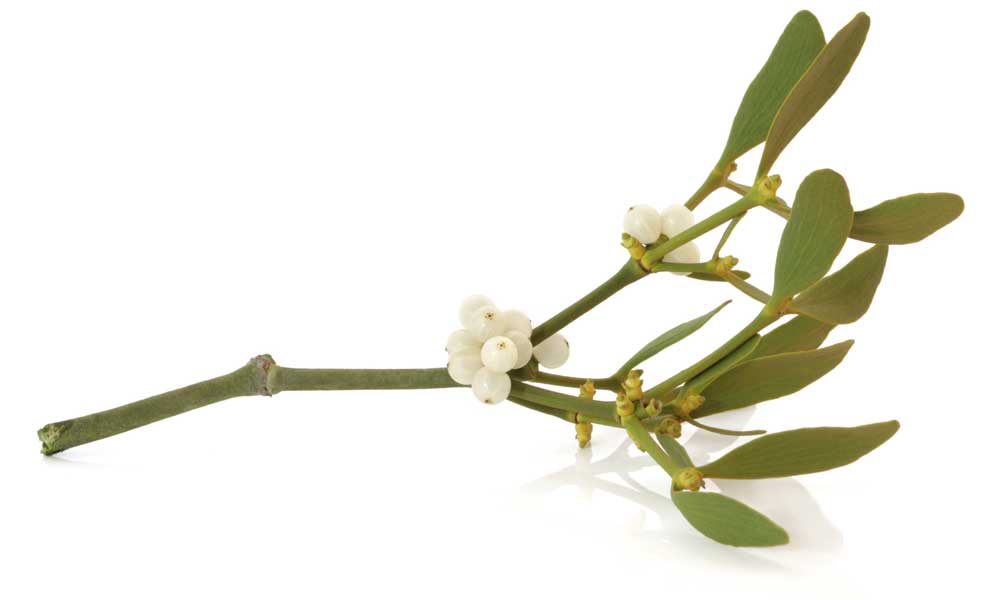
Almost everything sold fresh in the U.S. is Phoradendron leucarpum, the American mistletoe: an evergreen shrub with smooth oval leaves and clusters of white berries, favoring hardwood trees such as oak, elm, and sycamore. It stands out in winter, once deciduous trees drop their leaves, which is when harvesters spot it. European mistletoe, Viscum album, belongs to the same order, Santalales, but rarely turns up here as decor. Oklahoma has used mistletoe as its state floral emblem since 1893.
Both species are hemiparasites. Green leaves run photosynthesis using chlorophyll while a root-like haustorium taps the host tree for water and mineral nutrients. Birds do the planting, eating ripe berries and leaving the sticky mistletoe seed on a new branch. Cut a sprig from its host plant and that supply ends, which is why fresh bundles brown out within weeks.
A buying detail few guides mention: mistletoe is dioecious, meaning male and female plants are separate and only the female sets fruit. A berry-free sprig may simply be male, not stale. Dwarf mistletoe, the genus Arceuthobium that can infest conifers such as juniper and pine and cause the dense growths foresters call witches’ brooms, is a forest pest tracked by the USDA Forest Service, never a florist product.
Demand comes from the tradition of kissing under the mistletoe. Historians generally place that custom among English servants in the late 1700s, spreading to middle-class homes in the 1800s through writers such as Charles Dickens. Older associations reach back further: classical writers described Celtic druids treating the plant as sacred, and Norse mythology ties it to the death of Baldur and to his mother Frigg, cast in popular retellings as the goddess of love.
Fresh or Artificial: Make This Call First
The fresh or faux decision sets your store list, your timing, and your safety plan. A house with a crawling toddler or a curious cat has no real decision: buy faux.
| Factor | Fresh cut | Artificial |
|---|---|---|
| When you can buy | November and December | Any month, mostly online |
| Lifespan | Dries and sheds, one season | Reusable for years |
| Toxicity | Leaves and berries are toxic | No poisoning risk |
| Berries | Sometimes swapped for faux | Always faux |
| Returns | Usually not returnable | Standard retailer windows |
If you do go fresh, four checks separate a good bundle from a bad one. The fruit may already be fake. Real fruit drops off cut greenery and is the most hazardous part, so some “fresh” product arrives with the berries stripped and white faux clusters wired on. Ask before you pay. Leaf and stem condition matters next: deep green leaves, no brown edges, and stems that bend rather than snap. Brittle, woody stems mean the cutting started drying days ago. Packing on shipped orders should be breathable, since greenery sealed in solid plastic arrives worse than it left. Size comes last: a kissing ball needs headroom, so measure the door frame.
- Decide fresh or faux first. If small children or pets share the room, pick artificial and skip ahead.
- Check the calendar. Cut sprigs only reach stores in November and December.
- Ask about the fruit. Confirm whether the white clusters are real or wired on.
- Inspect leaves and stems. Deep green, pliable, no brown edges.
- Measure the doorway, then match the sprig or kissing ball to the space.
Where to Buy Fresh Sprigs in Person
Local shops are the most reliable source of fresh mistletoe, and only in November and December. Outside those months the aisles are bare and online faux is your only route.
Florists, garden centers, and nurseries
These are the most dependable places to find cut mistletoe. Florists and garden centers buy holiday greenery for the season, and staff can usually tell you whether the white fruit is real or wired on. Quantities per store are small, so call ahead. A florist that already handles your holiday flowers can often add a bundle to the order.
Tree lots, farmers markets, and grocery floral
Tree lots stack wreaths, garland, and cut sprigs beside the trees, so it is easy to grab one while picking out a real Christmas tree. Farmers markets depend on local harvesters. One example: in December 2025 a St. Louis TV station profiled a farm in Bourbon, Missouri, that plants its own crop instead of waiting on birds and supplies the metro area. Grocery floral departments sometimes carry small bundles in December near the poinsettias.
Where to Buy Artificial Mistletoe in Any Month
Faux stems, picks, and kissing balls stay listed online all year. That is the only route in July, and the safer one in December.
Craft stores and Walmart
Hobby Lobby and Michaels stock faux mistletoe stems and picks with their seasonal floral supplies, the place to look for something to keep for years. Walmart carries artificial versions in seasonal decor, including Kurt Adler picks and ornaments, though in-store stock varies. Browse their selection online if the shelf is picked over, and check the nearby Christmas decorations displays.
Amazon
Amazon has the deepest artificial mistletoe selection and a thin rotation of fresh sellers in season. Shop their full selection, and read seller feedback on anything listed as fresh, since third-party sellers handle their own fulfillment. The same catalog covers Christmas ornaments.
Etsy and the few growers who ship
Etsy is where handmade pieces live: beaded kissing balls, dried arrangements, small-batch faux stems. In our October 2026 check, Etsy also turned up a shop selling live mistletoe from Northern California. Sellers set their own processing times and shipping cutoffs, so read the shop policy before ordering anything perishable, and treat any seller without reviews as a gamble.
Is It Poisonous? Safety Rules Before You Hang It
Mistletoe is toxic, to pets in particular, and the berries are the bigger hazard because they fall. The ASPCA, the American Society for the Prevention of Cruelty to Animals, lists this plant as toxic to dogs and cats, and horses too, naming lectins and phoratoxins as the toxic compounds. Signs include vomiting, diarrhea, difficulty breathing, and a slow heart rate. For a pet, call the ASPCA Animal Poison Control Center at 888-426-4435; a consultation fee may apply.
For people the risk is lower than holiday folklore suggests. A 1986 study in the Annals of Emergency Medicine followed 14 cases where someone ate one to three berries or one or two leaves of American mistletoe; none developed symptoms, and the authors concluded small amounts are unlikely to cause serious toxicity. Larger amounts are a different story. If someone swallows any part of the mistletoe plant, call Poison Control at 1-800-222-1222, the free 24-hour line that routes to your local center, rather than guessing. Online guidance is also available from the National Capital Poison Center.
- Hang it high and sweep daily. Dried sprigs still drop fruit, and drying does not make them safe.
- Do not mix it up with holly. Holly has spiny leaves and red fruit; mistletoe has smooth, rounded leaves and pale fruit. Holly is toxic to pets too.
- Do not cut your own. It grows high in the tree branches of somebody else’s oak, and hacking at a host tree to reach it damages the tree and risks a fall.
Return Windows and the 2026 Holiday Extensions
Return terms often decide between two retailers selling the same faux stem. Fresh greenery is the exception: it is generally not returnable, so if a bundle arrives brown your recourse is a replacement from the seller, not a store return.
| Retailer | Standard window | Holiday note (checked October 2026) |
|---|---|---|
| Amazon | 30 days from delivery on most items | 2025 extension ran to January 31; 2026 terms not yet posted |
| Walmart | 90 days on most items | Reported: October 1 to December 31 buys returnable to January 31, 2027, with exclusions |
| Michaels | Check the policy page | Seasonal rules can differ |
| Hobby Lobby | Check the policy page | Keep the receipt and packaging |
| Etsy | Seller sets the policy | Handmade items are often final sale |
Walmart’s reported 2026 exclusions include select seasonal goods, and Amazon third-party sellers set their own terms, so confirm on the item page before you count on a January return.
Three Picks Worth Checking This Season
We left prices out on purpose: seasonal listings move weekly, and none we could confirm would stay accurate through December.
Best ready-to-hang faux: Kurt Adler mistletoe ball. Kurt Adler, a long-running Christmas decor brand, sells a 9-inch plastic mistletoe ball ornament with white berry accents and a ribbon hanger, the closest thing to a kissing ball you can keep for years. Check price on Amazon
Best budget: plain faux stems and picks. Unbranded artificial stems on wire are the cheapest way to cover a doorway, and a multi-pack handles several rooms. See options on Amazon
Best real option, in season: fresh cut sprigs. Order early in December from a seller with reviews, and confirm whether the fruit is real. Check seasonal listings on Amazon
The same buy-once math applies to artificial Christmas trees.
Start with the household question. If a child or a pet can reach the doorway, buy artificial mistletoe now, while every retailer has it stocked. For the real plant, set a reminder for the first week of November, call a local florist or garden center to reserve a bundle, and use Etsy or Amazon fresh listings only from sellers with a track record.
Common Questions About Mistletoe
Why do we kiss under mistletoe?
The custom is usually traced to English servants in the late 1700s, then adopted by their employers and popularized by 19th-century writers. Some households followed a rule that each kiss cost one berry, and the kissing stopped when the fruit ran out.
Should the berries be white or red?
White. The American species produces pale white fruit, and so does the European one; the name leucarpum translates as white fruit. Red fruit with spiny leaves means holly, the fastest check on an unlabeled holiday bundle.
Can you buy it in July?
Artificial, yes. Fresh, no. Faux stems and kissing balls stay listed online all year, while cut sprigs exist only in the November and December harvest window.
Do fresh sprigs need to be kept in water?
No. Cut sprigs hang dry rather than standing in a vase, since the stems fed off a host tree, not roots in soil. Fresh mistletoe may hold its color longer away from heat vents and direct sun, but a cut sprig dries out by the end of the season.
The wheretobuyguides.com editorial team rechecked sellers, product listings, safety sources, and return policies for this guide in October 2026.