
For most people, the best first stop for incense is an Indian grocery store or a local metaphysical shop, where you can buy a single stick or a small pack and smell it before committing. Order online when you want Japanese brands, bulk resin, or a burner that matches an unusual format. Decide the format first (stick, cone, coreless dhoop, coil, or loose resin), because it dictates the burner, the amount of smoke, and which retailers carry it.
This page contains affiliate links. We may earn a commission at no extra cost to you.
Pick the Format First, Then the Burner
Incense is a combustible aromatic material, usually plant-based, that releases fragrant smoke as it smolders. The scent comes from tree resin, wood powder such as sandalwood, dried herb material, and essential oil. India, China, and Japan have burned it for religion, ritual, prayer, and meditation for millennia, and the Ayurveda tradition still pairs those botanicals with daily practice. The form it takes changes almost everything about buying incense.
| Format | What it is | Holder needed | Where it is easiest to find |
|---|---|---|---|
| Stick (agarbatti) | Paste or coating on a thin bamboo core | Ash-catcher boat | Everywhere, from grocers to Walmart |
| Dhoop | Thick, soft stick with no bamboo core | Holder with a wide hole, or a sand bowl | Indian grocers |
| Japanese coreless stick | Thin pressed stick, no core, often lower smoke | Small ceramic or ash bowl | Online, makers direct, some metaphysical shops |
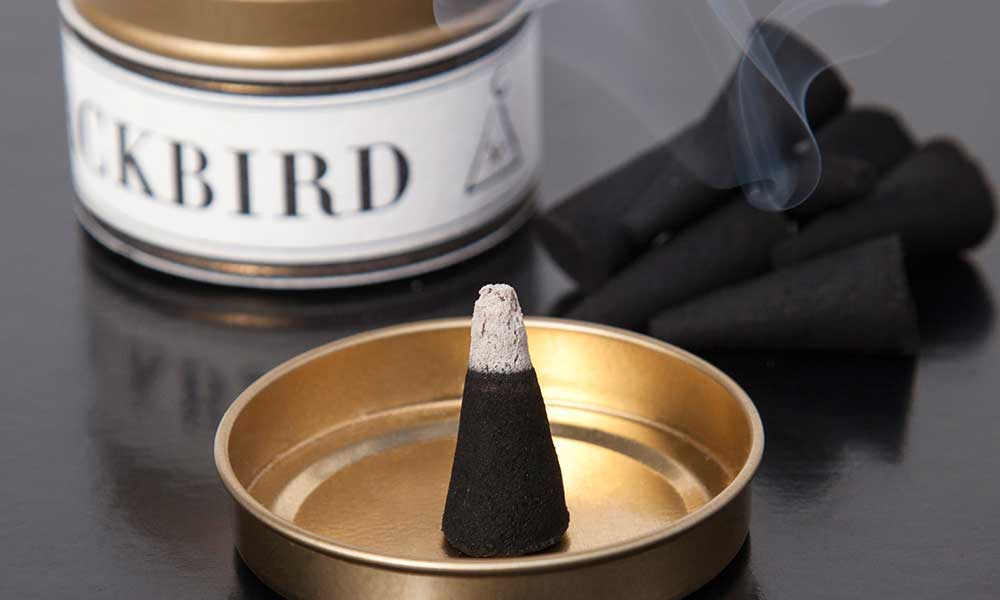
| Cone | Compact molded paste, shorter burn than a stick | Heat-proof plate | Big-box stores, smoke shops |
| Backflow cone | Cone with a hollow channel for a smoke-waterfall effect | Channeled burner | Online, gift shops |
| Coil | Long spiral, longest burn by far | Hanger or deep bowl | East Asian markets, online |
| Resin | Raw frankincense, myrrh, or copal grains | Censer plus charcoal disc | Metaphysical shops, online |
An incense burner is a required companion purchase, not an accessory. Cones will not seat in a stick holder, backflow cones need a channeled burner to produce the effect at all, and loose grains need a censer, a charcoal disc, and a layer of sand or ash so the heat does not crack the bowl.
- Pick the form first, since it dictates the burner.
- Buy the matching holder in the same order.
- Start with a variety pack rather than a 100-count box.
- Burn one in the actual room, window open, before you commit.
Masala, Dipped, or Coreless: Reading the Box
The biggest quality divide is how the aromatics reach the stick, not the brand name. A masala stick has the aromatic ingredient blended into a paste and hand-rolled onto a bamboo core, so the scent comes from the material itself. A dipped stick is a neutral blank coated in charcoal powder, then soaked in fragrance oil. Dipped throws scent harder and costs less; hand-rolled smells cleaner, since nothing burns charcoal under a perfume. Indian agarbatti and Japanese joss sticks lean rolled.
Snap a stick if you are unsure. A rolled one is the same color throughout, while a dipped stick shows a black outer layer over plain bamboo. Coreless formats skip the question entirely: dhoop is pressed thick and soft, and Japanese senko (the word for stick incense) is extruded thin with no splint, so only the blend burns.
Ingredient transparency. Good brands print the botanicals: sandalwood powder, jasmine, floral extracts, herbal blends, tree resins, agarwood. A label reading only “fragrance” tells you nothing. Aroma compounds in a synthetic blend behave differently in a closed room than a natural incense does, and the honest labels are usually on hand-rolled and imported boxes.
Resin, sage, and an honest sourcing note. Loose resin is the oldest format: frankincense, myrrh, copal, and agarwood chips on a charcoal disc in a censer, traditionally used as a temple offering and for purification. Two popular botanicals need a caveat. White sage grows natively only in Southern California and northern Baja, and United Plant Savers lists it as a species at risk from illegal harvesting. Palo santo (Bursera graveolens) is often called endangered online, which conflates it with a different listed tree. Both are tied to living Indigenous ceremony, so a smudge bundle deserves a question about where it was harvested. Lavender, rosemary, and cedar work fine as alternatives.
Where to Buy Incense in Person
The best in-store selection sits in shops most buyers never check; the big chains win on convenience, not range.
Indian and Asian grocery stores
The genuinely underrated channel. Indian grocers stock masala incense (agarbatti) and dhoop, usually shelved near the pooja supplies, and steady turnover keeps the boxes fresh. East Asian markets carry joss sticks from Japan and China plus long coils. If either is nearby, start there before paying gift-shop markups.
Metaphysical shops, yoga studios, and smoke shops
New-age and metaphysical stores carry loose resin, censers, charcoal discs, sage bundles, and single sticks sold one at a time, the cheapest way to sample before committing. Smoke shops often have the widest hand-dipped incense wall in town. You pay more per stick, but you buy your way out of a bad bulk decision.
Walmart, Target, and Walgreens
Walmart keeps incense sticks, incense cones, and holders in the home fragrance aisle near the candles, with the deepest range at Supercenters and more online. Target carries a curated set in home decor. Walgreens stocks a short mainstream lineup, and availability varies by location.
World Market, Earthbound Trading, and the craft chains
World Market shelves imported sticks and burners together, so you leave with a matched pair. Earthbound Trading Company covers similar ground in malls. Hobby Lobby and Michaels are better for the holder than the sticks. Five Below and Dollar Tree sit at the cheap, dipped end: a fine scent test, a poor way to stock up.
Ordering Online: Amazon, Makers, and Specialty Shops
Online sellers carry the widest range of forms and burners and are the only realistic route to imports from Kyoto and Tokyo, backflow sets, or bulk frankincense.
Amazon
Amazon, the largest online retailer in the US, lists sticks, cones, backflow sets, and burners from Wild Berry, Satya, HEM, Shoyeido, Gonesh, and Nippon Kodo. Third-party listings vary in quality and freshness, so check that the item ships from the brand’s own storefront or from Amazon directly, and compare the box with the maker’s product photos.
Japanese makers and buying direct
Shoyeido, headquartered in Kyoto, and Nippon Kodo, headquartered in Tokyo, both make incense with ingredient-forward blends of sandalwood, aloeswood, and spice. Nippon Kodo runs its own US online store, and Shoyeido has a shop in Boulder, Colorado; buying from the maker is the safest route to the higher grades. Wild Berry, made in Oxford, Ohio, and one of the best known American hand-dipped brands, also sells direct, the easiest way to find a scent a store has dropped.
Specialty importers, Etsy, and eBay
Incense Warehouse stocks sticks, cones, censers, and burners across dozens of brands, including harder-to-find scents like Egyptian musk; browse their catalog when a store wall comes up empty. Etsy is the place for handmade coils, ceramic burners, and small-batch organic makers, though sellers set their own return policies. eBay is useful for discontinued scents and large lots, though quality control varies by seller.
Smoke, Air Quality, and Fire Safety
Burning anything indoors adds particles and gases to the air, so ventilation belongs in the setup. The US Environmental Protection Agency, the federal agency that sets national air quality standards, lists burning candles among the sources of indoor particulate matter and says to ensure proper ventilation when burning candles and incense indoors.
What the research does and does not show
A 2008 review in Clinical and Molecular Allergy by Lin, Krishnaswamy, and Chi, Incense smoke: clinical, structural and molecular effects on airway disease, summarizes that incense smoke carries fine particulates, carbon monoxide, volatile organic compounds, and polycyclic aromatic hydrocarbons, and it recommends ventilating homes where incense burning is routine. Separately, an analysis of more than 61,000 adults in the Singapore Chinese Health Study, published in the journal Cancer in 2008, linked long-term heavy home use with a higher risk of squamous cell cancers of the upper respiratory tract. Both reflect daily, years-long exposure in observational studies; neither proves an occasional stick by an open window harmful, or harmless.
Asthma, pets, and birds
Anyone in the home with asthma is the person to plan around. A 2009 BMC Pulmonary Medicine survey of about 2,400 schoolchildren in Oman found that frequent home burning of bakhour, the Arabian scented wood-chip incense, was tied to more breathing symptoms, with the strongest effect in children who already had asthma. Birds are the household pet most at risk: their air-sac respiratory system moves air through the lungs far more efficiently than a mammal’s, and avian veterinarians group smoke and scented candles with inhaled toxins to keep away from them. Cats, especially cats with feline asthma, do poorly around smoke too, and concentrated tea tree oil is separately toxic to cats.
Burner setup that prevents fires
The Seattle Fire Department advises keeping burning incense within sight, away from furniture, drapes, bedding, books, and paper, and putting it out before leaving the room or going to sleep. Use a ceramic, metal, or stone holder wide enough to catch all the ash. Keep the burner away from smoke detectors, ceiling fans, and children. For fragrance with no flame at all, a diffuser with essential oils is the obvious swap, and beeswax candles are a lower-smoke middle ground.
Picks by Format
One pick per format and use, chosen on construction type, published ingredient detail, and how widely each is stocked, not on hands-on testing.
Best overall: Satya Nag Champa Agarbatti. A traditional hand-rolled Indian base of sandalwood and champa, the reference point buyers compare everything against, and popular enough that most Indian grocers carry it. Check price on Amazon
Best variety: Wild Berry incense sticks. One of the largest hand-dipped fragrance libraries made in the US, sold in small packs so sampling stays cheap. Expect more smoke than a rolled stick. Check price on Amazon
Best low smoke: Shoyeido Overtones. Made in Kyoto without a bamboo core, the structural reason these put out less visible smoke. Short format, shorter burn, and a good fit for small rooms and meditation. Check price on Amazon
Best cones: HEM variety cone box. A multi-scent assortment, the sensible way in since one fragrance gets old fast. Needs a heat-proof plate. Check price on Amazon
Best budget: HEM white sage sticks. Cheap and widely stocked. Be precise: these are fragrance sticks, not harvested sage bundles, so the sourcing concern above does not apply. Check price on Amazon
Start by choosing the format and buying its burner in the same order. Then pick up a variety pack or a few single sticks from an Indian grocer or metaphysical shop, and burn the first one in the room you care about with a window cracked. If someone at home has asthma or you keep birds, choose a coreless Japanese incense, burn it in a different room, or switch to a diffuser. Once a scent earns a place, a direct order from the maker or a bulk box is the cheapest restock.
Common Questions About Incense
Is incense bad for your lungs?
Incense smoke contains fine particles and gases that irritate airways, and heavy long-term exposure has been linked to respiratory problems in observational studies. The EPA advises proper ventilation whenever it is burned indoors. Occasional use with a window open is a very different exposure from daily burning in a closed room.
Is it safe to burn around cats, dogs, and birds?
Birds are the real concern. Avian lungs exchange air far more efficiently than a mammal’s, so standard veterinary advice is to keep smoke out of any room a bird lives in. Cats and dogs tolerate more, but still need ventilation, and cats with asthma should be kept away from it.
Do citronella coils actually keep mosquitoes away?
Not reliably. Citronella smoke may cut landings in the pocket of air around the source, but it is no substitute for an EPA-registered mosquito repellent on skin or clothing, and a breeze undoes it. Treat a coil as patio ambience.
Will a smoldering stick set off a smoke alarm?
It can. Smoldering produces the larger visible particles photoelectric alarms detect best, so that type is likelier to sound. Keep the burner away from any detector and out of a ceiling fan’s path.
Are store-brand and bulk boxes worth buying?
Only after you have burned that exact fragrance at home. A 100-count box costs less per stick than a 15-count pack, but an unopened box of something you dislike is worth nothing. Buy small first, then scale up.
Air quality, health, and sourcing notes on this page cite the EPA, United Plant Savers, the Seattle Fire Department, and peer-reviewed studies in Clinical and Molecular Allergy, Cancer, and BMC Pulmonary Medicine.