
If you lost one of your hubcaps, buy one, not four. A single factory cover comes from a salvage yard, a dealer parts counter, an eBay storefront, or a used hubcaps specialist. A full set of four comes from Walmart, Amazon, or a parts chain like AutoZone. Either way, the size you order is the number after the R on your tire sidewall, not the name of your car.
This page contains affiliate links. We may earn a commission at no extra cost to you.
What Hubcaps Are, and the Parts Sold Under the Same Name
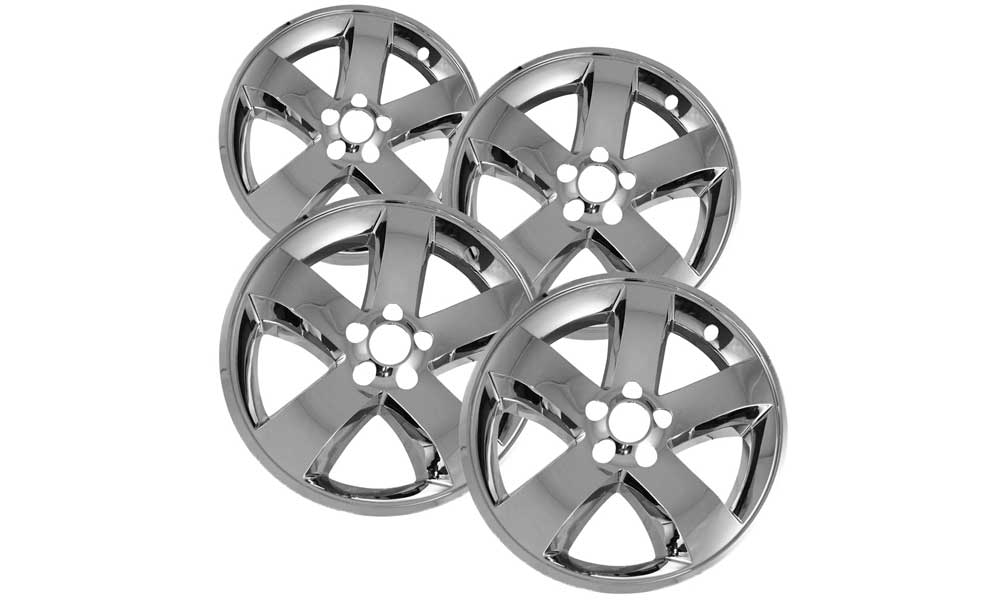
A hubcap is a removable disc that covers the face of a steel wheel, hiding the bare metal, the hub, and the lug nuts behind it. That part is simple. The trouble starts at the parts counter, because four different products get listed under one search term and none of them swap for another.
| Part | What it covers | How it holds on | Sized by |
|---|---|---|---|
| Hubcap / wheel cover | Face of a steel wheel | Spring clips or lug nuts | Diameter |
| Center cap | Middle bore of an alloy wheel | Tabs from behind | Bore and tab spacing |
| Trim ring | Outer lip of the wheel | Friction fit on the rim | Diameter |
| Wheel skin | An existing alloy wheel | Bolts or hidden clips | Diameter, bolt pattern |
Seller vocabulary is loose. O’Reilly Auto Parts files caps and covers together in one “Wheel Hub Cap/Cover” category, and most retailers now treat hubcaps and wheel covers as the same product. A center cap is different: a palm-sized plug for an alloy rim that already looks finished. A trim ring is a bright band around the outer edge.
Buy a full cover if your van, truck, or sedan rides on steel. Buy a center cap if the wheels are alloy and only the middle disc went missing. Tesla, Inc. blurred that line: the 18 inch Model 3 wheels wear clip-on aero covers over aluminum, and Tesla’s own service instructions have owners pull them off, starting at the valve stem opening, before touching the lug nuts.
How to Find the Right Size in Five Steps
Size decides the purchase, and size means wheel diameter, not your vehicle’s badge or build year. Work through these steps before you open any store page.
- Read the tire sidewall. Find the code molded into the rubber, such as 205/55R16. The number right after the R is the wheel diameter in inches, and covers are sold by that number. Most passenger cars land at 14, 15, 16, or 17 inch.
- Identify which part you need. A full cover spans the whole face, a center cap fills only the middle bore of an alloy design, and a trim ring covers just the outer lip.
- Count how many you need. If one is missing and three are intact, shop for a single replacement rather than a set of 4.
- Choose a channel that sells singles. Salvage yards, eBay storefronts, dealer parts counters, and specialist sites sell individual pieces. Big-box stores and parts chains mostly sell fours.
- Check the retention hardware, then secure it. Inspect the clips or ring on any used part for cracks, seat the cover flat, press around the full circumference, and run a zip tie through two opposing clip slots as backup.
Why not trust the year, make, and model dropdown? One nameplate can ship on more than one size depending on trim level, so check the sidewall even when a listing swears the part suits your Toyota, Honda, or Chevrolet. Also skip the tape measure: Hubcap Haven, a specialist seller, notes that a 16 inch cap measures close to 17 inches across, because it is named for the size it fits, not its own width.
Where to Buy Hubcaps: One Missing Cover or All Four
The right store depends on one question: are you matching three survivors, or covering four bare wheels? Matching needs an OEM replacement, meaning a part from the original equipment manufacturer with the correct emblem and clip design. Covering bare wheels just needs the right diameter.
One Original Match: Salvage Yards and Dealers
A salvage yard is the most overlooked single-piece source. Recyclers sell the original part pulled from a matching donor vehicle, one at a time, and its weathered finish usually blends with your other three better than anything new. LKQ, one of the largest recyclers in North America, runs self-service yards under the Pick Your Part name. Call ahead and ask whether the yard pulls covers itself or you walk the rows.
A dealer parts department looks up the original part number for your build and orders one piece. Call with the year, make, model, and trim, plus the diameter off the tire. Older applications are often discontinued at the warehouse, which is where the used route wins.
One Original Match Online: eBay and Specialists
eBay is the deepest source for individual used and discontinued pieces. Sellers such as Nationwide Hubcaps run standing storefronts for older applications. Search the part number stamped on the back of a cover you still have, and singles usually surface. Shipping on one plastic disc can approach the price of the part, so read the terms, then compare current listings there.
Specialist retailers exist to sell one piece at a time. Hubcaps.com now redirects to hubcaps.org, which sells used hub caps and center caps by make, with stock running from the 1970s to current models, so browse their catalog if the dealer says discontinued. WheelCovers.com covers wider ground: new and used factory covers, chrome wheel skins, trim rings, and wheel simulators for trucks, vans, RVs, and trailers. A Toyota Camry, Honda Civic, or Nissan Altima turns up in minutes. A Mini Cooper, a Mitsubishi, or a vintage Chrysler is where these sellers earn their reputation.
A Full Set: Walmart, Amazon, and Parts Chains
Walmart sells new sets almost entirely in fours, in silver, matte black, and two-tone finishes. Its website lists far more than any shelf, so browse their online selection before driving over.
Amazon has the widest catalog of new sets, plus application-specific replacement parts from suppliers like Dorman. The vehicle filter narrows things fast, though seller-supplied fitment still needs a sidewall check, and return windows vary by seller. Shop the automotive category #ad.
AutoZone, O’Reilly Auto Parts, Advance Auto Parts, and NAPA carry covers and center caps, usually with exterior accessories rather than hard parts, and the websites show more than the stores stock. Pep Boys still shows up in searches, but it began dropping retail parts sales in 2021 to focus on service and tires, so phone before counting on a shelf. The same trip works for lug nuts or headlights.
What Seller Pages Said When We Checked in October 2026
When we checked seller pages and listings in October 2026, the real differences were condition, shipping, and what happens if the part is wrong. Prices move daily, so the table sticks to policies and stock.
| Seller | Sells singles | New or used | Worth knowing |
|---|---|---|---|
| hubcaps.org (Hubcaps.com) | Yes | Used | Free shipping to the contiguous U.S., satisfaction guarantee |
| WheelCovers.com | Yes | New and used | Also wheel skins, trim rings, simulators |
| eBay storefronts | Yes | Mostly used OEM | Shipping set per seller |
| Walmart | Rarely | New aftermarket | Many listings say steel wheels only |
| O’Reilly (Dorman parts) | Yes | New | Some listings cite a limited lifetime warranty |
One pattern stood out: Walmart listings, including Winjet sets, state the covers fit steel rims and are not suitable for aluminum alloy. That warning sits in the listing text, and ignoring it is the easiest way to end up returning a new set.
Steel, Alloy, or Aero: Will a Universal Cover Fit?
A universal cover fits only a steel wheel of the matching diameter. Alloy has no retention channel for the clips, and even two 16 inch covers are not automatically interchangeable, because clip depth varies between manufacturers.
Retention type. Snap-on covers grip a wire ring behind the face, bolt-on versions thread onto studs or screws, and lug-nut retained designs sit under the lug nuts, common on van and light truck applications.
Material and finish. Molded ABS plastic dominates because it will not rust. Chrome plating over plastic looks bright out of the box and lifts at the edges once road salt works underneath. Silver and matte black hide brake dust. Metal is still the choice for classic and spinner-style restorations, and custom designs need a piece sourced by the rim itself.
OEM against aftermarket. An OEM cover carries the correct emblem and the retention design your wheel was built around. Aftermarket sets from brands such as Winjet and BDK come in universal diameters. If you are matching three survivors, an OEM replacement is the only route that will not look off.
Four Picks Matched to the Problem
Each of these solves a different situation. Confirm the size against your own sidewall before you order.
Best for a factory match: Dorman OE Solutions replacement parts. Sold by application rather than as a universal set, so you can buy one piece for one loss, and some listings cite a limited lifetime warranty. Check price on Amazon
Best overall set: Winjet silver wheel covers, set of 4. Plain lacquered face, snap retention, sold in 14, 15, and 16 inch versions. Check price on Amazon
Best black set: BDK covers, 4 pack. Matte black, snap-on, listed for steel rims on cars, trucks, and SUVs. The pick when all four wheels are bare. Check price on Amazon
Best plated look: a 15 inch chrome 4 pack. Bright plated finish over plastic for a dry climate. Keep it off salted roads. Check price on Amazon
Mistakes That Send a New Cover Into the Ditch
- Buying a set to replace one loss. Sets are how this product is merchandised, not how it is usually needed. Three good covers already on the car means a new set throws away three working parts.
- Trusting the fitment filter by itself. Marketplace fitment data is supplied by sellers and is not always right. Confirm the sidewall number first.
- Ordering a center cap when you need a full cover. If the missing piece was the size of a coffee mug lid, you want a center cap. If it spanned the whole face, you want a wheel cover.
- Ignoring the back of a used part. Flip any secondhand cover over before paying. Cracked mounting tabs and a bent ring are why cheap ones will not stay seated, and both are visible in five seconds.
- Skipping the zip tie. Run one through two opposing clip slots and around the retention ring, then snip the tail. It costs pennies and catches a cover that pops loose on a pothole.
Our guides to car parts and Interstate Batteries take the same fit-first approach.
Read the sidewall first. Then count how many pieces you actually need: if the answer is one, skip the retail four-pack and call a salvage yard or search the part number on eBay. Buy hubcaps as a set only when all four wheels are bare, and zip-tie whatever you install.
Common Questions About Hubcaps
Can I buy just one instead of a set?
Yes, and it is usually the smarter buy. Salvage yards, eBay storefronts, dealer parts counters, and specialist sites all sell singles. Big-box retailers are the outlier, because the packaging is built around fours.
What size do I need?
Whatever number follows the R in your tire’s sidewall code. In 195/65R15 the wheel is 15 inch, so a 15 inch cover is the match. If the tire is too worn to read, the same figure is usually stamped on the back face of the wheel itself.
Is a hubcap the same as a rim?
No. The rim is the structural metal the tire seals against and the lug nuts clamp. The cover is cosmetic and lifts off by hand. Losing a cover is a cosmetic problem; a damaged rim can mean a tire that will not hold air.
Why do they keep falling off?
Two causes account for most of it: fatigued clips that no longer spring back, and a cover pressed on at an angle so only part of the ring engaged. A rattle at low speed points at the cover; a vibration you feel through the steering wheel is a tire or balance problem instead.
Do new cars still come with them?
Fewer do. Alloy wheels are standard on many trims from Ford Motor Company, Hyundai Motor Company, Kia, Mazda, Volvo, BMW, Lexus, and Cadillac, and alloy needs only a small center cap. Base trims, fleet orders, and work vans still commonly run steel, and some entry-level crossovers such as the Toyota RAV4 have offered it.
Will a universal cover fit my wheel?
Only on a steel wheel of the matching diameter. Universal parts will not clip to alloy, which has no retention channel, and clip depth varies between manufacturers even at the same size. Custom and vintage wheels are their own category and generally need a piece sourced by wheel, not by car.
The wheretobuyguides.com editorial team checked seller pages and listings for this guide in October 2026.