
Buying hearing aids used to mean expensive appointments and limited choices. Since the FDA opened the market to over-the-counter (OTC) devices in 2022, the options have expanded dramatically – you can now purchase quality devices at pharmacies, big-box stores, and online retailers without a prescription. But more choices also means more confusion. This guide covers what to look for, what to avoid, and the best places to buy both OTC and prescription models in store and online.
This page contains affiliate links. We may earn a commission at no extra cost to you.
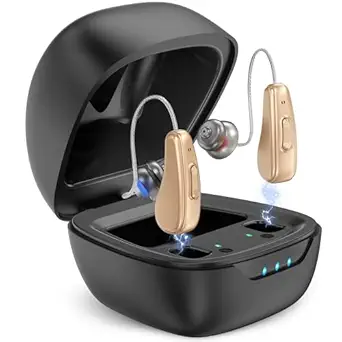
What Are Hearing Aids and Who Needs Them
A hearing aid is a small electronic device worn in or behind the ear that amplifies sound to help people with diminished auditory function communicate and participate in daily life. Modern devices use digital signal processing to distinguish speech from background noise, adjust automatically to different environments, and connect wirelessly to phones and televisions.
People with mild to moderate hearing loss are the primary candidates for OTC devices, which became available without a prescription for adults 18 and older in October 2022. Those with severe or profound loss still need prescription-grade devices fitted and programmed by an audiologist or licensed dispenser. According to the American Speech-Language-Hearing Association, untreated auditory decline is linked to cognitive decline, social isolation, and depression – making early intervention important for long-term health.
If you suspect your ability to hear has changed, a professional evaluation is the best starting point. Many pharmacies and retail locations offer free screening tests that can help you decide whether an OTC device is appropriate or whether you need a full audiological exam.
What to Look For: Features and Buying Criteria
Not all devices are built the same. These are the features that matter most.
Style and fit. Behind-the-ear (BTE) models sit behind the outer ear with a tube directing sound into the canal. In-the-ear (ITE) and in-the-canal (ITC) styles are smaller and more discreet but may not suit all ear shapes. Receiver-in-canal (RIC) designs combine small size with strong performance and are the most popular category today.
Amplification and sound quality. Look for devices with digital noise reduction, directional microphones, and multiple listening programs. Basic OTC models offer simple volume amplification, while premium options include AI-powered sound processing that adapts to your environment in real time.
Rechargeable vs. battery-powered. Rechargeable models eliminate the hassle of replacing tiny batteries every 3 to 10 days. A single overnight charge typically lasts 16 to 24 hours. Battery-powered devices are lighter and remain popular with users who prefer not to worry about charging.
Bluetooth connectivity. Most modern devices connect to smartphones via Bluetooth for streaming phone calls, music, and audiobooks directly. Some pair with companion apps that let you adjust settings, run self-fitting tests, and even receive remote support from a professional.
Self-fitting vs. professionally fitted. OTC devices are designed for self-adjustment using a smartphone app. Prescription models are programmed by an audiologist based on your specific audiogram. If your loss is straightforward and mild, self-fitting works well. If it is asymmetric, complex, or moderate-to-severe, professional fitting delivers significantly better results.
Return policy and trial period. Reputable sellers offer 30- to 60-day trial periods. This is essential – no amount of specs reading replaces wearing a device in your real-world environment for several weeks. Avoid any seller that does not offer a risk-free trial. Most direct-to-consumer brands and warehouse clubs include generous return windows, but check the restocking fee policy before buying – some charge 10 to 20 percent if you return after the first week.
What to Avoid When Buying Hearing Aids
These are the mistakes that lead to wasted money and devices sitting in a drawer unused.
Skipping a professional evaluation. Even if you buy OTC, knowing your specific type and degree of loss helps you choose the right device. A free screening at Costco, Sam’s Club, or a local audiology office takes 15 minutes and saves you from buying something that cannot address your needs.
Confusing amplifiers with true devices. Cheap personal sound amplification products (PSAPs) sold for $20 to $50 are NOT FDA-regulated and do not meet the standards required of actual OTC devices. They amplify all sound equally – including noise – and can even damage your remaining ability if used at high volumes.
Buying based on price alone. The cheapest option often lacks noise reduction, feedback cancellation, and the ability to customize settings. Spending $300 to $800 on a quality OTC pair typically delivers a dramatically better experience than a $50 amplifier.
Not using the trial period. Many people buy, try for a day, feel uncomfortable, and give up. Adapting to amplification takes 2 to 4 weeks of consistent use. Wear your devices daily during the trial period before deciding whether to return them.
Ignoring follow-up care. Prescription devices require periodic adjustments as your needs change. Even OTC users benefit from annual evaluations to track any progression and ensure their devices still match their current level of loss.
Where to Buy Hearing Aids In Store
Shopping in person lets you get fitted, ask questions, and often take advantage of on-site audiology services.
Costco
Costco’s in-store centers offer prescription devices from brands like Phonak (sold as Kirkland Signature) at significantly lower prices than independent clinics. Licensed dispensers perform evaluations, fitting, and follow-up adjustments – all included in the purchase price. One of the best values available for prescription-grade products.
Sam’s Club
Similar to Costco, Sam’s Club operates in-store centers with licensed professionals. They carry major brands and include evaluations and follow-up visits. Membership is required, but the savings versus private audiology practices are substantial.
CVS and Walgreens
Major pharmacy chains carry OTC devices from brands like Lexie and Sony in the health and wellness aisle. No prescription or appointment needed – just pick up a pair and self-fit at home. Pharmacists can answer basic questions but cannot perform audiological assessments.
Best Buy
Best Buy stocks premium OTC options from Jabra Enhance, Sony, and others in their health tech section. Staff can demonstrate devices and explain the app-based fitting process. A good option if you want to handle and compare multiple models before deciding. Geek Squad support is available for help with Bluetooth pairing and app setup after purchase.
Tip: If you are considering prescription devices, always get a formal evaluation first. Many retailers offer free assessments – take advantage of them even if you ultimately buy elsewhere.
Where to Buy Hearing Aids Online
Online shopping offers the widest selection, competitive pricing, and access to brands that sell direct-to-consumer with remote audiology support.
Amazon
Browse their selection for OTC devices from dozens of brands at various price points. Amazon carries both FDA-cleared OTC models and personal amplifiers, so read product descriptions carefully to ensure you are getting an actual regulated device. Prime shipping and returns make it easy to trial and return.
Lexie Hearing
Visit their website for affordable OTC devices powered by Bose technology. Lexie offers remote support from licensed professionals through their app, plus a 45-day trial period. One of the most accessible entry points for first-time buyers.
Eargo
Check their product line for virtually invisible in-canal devices with rechargeable batteries and app-based customization. Eargo offers remote audiologist support and financing options. Their devices are among the most discreet available.
Jabra Enhance
Explore their options for premium OTC devices backed by decades of audio engineering expertise. Jabra Enhance pairs include an intuitive self-fitting app and optional access to licensed audiologists for remote fine-tuning. Strong choice for tech-savvy users who want top sound quality.
Top Picks for 2026
These are the models that consistently earn strong reviews from users and audiology professionals.
Best overall OTC: Jabra Enhance Plus. Sleek, rechargeable in-ear design with Bluetooth streaming and a clinical-grade self-fitting app. Around $500 to $800. Excellent sound quality and a 100-day trial period.
Best budget OTC: Lexie B2 Powered by Bose. Quality amplification with Bose audio technology at an accessible price. Around $800 to $1,000. Remote support from licensed professionals included.
Most discreet: Eargo 7. Nearly invisible in-canal design with rechargeable batteries and a compact charging case. Around $1,500 to $2,000. Ideal for people who prioritize aesthetics alongside performance.
Best value prescription: Costco Kirkland Signature 10. Premium Phonak technology at warehouse pricing. Around $1,400 to $1,800 per pair, including fitting and follow-up. The best value in the prescription category by a wide margin.
Best for severe loss: Phonak Audeo Lumity. Professional-grade with superior speech-in-noise processing and AutoSense OS. Around $3,000 to $6,000 per pair through an audiologist. The gold standard for complex or severe cases.
Frequently Asked Questions
Can I buy hearing aids without a prescription?
Yes. Since October 2022, FDA-cleared OTC devices are available to adults 18 and older with perceived mild to moderate loss. No prescription, audiogram, or professional fitting is required. These can be purchased at pharmacies, electronics stores, and online retailers.
How much do hearing aids cost?
OTC devices range from $200 to $2,000 per pair. Prescription models range from $1,000 to $6,000 or more per pair, typically including professional fitting and follow-up visits. Costco and Sam’s Club offer prescription devices at significantly lower prices than independent clinics.
Does Medicare pay for hearing aids?
Original Medicare (Parts A and B) does not cover devices or fitting exams in most cases. Some Medicare Advantage plans include partial coverage. Medicaid coverage varies by state. Many manufacturers and retailers offer financing plans, and FSA/HSA accounts can be used for qualified purchases.
How do I know if I need hearing aids?
Common signs include frequently asking people to repeat themselves, turning up the TV louder than others prefer, difficulty following conversations in noisy environments, and feeling that people mumble. A professional evaluation or free screening at a retail location can confirm whether amplification would help.
Are Costco hearing aids as good as others?
Yes. Costco’s Kirkland Signature brand is manufactured by Phonak, one of the world’s top producers. The devices use the same core technology as Phonak’s premium retail models at roughly half the price. The main trade-off is limited brand selection and the requirement of a Costco membership.
About This Guide
Reviewed by the wheretobuyguides.com editorial team. Content on auditory health devices is reviewed with guidance from published FDA consumer guidelines and ASHA (American Speech-Language-Hearing Association) recommendations. Last updated: March 2026.
Whether you choose an OTC device from a pharmacy shelf or a professionally fitted prescription model from an audiologist, finding the right solution is worth the investment. Better amplification means clearer conversations, stronger connections with the people around you, and a measurably better quality of life.